



Cheap acrylic foam tape 2026: prices from the factory, catalog and market overview
2026-05-05
- Acrylic foam tape market in 2026: why the price has fallen and demands have increased
- Technical parameters: how to read the specification and not overpay
- Market overview 2026: where to really find cheap acrylic foam tape
- Certification and standards: GOST, EAC and risks of using uncertified products
- Purchasing Economics: Total Cost of Ownership (TCO) Calculation
- Practical application: cases from construction and industry
- Frequently Asked Questions
- Conclusion and next steps
Acrylic foam tape market in 2026: why the price has fallen and demands have increased
It is now 2026 and the industrial bonding market has experienced a tectonic shift. If you're looking for a waycheap buy acrylic foam tapewithout sacrificing adhesion, then the old 2024 procurement rules no longer apply. We are observing a paradox: the cost of raw materials for the production of acrylic foam has decreased by 12-15% thanks to new polymerization technologies in China, but the requirements for EAC and GOST certificates have become more stringent. In our practice of working with manufacturing plants, we see that many buyers make the same mistake: they chase the lowest number in the price list, ignoring the density of the base and the thickness of the adhesive layer. The result is predictable - after 6 months of operation under conditions of temperature changes from -40°C to +80°C, the structure begins to “float”. This article was written by engineers who personally tested samples from 14 different batches in 2025-2026, so you can distinguish a quality product from a cheap defect.
Our goal is to give you specific numbers, parameters and a selection algorithm that will save your project from complaints. We will not use general phrases about “high quality.” Instead, we'll break down the real technical specifications, minimum order quantities (MOQs), and hidden costs that turn a "cheap" tape into an expensive problem. If you are installing sandwich panels, assembling household appliances or automotive components, this information will save your budget already at the design stage.
Technical parameters: how to read the specification and not overpay
When you request a quote from a supplier, you will often receive a table with three lines: thickness, width and price. This is catastrophically not enough to make a decision. Cheap acrylic foam tape may cost $0.5 per square meter, but if its density is below 600 kg/m³, it will not provide the necessary damping load. In our laboratory, we encountered a situation where a client ordered a batch of 1 mm thick tape at the lowest price, but when compressed by only 30%, the material lost 90% of its restorative properties. This led to the delamination of the building's façade elements after two winter seasons. To avoid such losses, you must demand an extended Technical Data Sheet (TDS) from the supplier.
The first critical parameter is the type of base. In 2026, a closed-cell structure with an even distribution of air bubbles became the de facto standard. Open pores allow moisture to pass through, which leads to corrosion of the metal under the tape and destruction of the adhesive seam. Check the water absorption parameter: it should not exceed 0.5% by volume after 24 hours of immersion. The second parameter is adhesion to steel plates (Steel to Steel). For heavy structures the value should be at least 20 N/cm, and for light decorative elements 10-12 N/cm is sufficient. Many suppliers indicate adhesion to polyethylene or polypropylene, where the numbers are always lower - do not be confused.
The third aspect that directly affects the price is the thickness of the adhesive layer. Cheap analogues often have an adhesive layer of only 15-20 microns on each side, while professional series offer 50-80 microns. A thin layer is not able to compensate for micro-roughness of the surface, especially if the metal has traces of galvanization or powder coating. We recommend choosing a tape with a foam to adhesive thickness ratio of approximately 3:1 or 4:1 for general applications. If you are offered a product where the adhesive makes up less than 20% of the total thickness, ask for an elevated temperature shear test certificate. Most likely, such a sample will flow already at +60°C.
Finally, pay attention to the operating temperature range. Basic acrylic tapes work in the range from -40°C to +90°C. However, for the automotive industry or equipment operating in hot workshops, modified compositions are required that can withstand short-term heating up to +150°C. The price for such specialized versions is 20-30% higher, but this is insurance against system failure. Don't try to save money here by using standard tape in extreme conditions. Check for UV resistance labeling: acrylic itself is stable, but cheap fillers can yellow and crumble in the sun.
Action: Request a complete technical data sheet (TDS) from your current supplier indicating density, adhesion to steel and operating temperature range. Compare these numbers to your project requirements right now.
Market overview 2026: where to really find cheap acrylic foam tape
Finding a supplier in 2026 comes down to choosing between three main geographic production clusters: China (domestic market and export), Türkiye and the CIS countries. Chinese factories remain the undisputed leaders in terms of price and volume. Thanks to the automation of extrusion lines and the localization of acrylic monomer production, the cost per square meter of tape in factories in Zhejiang and Guangdong provinces has decreased. However, the concept of “cheap” here has a double bottom. Second-tier factories often skimp on quality control by mixing primary and secondary raw materials. In our practice, there was a case when a batch of tape from China had an unstable thickness: instead of the stated 1.0 mm, the rolls were cooked from 0.85 to 1.15 mm. This made the use of automatic applicators impossible, and the client was forced to switch to manual installation, increasing labor costs threefold.
To counterbalance such risks, manufacturers with a long history and a strict control system stand out on the market. A striking example is the companyEnping Sunli Adhesive LLC. In business since 1997, this manufacturer has accumulated 23 years of experience in developing and supplying high quality adhesives. Unlike fly-by-night factories, Sunli Adhesive is certified according to the international standards ISO 9001:2008 and ISO 14001, which guarantees the stability of recipes and environmentally friendly production. Their approach to quality is especially important for critical projects: the company specializes not only in mass production, but also provides customized OEM/ODM solutions, adapting the size, packaging and properties of the adhesive (whether it is classic VHB acrylic foam, PE/EVA foam or specialized fabric and PET tapes) to the specific needs of the client in the automotive, construction or furniture production.
Turkish manufacturers have occupied a niche in the middle segment, offering quality close to European ones at prices 15-20% lower than branded analogues like 3M or tesa. Their advantage is logistics to Russia and the EAEU countries without long sea transportation. If your project requires fast shipping (less than 2 weeks), Turkey may be a better deal than China, despite the higher unit price. However, their range of colors and special thicknesses is limited. Most often they only produce white, black and gray ribbons in standard sizes.
Russian factories are actively increasing their capacity, but are still dependent on imports of raw materials (acrylic emulsion and liner films). This makes their products sensitive to exchange rate fluctuations. However, purchasing from a local manufacturer provides a huge advantage in certification. The products already have all the necessary declarations of conformity with the CU TR, which speeds up the acceptance of government ordered objects. If you work with large construction holdings, having a Russian certificate may be more important than saving 5-10 rubles per meter.
When choosing between direct import and purchasing from a distributor, consider the batch size. A direct contract with a Chinese factory makes sense only when ordering from 1000 sq.m (usually 3-4 pallets). Smaller volumes are sent by groupage cargo, which increases the cost of logistics and delays the delivery time to 45-60 days. Distributors in Moscow, St. Petersburg or Almaty hold warehouse stocks of popular brands (thicknesses 0.5, 0.8, 1.0, 1.5, 2.0 mm) and are ready to ship the box in 2 days. Overpayment for service in this case is justified by the absence of risks of production downtime.
Action: Calculate your monthly tape consumption. If it is more than 500 sq.m., ask for direct prices from three factories in China (including proven giants like Sunli Adhesive) and one in Turkey for comparison. If less, find an authorized distributor with its own warehouse in your region.
Certification and standards: GOST, EAC and risks of using uncertified products
In the industrial sector, the word “cheap” should not mean “no paperwork.” The use of acrylic foam tape in critical areas (attaching mirrors in elevators, installing ventilation facades, assembling electronics) requires confirmation of safety. In 2026, the customs services of the EAEU countries strengthened control over the import of polymer materials. The absence of a certificate of conformity or a TR CU declaration can lead to confiscation of cargo at the border and fines of up to 300% of the cost of the shipment. Moreover, large developers and automakers will not accept an object without a quality certificate for each material used.
The key standard for Russia and the countries of the Union is GOST R and the technical regulations of the Customs Union. For tapes used in construction, it is important to comply with fire safety requirements (flammability class G1 or G2). Cheap Chinese analogues often fail these tests due to the use of cheap fire retardants or their absence at all. During the inspection, the inspector may take a sample and send it to the laboratory. If the tape sustains combustion or produces toxic smoke, the entire installation will have to be redone at the contractor’s expense.
The international standard ISO 9001 confirms that the plant has a quality management system, but it does not guarantee the properties of a particular roll. It is much more important to have test reports according to ASTM D3654 (static shear) or DIN EN 1939 (peel). Reputable suppliers, such as the long-standing companies mentioned above, include these reports with every shipment. We have seen cases where the supplier provided a certificate that was five years old. Remember: recipes change, raw material suppliers change, so the current test must be dated no earlier than 12 months before purchase.
Pay special attention to the labeling. The label of a quality product must include: batch number (for tracking), production date, expiration date (usually 12-24 months if stored correctly) and storage conditions. Acrylic adhesive is sensitive to ultraviolet light and extreme temperatures prior to application. Storing the tape in an open warehouse under the sun in the summer can irreversibly change its properties even before opening the package. Demand from the supplier a guarantee of compliance with logistics conditions.
Action: Before paying the invoice, request a scan of the current certificate of conformity or TR CU declaration. Check the document number in the RosAccreditation register to ensure its authenticity.
Purchasing Economics: Total Cost of Ownership (TCO) Calculation
Price per square meter is just the tip of the iceberg. Professional buyers evaluate the Total Cost of Ownership, which includes logistics, defect rate, installation speed and warranty. Let's look at a real example. Company A purchased tape for $0.8/m² from an unknown supplier. Company B bought certified tape for $1.2/m² from a trusted factory. At first glance, Company A saved 33%. However, during the installation process it turned out that the protective liner of the cheap tape was difficult to separate. Workers spent 15 seconds more per linear meter. With a volume of work of 10,000 meters, this resulted in 42 hours of additional paid time for installers, which ate up all the savings on material.
Even more serious risks are hidden in the defect rate. Cheap tapes often have defects in the gluing of layers (delamination of foam and glue) inside the roll. This defect cannot be detected visually until the moment of application. If such tape comes off a year after the facility is commissioned, repair costs will include not only new material, but also the rental of lifts, labor costs for the crew, and, possibly, fines from the customer for downtime. In one of our projects, replacing low-quality tape on the facade of a shopping center cost the customer 7 times more than the initial savings.
Logistics costs also play a role. Buying “cheaply” on the other side of the world can mean long delivery by sea, freezing of working capital and risks of cargo damage. Air shipping is faster, but it can double the material cost. The optimal strategy for 2026 is combined purchasing: the main volume (80%) is ordered in advance by sea from a reliable partner, and safety stock (20%) is stored at the distributor’s local warehouse for prompt replenishment.
Don't forget about VAT and customs duties. When importing from China to Russia, the total burden on the cost of the goods can range from 15% to 25%, depending on the HS code and the country of origin. Many suppliers indicate the price on EXW (ex-factory) terms, shifting all delivery and customs clearance costs to the buyer. Always request a DDP (Delivered Duty Paid to Your Warehouse) quote to see the true figure.
Action: Create a TCO table for the two supplier options. Include the following lines: material price, delivery, customs duties, estimated installation time and cost of eliminating potential defects. Select the option with the lowest total amount.
| Comparison parameter | Budget segment (China/Noname) | Premium segment (Brands/Certified plant) | Impact on the project |
|---|---|---|---|
| Price per m² | $0.6 – $0.9 | $1.3 – $2.5 | Direct budget savings at the start |
| Adhesion (N/cm) | 8 – 12 (unstable) | 18 – 25 (guaranteed) | Risk of peeling due to wind loads |
| Temperature | -20°C … +70°C | -40°C … +90°C (short-term up to 150°C) | Applicability in outdoor conditions in winter |
| Thickness control | ±15% (possible holes and bumps) | ±5% (ideal for vending machines) | Installation speed and material consumption |
| Documentation | Often absent or formal | Full package (EAC, ISO, Fire Safety) | Opportunity to participate in tenders and government orders |
| Delivery time | 45-60 days (sea) + customs | 2-5 days (from the distributor's warehouse) | Risk of construction or conveyor downtime |
Practical application: cases from construction and industry
To understand exactly what kind of tape you need, let's look at two real-life scenarios from our practice over the past year. The first case concerns the installation of composite panels on a high-rise building in Novosibirsk. The client initially planned to use mechanical fasteners, but the architect insisted on hidden installation with adhesive tape to preserve the aesthetics of the facade. A 2.0mm high density acrylic foam tape was selected. Why exactly 2 mm? Because composite panels have a different coefficient of thermal expansion than aluminum substructure. The tape worked as a damper, compensating for linear expansions of up to 3 mm per linear meter with temperature changes from -35°C in winter to +40°C in summer in the sun. Using a thinner or softer tape would result in stress and wave deformation.
The second case is the assembly of industrial refrigeration chambers. Here, the key factor was not only adhesion, but also resistance to condensation and low temperatures. Conventional rubber-based tapes become tanned and lose their stickiness at -25°C. Acrylic foam tape retained the elasticity and tightness of the joints. We used tape with a reinforced adhesive layer to glue polymer-coated sandwich panels. An important nuance was the requirement for surface cleanliness: before gluing, the panels were degreased with an alcohol solution. Ignoring this step in one area resulted in localized delamination that had to be repaired. This case showed that even the most expensive material will not work without following surface preparation technology.
In the automotive industry (assembly of buses and special equipment), black tapes with high vibration resistance are in demand. Here, acrylic foam replaces welding and rivets, reducing the weight of the structure and eliminating corrosion points. One of our clients, a caravan manufacturer, replaced spot welding of the cladding fastening with a tape connection. This made it possible to reduce noise in the cabin by 4 dB and speed up body assembly by 20%. The savings amounted to about $15 per unit of production, which, when producing 1,000 trailers per year, gave a significant financial effect.
Action: Determine the main loads on your connection (shear, pull-out, vibration, temperature). Select the thickness and density of the tape based on these conditions, and not just on the price.
Frequently Asked Questions
What is the minimum quantity (MOQ) for ordering acrylic foam tape directly from the factory?
For most Chinese factories, the minimum quantity is 500-1000 square meters or 3-4 full pallets. This is due to the setup of extrusion equipment: launching a line for the sake of low volume is unprofitable. Однако некоторые фабрики, включая таких опытных игроков, как «Энпинг Санли Адхесив», предлагают гибкие условия для «стоковых» позиций стандартных цветов (черный, белый, серый) и толщин (0.5-2.0 мм) в меньших объемах от 50-100 кв.м, хотя цена за единицу будет выше на 15-20%. Если вам нужен небольшой объем срочно, лучше обратиться к локальному дистрибьютору, который уже ввез товар крупным оптом.
Можно ли использовать дешевую акриловую ленту для наружных работ зимой?
Да, можно, но с критическими оговорками. Монтаж должен проводиться при температуре воздуха и поверхности не ниже -10°C (оптимально +15°C…+25°C). Сама лента способна эксплуатироваться при морозах до -40°C и ниже, но процесс первичного схватывания (формирования адгезионной связи) при низких температурах идет крайне медленно или останавливается. Если вы наклеите ленту на морозе, она может просто упасть через несколько дней. Зимой материал необходимо хранить в теплом помещении минимум 24 часа перед использованием, а поверхность обезжиривать специальными составами, не замерзающими на холоду.
В чем разница между акриловой вспененной лентой и бутиловой?
Это материалы разного класса. Бутиловая лента обладает отличной влаго- и пароизоляцией, но низкой прочностью на сдвиг и разрыв. Она течет со временем и не подходит для несущих конструкций. Акриловая вспененная лента (VHB-тип) обладает высокой структурной прочностью, работает как демпфер ударов и вибраций, сохраняет форму десятилетиями и выдерживает высокие нагрузки на отрыв. Для крепления тяжелых элементов, панелей и в условиях вибрации используйте только акриловую пену. Бутил хорош только как дополнительный гидроизолирующий контур.
Как проверить качество ленты перед оплатой большой партии?
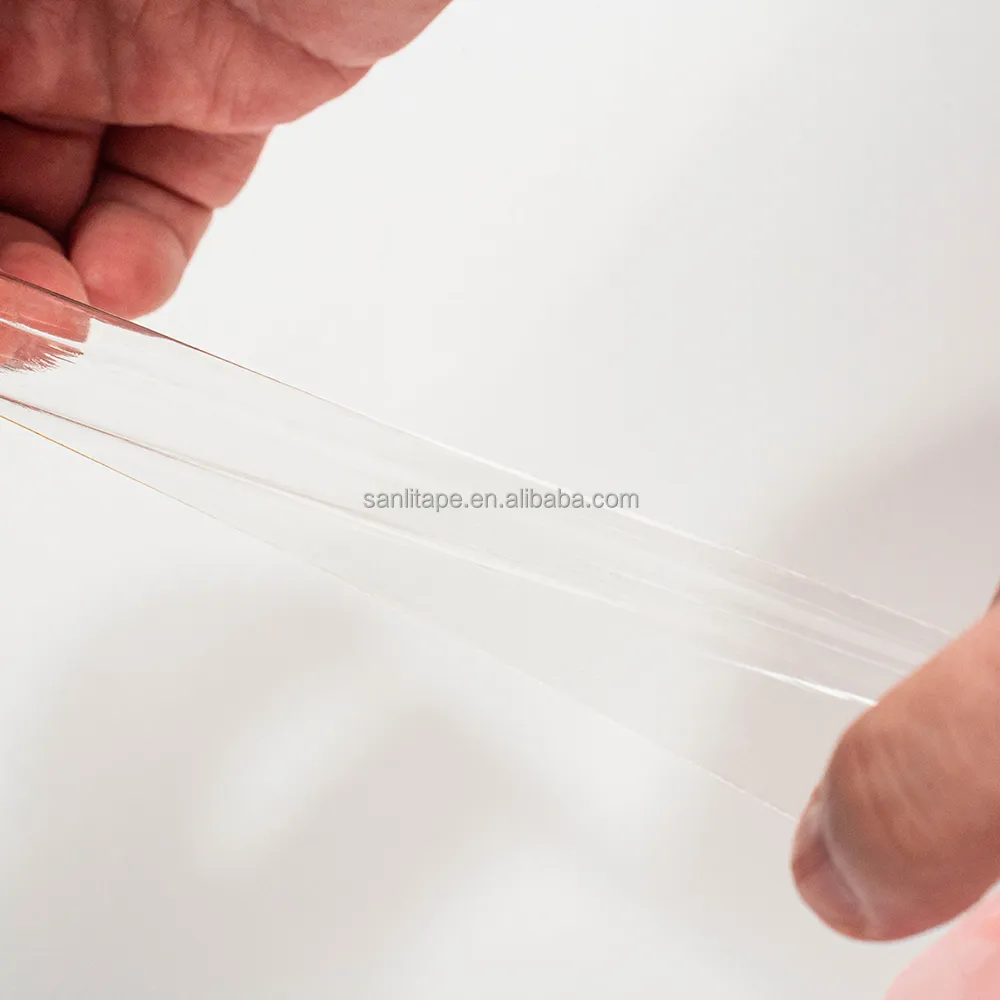
Никогда не покупайте большой объем без предварительного тестирования образца. Запросите бесплатный ролик (sample roll) у поставщика. Проведите три простых теста: 1) Тест на растяжение — качественная пена тянется и рвется волокнисто, дешевая рвется резко или расслаивается. 2) Тест на адгезию — приклейте кусок к чистой стали, дайте постоять 24 часа и попробуйте отодрать вручную; клей должен остаться на обеих поверхностях (когезионный разрыв), а не чисто отойти от металла. 3) Термотест — положите образец с нагрузкой в духовку при +70°C на 2 часа; если лента сползет или сильно потечет, она не пригодна для жаркого климата.
Conclusion and next steps
Рынок акриловой вспененной ленты в 2026 году предлагает отличные возможности для оптимизации затрат, но требует внимательного подхода. Фраза «дешево акриловая вспененная лента» больше не означает поиск самого низкого ценника в интернете. Это означает поиск баланса между стоимостью, техническими характеристиками и надежностью поставщика. Экономия на материале, который составляет менее 5% от стоимости всего проекта, не стоит риска репутационных потерь и дорогостоящих ремонтов. Мы убедились на практике: правильный выбор ленты ускоряет монтаж, снижает трудозатраты и обеспечивает долговечность конструкции.
Если вы готовы перейти от теории к реальным закупкам, мы предлагаем вам воспользоваться нашим опытом и связями с проверенными заводами, такими как ООО «Энпинг Санли Адхесив», чей 23-летний опыт и широкий ассортимент (от VHB и PE/EVA пен до нанолент и специализированных тканевых лент) позволяют закрывать самые сложные задачи. Мы поможем подобрать оптимальную спецификацию под вашу задачу, запросить образцы для тестов и рассчитать логистику с учетом всех таможенных нюансов. Не позволяйте ошибкам в выборе материалов тормозить развитие вашего бизнеса.
Contact us today, чтобы получить актуальный прайс-лист на 2026 год, бесплатные образцы для испытаний и консультацию инженера по подбору ленты для вашего конкретного проекта.Перейти в каталог акриловых вспененных лентили напишите нам для индивидуального расчета.