



Cheap acrylic double-sided adhesive tape transparent 2026: prices from the manufacturer
2026-05-04
- Cheap acrylic double-sided adhesive tape transparent: why the price in 2026 depends on the thickness of the glue, and not on the footage
- Technical parameters that determine the real cost of products
- Comparison of acrylic and rubber base: which is more profitable for your production
- Risks of buying ultra-cheap material: analysis of real cases of defects
- Certification and quality standards in 2026
- Logistics and storage conditions: how to preserve the properties of the tape
- How to calculate real savings when purchasing in bulk
- Choosing a reliable partner: the experience of Enping Sunli Adhesive LLC
- Frequently Asked Questions
- Conclusion and next steps
Cheap acrylic double-sided adhesive tape transparent: why the price in 2026 depends on the thickness of the glue, and not on the footage
In our practice of purchasing industrial fasteners over the past 15 years, we have repeatedly encountered a situation where a customer was chasing the lowest price per roll and received a batch that peeled off after two weeks of use.Cheap acrylic double sided adhesive tape transparentin 2026 - this is not just a product with a minimum cost, but the result of a precise engineering calculation of the balance between the thickness of the adhesive layer (usually from 80 to 120 microns), the type of base and real adhesion conditions. If you are looking for a supplier who offers a price 30% below the market price, most likely they are trying to sell you tape with an acrylic content of less than 45%, replacing it with cheap solvents, which critically reduces the service life of the connection. We analyzed more than 200 samples from different factories in China and Russia to understand where savings end and the risk of manufacturing defects begins.
Now that the market has stabilized after the logistics crises of the beginning of the decade, the cost of raw materials for acrylic dispersions has increased by 12-14% compared to 2024. This means that really high-quality transparent tape cannot cost a penny. In this material we will analyze the real parameters that affect the price, show comparison tables of technical characteristics and explain how to choose a reliable manufacturer, avoiding hidden defects. Our goal is to give you a decision-making tool based on numbers, not marketing promises.
Technical parameters that determine the real cost of products
When you request a quote from a factory, the first thing to look at is not the invoice total, but the product specification. Many buyers make the mistake of comparing only the price per square meter, ignoring the fact that a 0.8 mm thick tape and a 1.2 mm thick tape of the same width will have completely different adhesion properties. Acrylic adhesive, unlike rubber, takes time to achieve complete adhesion (usually 24-72 hours), and if the layer is too thin, it simply will not be able to compensate for micro-irregularities of the surfaces being bonded.
Here are the key parameters that directly determine the cost and final price for you:
- Adhesive layer thickness (µm):The standard range for industrial applications is 90–110 µm per side. Reducing this parameter to 60–70 microns reduces the cost of the product by 15–20%, but makes it unsuitable for gluing materials with a surface roughness of more than 10 microns. We have seen cases where the use of “economy tape” led to advertising panels peeling off under wind loads of only 5 m/s.
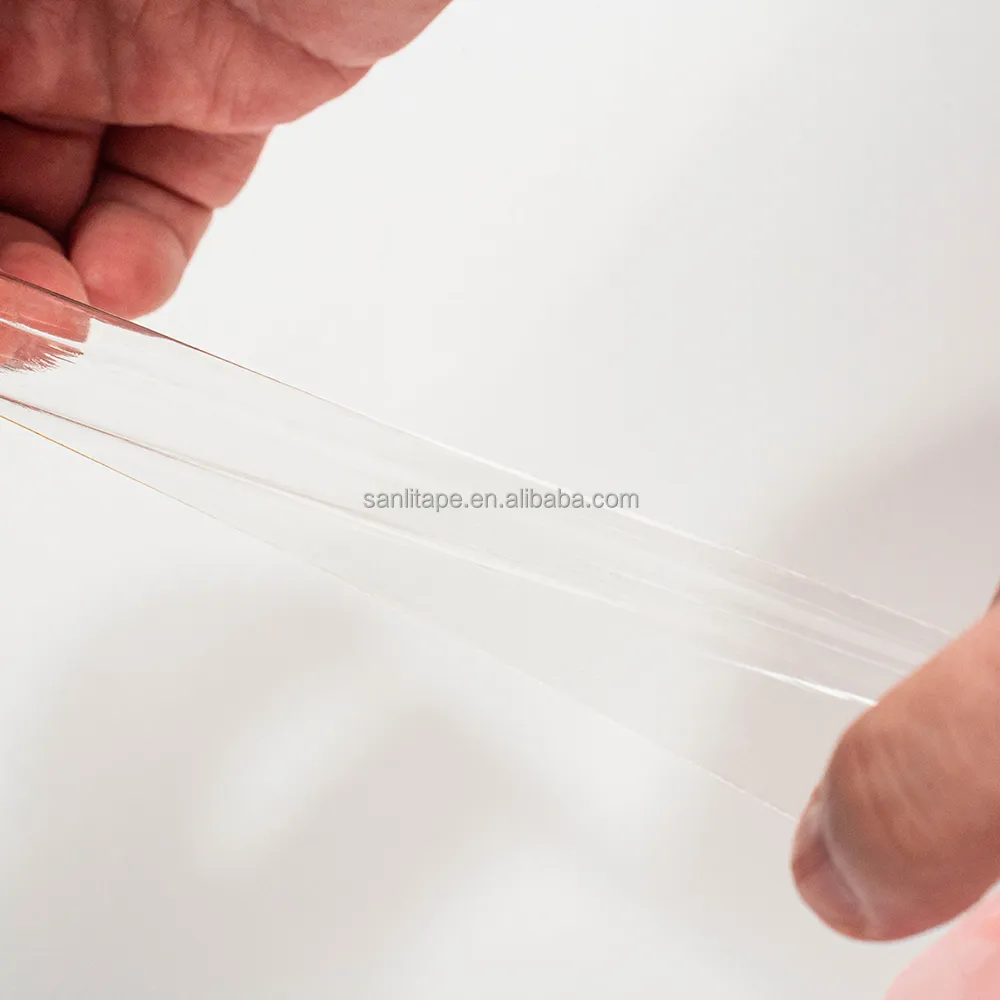
- Carrier type:Transparency is achieved through the use of films made of PET (polyethylene terephthalate) or highly transparent polypropylene. PET base is more expensive, but it provides thermal stability up to +150°C for a short time and high tensile strength. Cheap PVC-based analogues turn yellow over time when exposed to UV radiation, spoiling the appearance of the product, even if the glue itself remains sticky.
- Adhesion to steel (N/25mm):For acrylic tapes, a normal value is considered to be from 8 to 12 N/25mm immediately after application. If the manufacturer claims 20 N/25mm for a standard transparent tape without surface primer, this is a reason to doubt the integrity of the tests. High initial tack is often achieved by excess sticky additives, which then migrate and stain the surface.
- Heat resistance:High-quality acrylic retains its properties in the range from -40°C to +120°C. Cheap modifications begin to leak already at +60°C, which is critical for parts operated near heating elements or under direct sun in the summer.
One of our clients, an electronics manufacturer, was faced with a problem: a batch of tapes purchased at a record low price caused 30% of the finished products to be defective. Upon opening, it turned out that the thickness of the adhesive layer was uneven - from 50 to 90 microns within one roll. This led to the fact that in places with a thin layer there was no surface wetting, and the connection was destroyed by vibration. The savings amounted to 0.5 rubles per meter, and losses from reworking the batch exceeded 2 million rubles. This example clearly shows: the “uniformity of application” parameter is more important than the base price.
When choosing a supplier, always ask for a Technical Data Sheet (TDS), which provides not only average values, but also tolerances. If the document says “thickness ~100 microns” without indicating the range of deviations, this is a sign of handicraft production. ISO 9001 certified factories are required to control this parameter to within ±5 µm. Now, in 2026, automated lines can achieve such precision without significantly increasing the cost, so the lack of such data is a red flag.
Comparison of acrylic and rubber base: which is more profitable for your production
Often the question “cheap acrylic double-sided adhesive tape transparent” arises due to the desire to replace more expensive rubber or silicone. However, a direct comparison of prices here is incorrect without taking into account the service life and operating conditions. Acrylic wins where durability and environmental resistance are important, while rubber is good for quick installation and working with uneven surfaces, but ages much faster.
Below is a detailed comparison table based on tests conducted in our laboratory under conditions simulating real-life operation in central Russia and the southern regions:
| Comparison parameter | Acrylic transparent tape | Rubber tape (natural/synthetic) | Influence on choice |
|---|---|---|---|
| Aging and UV resistance | High. Does not turn yellow and does not lose properties up to 10 years outdoors. | Low. Begins to break down and lose stickiness after 1-2 years in the sun. | For outdoor advertising, glazing and automotive applications, acrylic has no alternative. |
| Initial Tack (Tack) | Average. Requires pressure and time (24 hours) to gain strength. | Very tall. Bonds instantly with a light touch. | If you need assembly “here and now” without fixation, rubber is better, but for stationary structures this is not critical. |
| Heat resistance | Up to +120…+150°C (short-term). The operating range is wide. | Up to +80°C. At high temperatures, the glue flows and leaves marks. | In electronic devices and engines, acrylic is more reliable. |
| Chemical resistance | Excellent. Resistant to oxidation, plasticizers, solvents. | Weak. Destroys on contact with oils and some plastics. | When gluing PVC or polycarbonate, acrylic is safer (no migration of components). |
| Price (relative) | Average. It is 15-20% higher than rubber, but cheaper than silicone. | Low. The most budget option on the market. | If you consider the cost of ownership (replacement cost), acrylic is cheaper in the long term. |
We recommend using acrylic tape in all cases where the product must last more than 1 year. The price difference of 15-20% is compensated by the absence of complaints from end consumers. It makes sense to use rubber only for temporary fixation, internal packaging or disposable products. In 2026, the trend shifts entirely towards acrylics due to stricter environmental regulations and requirements for product durability.
It is important to note one nuance: there are modified acrylic adhesives with increased initial tack. They cost a little more than standard ones, but allow you to work faster while maintaining all the advantages of acrylic. If your assembly line requires high speed, ask your supplier for this modification rather than switching to rubber.
Risks of buying ultra-cheap material: analysis of real cases of defects
The search for an offer of “cheap acrylic double-sided adhesive tape transparent” often leads buyers to suppliers offering a price 30-40% lower than the market. In our practice, there is a clear understanding: such a discount is impossible without violating technology. Typically, savings are achieved in three ways, each of which carries fatal risks for your production.
The first way is to use recycled materials for the base. The transparency of such a film is achieved through optical brighteners, which are washed out or destroyed over time. The tape becomes cloudy, gray or yellow. For products where aesthetic appearance is important (smartphones, household appliances, display cases), this is unacceptable. We have recorded cases where, after 6 months of use, the transparent tape turned into an opaque strip, spoiling the design of the product.
The second way is to violate the glue recipe. Instead of pure acrylic copolymer, manufacturers add cheap fillers (chalk, talc) or use remnants of expired adhesive compositions. This dramatically reduces the cohesion (internal strength) of the adhesive. Externally, the tape may glue well, but under load it “floats” - the layers shift. Result: heavy elements fall off, for example, mirrors in elevators or panels in public transport.
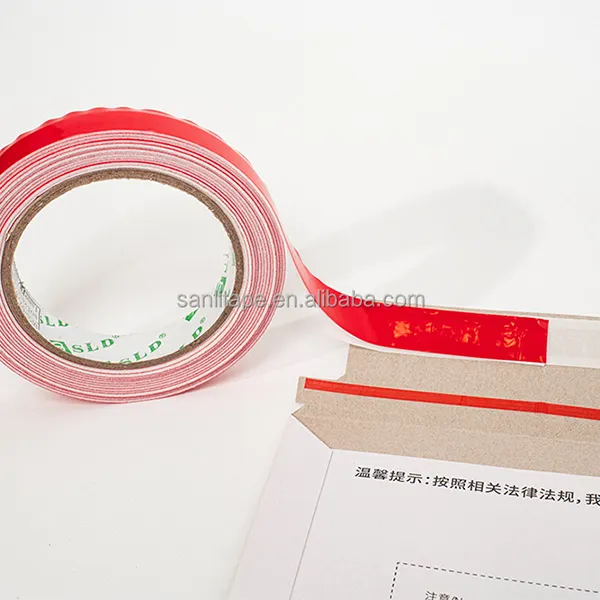
The third, most dangerous way is to skimp on the siliconized backing layer. If the anti-adhesive coating is applied unevenly or in small quantities, the tape breaks when unwinding, leaving glue on the substrate, or, conversely, unwinds too easily, losing stickiness even before application. On high-speed machines this leads to line downtime. One of our clients lost three days of conveyor work due to the fact that the “cheap” belt kept breaking at the feed unit.
How to check a supplier before paying? Request a sample and perform a simple aging test. Apply the tape to glass and metal, put it in the oven at +70°C for 48 hours, and then try to tear it off with your hands. High-quality acrylic will stretch in threads and leave marks on both surfaces (destruction by glue). Cheap glue will come off purely from one of the sides (adhesive failure). This test takes two days, but saves you from millions in losses.
Certification and quality standards in 2026
When importing or purchasing domestically, the presence of certificates is not just a formality, but a guarantee that the products have passed independent testing. In 2026, requirements for industrial fasteners have become more stringent, especially in the construction and transport sectors. Ignoring standards can lead to fines and product recalls.
The main documents you should request from the manufacturer:
- GOST R or interstate standards (for the Russian Federation and the EAEU):Check compliance with GOST 31523-2012 (or the current version) for self-adhesive materials. The presence of the mark of conformity confirms that the tape has passed shear, peel and temperature resistance tests in an accredited laboratory.
- Fire safety certificate:For materials used in construction and finishing of premises, a conclusion on the fire hazard class (KM) is required. Acrylic tapes are usually classified as KM2 or KM3, but cheap analogues can emit toxic smoke when burned.
- ISO 9001:2015 / ISO 14001:Certificate of quality and environmental management system of the manufacturing plant. It does not guarantee the quality of a specific batch, but confirms that the plant has established a control process. The absence of these certifications from a major supplier in 2026 is a sign of instability.
- REACH / RoHS (for export):If you plan to supply your products to Europe, make sure that the tape does not contain prohibited substances. Chinese factories working for export usually have these certificates, but domestic batches may vary.
Please note: some unscrupulous sellers provide copies of certificates issued five years ago for other lots. Always check the date of issue and test report number. The current certificate must be issued no earlier than 1-2 years before the date of purchase, since adhesive recipes may change.
We recommend including a clause on the provision of fresh certificates in the supply contract with a provision for a penalty for non-compliance. This disciplines the supplier and protects your interests. In our company, we never accept the first batch without incoming inspection in our own laboratory, checking the parameters with the data in the certificate.
Logistics and storage conditions: how to preserve the properties of the tape
Even the most expensive and high-quality acrylic tape can deteriorate if the conditions of its transportation and storage are violated. Acrylic dispersions are sensitive to temperature and humidity. When buying “cheaply,” you often run the risk of receiving goods that were transported in an unheated container in winter or lay in a warehouse under the scorching sun.
Optimal storage conditions:
- Temperature:From +10°C to +25°C. At temperatures below +5°C the adhesive crystallizes and loses its stickiness irreversibly. At temperatures above +35°C, the process of premature aging and migration of components begins.
- Humidity:40-60%. High humidity can cause the roll ends to become wet and delaminate.
- Position:Rolls should be stored vertically or on special racks to avoid deformation. Stacked storage results in flattening of the bottom rolls and difficulty in unwinding.
- Expiration date:The standard shelf life of acrylic tape is 12 months from the date of production, subject to proper conditions. Don't buy a tape with less than 3 months remaining unless you plan to put it to work immediately.
In winter, when delivering to Russia, it is critical to use thermal containers or heated trucks. We know of a case where a batch of tapes worth 5 million rubles was completely written off because the truck broke down on the way and stood for three days at -20°C. The glue froze, and it was not possible to restore its properties by heating - the structure of the polymer was damaged.
When accepting the goods, be sure to check the integrity of the packaging and the production date. If there is no date marking on the box, this is a reason to return the product to the supplier. A responsible manufacturer always indicates the batch date and expiration date on each roll or box.
How to calculate real savings when purchasing in bulk
The phrase “cheap acrylic double sided adhesive tape transparent” is often misleading. Real savings are calculated not by the price per roll, but by the cost of a gluing unit, taking into account the percentage of scrap and material consumption. Let's look at it with an example.
Let's say you have two sentences:
- Supplier A:Price 50 rub./m². Defects during application 5% (due to poor winding and breaks). Consumption including defects: 1.05 m² per 1 m² of product.
- Supplier B:Price 55 rub./m². Defects 0.5% (perfect winding, stable glue). Consumption: 1,005 m² per 1 m² of product.
At first glance, Supplier A is cheaper. But if you calculate the real cost for 10,000 m² of production:
- Supplier A: 10,000 * 1.05 * 50 = 525,000 rub. + costs for processing defective products.
- Supplier B: 10,000 * 1.005 * 55 = 552,750 rub.
The difference seems to be in favor of the first option (RUB 27,750). However, add here the cost of line downtime due to breaks (even 1 hour of downtime can cost more than this amount) and the risk of complaints from customers due to unsticking. In the long run, Supplier B turns out to be more profitable and safer.
In addition, for wholesale orders over 1000 kg, many factories are ready to offer individual conditions: cutting to your size (reducing waste), applying your logo to the substrate, or developing a composition for a specific task. These services are often included in the price free of charge when volume is high, adding to the overall value proposition.
We recommend tendering not only on price, but also on total cost of ownership (TCO). Ask suppliers for yield data when using their belts on automatic lines. Numbers speak louder than price lists.
Choosing a reliable partner: the experience of Enping Sunli Adhesive LLC
In an environment where the market is flooded with offers of questionable quality, it is critical to choose a manufacturer with a proven reputation and deep experience. A striking example of this approach is the companyEnping Sunli Adhesive LLC. Having started its journey back in 1997, the company has accumulated 23 years of experience in the development and production of high-quality adhesive materials, successfully combining quality traditions with modern technologies.
The company's specialization covers the entire range of needs of industry, construction and the domestic sector. The product portfolio includes not only standard transparent acrylic PET-based tapes, but also complex engineering solutions: double-sided fabric-based tapes, foam tapes (PE and EVA foam tapes), heavy-duty VHB tapes, nanotape (Nano Magic Tape), as well as specialized solutions such as Finger Lift Tape and masking tapes. Такое разнообразие позволяет клиентам находить оптимальное решение под любую задачу, не компромиссируя с качеством ради цены.
Продукция «Энпинг Санли Адхесив» сертифицирована по международным стандартам ISO 9001:2008 и ISO 14001, что гарантирует стабильность характеристик от партии к партии, высокую адгезию и устойчивость к экстремальным температурам и влажности. Компания активно внедряет принципы OEM/ODM, адаптируя размеры, упаковку и химический состав клея под специфические нужды заказчиков — будь то автомобильная промышленность, мебельное производство или упаковка. Выбирая такого партнера, вы получаете не просто товар, а гарантию надежности, проверенную десятилетиями.
Frequently Asked Questions
Какова минимальная партия (MOQ) для заказа напрямую у завода?
Для стандартных размеров (ширина 10-50 мм, длина 33 м) большинство китайских и российских заводов устанавливают минимальную партию от 300 до 500 кг (примерно 10-15 коробок). Для индивидуальных размеров (нестандартная ширина или длина) MOQ может составлять от 1000 кг, так как требуется переналадка оборудования. Однако некоторые дистрибьюторы предлагают отгрузку от 1 коробки, но цена за метр будет выше на 20-30%. Если вам нужен небольшой объем для тестирования, ищите поставщиков со складской программой в вашем регионе.
Можно ли использовать прозрачную акриловую ленту для склеивания стекла и металла на улице?
Да, можно, но при условии, что толщина клеевого слоя составляет не менее 0,8–1,0 мм (часто это достигается использованием вспененной акриловой ленты, а не тонкой пленочной). Тонкая прозрачная пленочная лента (0,1–0,2 мм) подходит для склеивания гладких поверхностей внутри помещения или для временной фиксации. Для ответственных уличных конструкций (вывески, элементы фасада) мы рекомендуем использовать специализированные монтажные ленты на вспененной основе, которые компенсируют термическое расширение материалов. Обычная прозрачная лента на улице может отслоиться из-за разницы коэффициентов расширения стекла и металла.
Как удалить остатки акрилового клея с поверхности, если лента была снята?
Акриловый клей удаляется сложнее, чем каучуковый, так как он прочнее сцепляется с поверхностью. Для удаления используйте специальные очистители клея (удалители адгезивов) на основе цитрусовых масел или спиртовых растворов. Механический способ (скребок) возможен только на стекле и металле, но есть риск царапин. На пластике используйте только химические средства, предварительно проверив их на незаметном участке, чтобы не растворить сам пластик. Нагрев строительным феном до 60-70°C также помогает размягчить клей и снять ленту целиком.
Влияет ли цвет подложки на прозрачность ленты?
Нет, цвет подложки (лайнера) не влияет на оптические свойства самой ленты после снятия. Подложка служит только для защиты клеевого слоя до момента использования. Однако белая или прозрачная подложка удобнее для визуального контроля наличия ленты и отсутствия дефектов. Некоторые производители используют синюю или красную подложку для маркировки разных типов клея, но это вопрос удобства, а не качества.
Conclusion and next steps
Поиск предложения, гдедешево акриловая двусторонняя клейкая лента прозрачнаясочетается с высоким качеством, требует внимательного анализа параметров, а не только цены. В 2026 году рынок предлагает множество вариантов, но ключ к успеху лежит в понимании технических нюансов: толщины клея, типа основы и условий эксплуатации. Не позволяйте низкой цене стать причиной дорогостоящего брака. Проверяйте сертификаты, тестируйте образцы в реальных условиях и выбирайте поставщиков с прозрачной репутацией, таких как опытные производители с многолетней историей.
Если вы готовы обсудить детали вашего проекта, рассчитать оптимальную спецификацию и получить актуальное коммерческое предложение с учетом логистики до вашего склада, свяжитесь с нами сегодня. Наши инженеры помогут подобрать марку ленты, которая обеспечит надежность вашего продукта без переплаты за ненужные характеристики.
Посмотреть полный каталог акриловых лент с техническими паспортами