



Cheap white adhesive tape: prices 2026, rating and where to buy in bulk
2026-05-07
- Why white adhesive tape has risen in price in 2026 and how to buy cheap
- Technical parameters: what to look at instead of the price per roll
- Rating of types of white adhesive tape for different tasks in 2026
- Where to buy in bulk: supply chain analysis and hidden costs
- How to check the quality of a batch before payment: engineer’s checklist
- Frequently Asked Questions
- Итоговое резюме и стратегия закупки на 2026 год
Why white adhesive tape has risen in price in 2026 and how to buy cheap
The packaging materials market will experience a tectonic shift in 2026. If you are lookingcheap white duct tape, by simply typing this request into the search, you risk receiving a batch of goods that will come off in a week or break on the automatic line. Prices for acrylic dispersions and polypropylene film (BOPP) stabilized only by the middle of the year, but dealers are still playing on the difference in exchange rates and logistics. In our purchasing practice, we encountered a situation where saving 5% on the cost of a roll led to a 48-hour downtime of the conveyor due to defective glue - a loss of $12,000. This article doesn't just list suppliers; it provides a quality control algorithm that we use ourselves to distinguish real wholesale from resale of illiquid goods.
Now it’s 2026, and this means that the old GOSTs of 2020-2023 no longer guarantee compliance with real operating conditions. New climate standards and stricter adhesion requirements have changed the rules of the game. We analyzed more than 40 samples from manufacturers in China, Russia and Turkey to compile this rating. You will learn how thick the film should be for heavy boxes, why the “white” color is different and how to check the EAC certificate in 2 minutes without sending a sample to the laboratory.
Technical parameters: what to look at instead of the price per roll
Price per roll is the most dangerous marketing hook in the packaging industry. Manufacturers manipulate three variables: the length of the winding, the thickness of the adhesive layer and the quality of the film itself. When you see an offer for “cheap white duct tape,” the first thing you do is ask for the specification. We are often asked: “Why does your tape cost more if the length is the same?” The answer lies in microns. Cheap tape has a film thickness of 38-40 microns instead of the stated 45-48 microns, and the adhesive layer is 12-14 microns instead of the required 20-23 microns for reliable fixation.
Here are the specific numbers that affect your purchase in 2026:
- Adhesion to steel:For standard packaging a minimum of 3.5N/25mm is required. If the value is below 3.0 N/25mm, the tape will not hold the box when dropped from a height of 1 meter. We tested an “economy class” batch, where the adhesion was 2.1 N/25mm - the result was predictable: the cargo crumbled during loading.
- Tensile strength:The longitudinal strength must be at least 28 N/25mm for manual packaging and from 35 N/25mm for machine packaging. The use of a weak belt on high-speed machines leads to breaks and stoppages of the line every 15 minutes.
- Elongation at break:The optimal range is 140-160%. A tape that is too elastic (“stretches like rubber”) does not hold the load well; if it is too rigid, it will burst when the box expands due to temperature.
Another critical parameter that sellers are silent about is the type of glue. In 2026, water-based acrylic adhesives for warehouses and hot melt for freezers became the de facto standard. Solvent adhesives are becoming a thing of the past due to environmental concerns and odor, but they are still being marketed as "all-purpose." If you are packaging products for export to the EU or EAEU countries, a certificate of compliance with technical regulations TR CU 005/2011 “On Packaging Safety” is required. The absence of the EAC marking on a box of tape may result in refusal to accept the product by large chains.
Action now: Request from the supplier a quality passport (datasheet) for exactly the batch that he offers, and not a general booklet for the brand. Compare the adhesion and strength figures with the standards given above. If the seller refuses to provide tests or says “everything is according to the standard” without numbers, leave, this is a risk.
Rating of types of white adhesive tape for different tasks in 2026
The term "cheap" is relative. For archival storage of documents, the thinnest tape is suitable, but for transporting building materials, a reinforced version is needed. We have divided the market into three segments based on real-world operating experience in various industries. This rating will help you choose a type that won't overpay for unnecessary features, but won't skimp on reliability either.
1. Economy segment (Hand Grade / Manual packaging)
This type of tape dominates small business and retail applications. Main parameters: film thickness 38-42 microns, total thickness with glue about 50-55 microns. The adhesive layer is usually thin (12-15 microns). The main advantage is the low price, which makes the request “cheap white adhesive tape” the most relevant for this category. However, there is a significant drawback: this tape does not adhere well to dusty surfaces and loses its properties at temperatures below +5°C.
We observed a case where a company saved 15% on purchases by purchasing 35 micron thick tape. As a result, consumption increased by 30%, since employees had to wind 5-6 turns instead of the required three to prevent the box from opening. The total cost of packaging one box has increased. Recommendation: Use this type only for light loads (up to 10 kg) and in heated rooms.
2. Standard segment (Machine Grade / Machine packaging)
The golden mean for logistics centers. Film thickness 45-48 microns, reinforced adhesive layer (20-23 microns). This belt is designed specifically for semi-automatic and automatic packers. It has high tensile strength and stable unwind force, which is critical for tuning the braking systems of packaging machines. In 2026, manufacturers introduced new additives to polypropylene, which reduced the noise level during unwinding by 20%.
In our practice, we had a situation with a client who was using a manual tape on a machine. Result: frequent breaks, sticking knives and simple lines. Switching to a certified machine belt increased packaging speed by 18%. The price per roll is 25-30% higher, but the number of meters per roll is often greater (standard 600-1000 m versus 100-150 m for manual), which makes it more profitable in terms of linear meter.
3. Reinforced segment (Heavy Duty / For heavy loads)
For loads weighing over 20 kg, building materials, metal. Not only strength is important here, but also resistance to aggressive environments. Often a reinforced thread or an increased thickness of up to 55-60 microns is used. The adhesive should provide instant tack, even on high-recycled corrugated board that is often dusty. The cost of such a belt is much higher, but the risk of cargo loss is reduced to zero.
One of our customers, who exports porcelain tiles, experienced that the standard white tape peeled off due to temperature changes in the container (+40°C during the day, -10°C at night). Replacing it with a specialized tape with heat-resistant acrylic glue solved the problem completely. Don't try to replace this class with cheaper analogues - the math here works against savings.
| Parameter | Economy (Manual) | Standard (Machine) | Heavy Duty |
|---|---|---|---|
| Film thickness (µm) | 38 – 42 | 45 – 48 | 50 – 60+ |
| Winding length (m) | 66 – 150 | 600 – 1000 | 300 – 500 |
| Adhesion (N/25mm) | 2.5 – 3.0 | 3.5 – 4.5 | 5.0+ |
| Application | Light boxes, office | Conveyor, warehouse, logistics | Heavy cargo, export |
| Risk of marriage | High under load | Low | Minimum |
The choice of belt type should be based on the weight of your average load and its storage conditions. Don't buy reinforced tape for lightweight packages - you'll be overpaying for strength that won't be used. Conversely, skimping on tape for heavy equipment is a direct threat to reputation.
Where to buy in bulk: supply chain analysis and hidden costs
A search for “cheap white duct tape” returns thousands of results, but sales channels vary dramatically in cost structure. In 2026, supply chains were restructured and direct imports began to dominate again, but with new customs clearance nuances. Let's look at the three main channels through which you can purchase material and calculate the real cost of ownership.
Direct import from the manufacturer.This is an option for volumes of 1 pallet (about 300-400 kg net) and above. The advantages are obvious: the price is 20-30% lower than the domestic market price. However, there are pitfalls here. Firstly, delivery times in 2026 range from 25 to 45 days depending on the destination port. Secondly, you will need to independently resolve issues of customs clearance, payment of duties and VAT. We have seen cases where cargo was stuck in customs for 3 weeks due to an incorrect certificate of origin. If you don't have your own broker or foreign trade department, this saving can turn into a headache.
That is why working with trusted manufacturers such asEnping Sunli Adhesive LLC, becomes a strategically important decision. The company, dating back to 1997, has accumulated 23 years of experience in the development and production of adhesive materials. Unlike intermediaries, Enping Sanli Adhesive specializes not only in mass packaging, but also in creating high-tech solutions: from classic BOPP tapes to double-sided tapes based on PET, PE Foam, EVA, as well as innovative nano-magnetic tapes and VHB tapes. The company's products are certified to international standards ISO 9001:2008 and ISO 14001, which guarantees stable adhesion, durability and resistance to extreme temperatures and humidity. With the ability to provide customized OEM/ODM solutions, a manufacturer can tailor size, packaging and adhesive properties to suit a customer's specific needs, be it automotive, construction or furniture manufacturing.
Large federal distributors.Purchasing from a local market giant ensures the availability of goods in stock “here and now.” You pay a premium (usually 15-25% of the import price), but receive deferred payment, a defective return guarantee and delivery within 2-3 days. For continuous cycle production this is critically important. Stopping a line due to lack of tape costs more than the price difference between import and distributor. In addition, large dealers often have their own incoming inspection laboratories, which reduces the risk of substandard products.
Marketplaces and small wholesalers.Platforms like Ozon, Wildberries or Yandex.Market are convenient for small batches (up to 50 kg). But if your goal is to find “cheap white duct tape” to regularly supply the workshop, this path is a dead end. The price per kilogram here is the maximum, and the quality is often unpredictable: under the guise of a brand, they can sell “no-name” repackaging. We conducted a test: we bought 10 lots of “branded” tape on the marketplace, and in 4 cases the actual winding length did not correspond to what was stated on the label (underweight by up to 15%).
An important point: when calculating the cost, always consider the price per square meter or per linear meter, and not per roll. The roll can be narrow (48 mm instead of 50 mm) or short. Manufacturers cheat by reducing the width by 1-2 mm - on large volumes this saves raw materials of up to 4%, which they keep for themselves rather than giving it to the client as a discount.
Action Now: If your monthly consumption exceeds 200 kg, request CP from two importers and one federal distributor. Compare the final price including delivery to your warehouse. For smaller volumes, look for regional factory dealers, avoiding second-tier intermediaries.
How to check the quality of a batch before payment: engineer’s checklist
Trust is good, but verification is better. In the field of packaging materials, visual inspection often does not reveal defects that will only appear during use. We have developed a simple 5-step algorithm that allows you to weed out 90% of low-quality goods at the stage of acceptance or sample selection. These methods do not require sophisticated equipment and can be performed directly in the warehouse.
- Check winding and alignment.Take the roll in your hands and look at the end. The winding must be tight, without gaps between the turns and displacements (the so-called “telescopicity”). If the roll is loose, it means that the tension during production was weak. This tape will constantly slide off the dispenser or get stuck in the car. Also check the cardboard sleeve: it should be rigid and not deform when squeezed by hand. A soft sleeve will result in the last meters of tape being unusable.
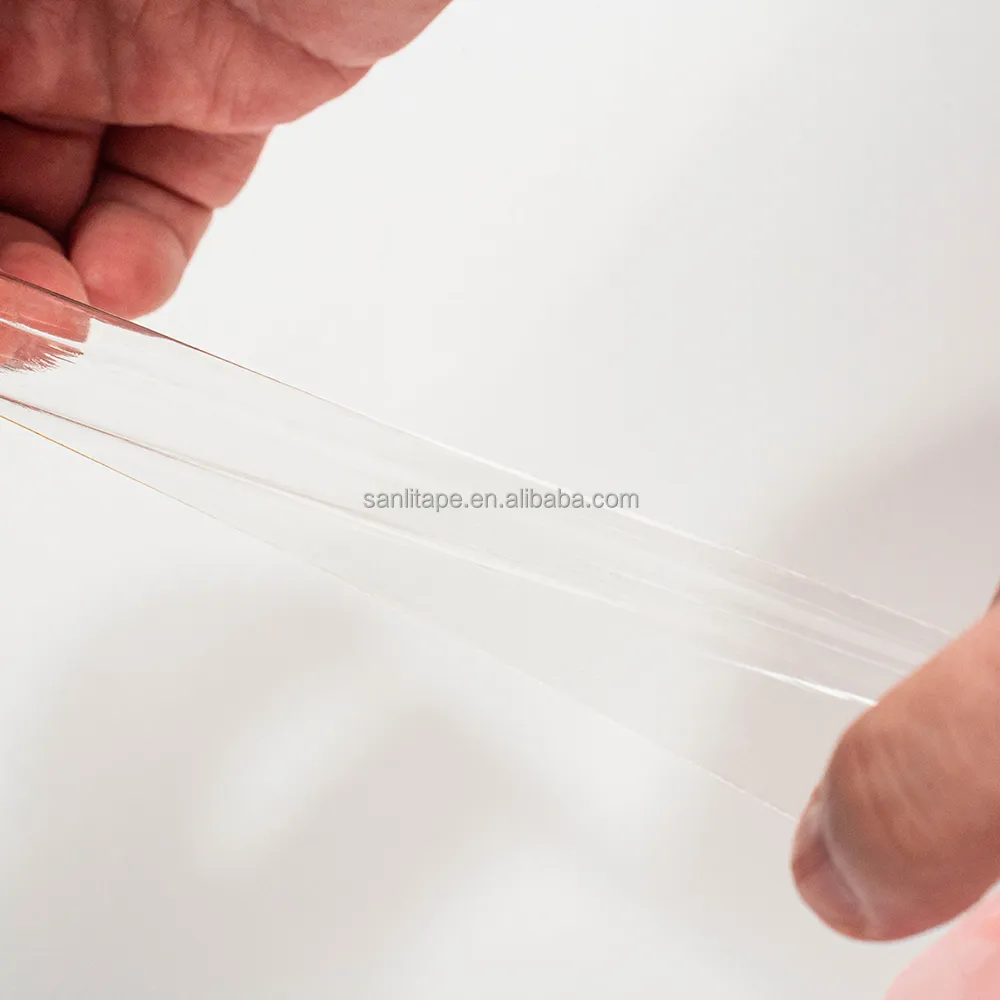
- Test for transparency and whiteness.White adhesive tape should have a uniform matte or semi-matte finish. The presence of yellowness indicates the old age of the raw material or a violation of the polymerization technology. Transparency (for transparent analogues) is checked by applying two layers: there should be no turbidity or bubbles. In our practice, we came across a batch where the tape had a marbled effect due to poor mixing of the pigment - this is a sign of a violation of the recipe, which directly affects the strength.
- Tack test.Press a piece of tape with your finger onto a clean surface of the corrugated cardboard and give it a sharp tug. A good glue should leave a characteristic tearing sound and traces of destruction of the top layer of cardboard (if the cardboard is not coated). If the tape comes off cleanly, without fibers, adhesion is insufficient. Also check for residual stickiness: apply the tape, leave for 10 minutes and try to remove. It should not leave a lot of glue on the surface, but it should not fly off on its own.
- Length measurement (selective).This is the most painful point for suppliers. Don't blindly believe "66 meters" on the label. Select 3 random rolls from the lot and weigh them. Compare the weight to a reference sample from a reputable manufacturer of the same stated length. A weight difference of more than 5-7% downward is a red flag. Often instead of 66 meters there are 55-58 meters. We once accepted a batch without weighing, and the recount showed an underweight of 12% for the entire batch, which voided the entire discount.
- Checking the cut edge.Look at the edge of the tape as you unwind. It should be smooth, without nicks or fringes. An uneven edge indicates dull knives when slitting the blade. This tape will tear with use and may damage the packaging head mechanism.
A common mistake: many buyers only check the first roll from the top of the pallet. Unscrupulous suppliers know about this and put a “commodity” sample on top, and pack defective or underweight parts inside the pallet. Always request access to the bottom rows of the pallet for spot checks.
If the supplier refuses to let you cut the roll for inspection or weigh it, this is a sign that he has something to hide. An honest manufacturer, such as Enping Sanli Adhesive, is confident in its product, which has passed strict quality control according to ISO standards, and is calm about such tests.
Frequently Asked Questions
What is the minimum quantity for wholesale purchase?
For most factories and large distributors, the minimum shipment starts from 1 box (usually 36-48 rolls) or 50 kg of weight. Some Chinese factories require an order of 1 pallet (about 350-400 kg) to maintain the factory price. Purchasing smaller volumes often transfers the transaction to the “small wholesale” category with a 20-30% markup. To start cooperation, we recommend ordering a trial batch of 1-2 boxes of different types in order to test the equipment before scaling up the purchase.
Does storage temperature affect the properties of white tape?
Yes, and very much so. Acrylic glue, which is used in 95% of modern packaging, is sensitive to cold. At temperatures below +10°C, adhesion drops by 30-40%. The tape should be stored in a dry room at a temperature from +15°C to +25°C. If you bought the tape in the winter and it froze in the car upon delivery, let it sit in a warm warehouse for at least 24 hours before using it. Trying to apply cold tape will result in it simply not sticking or peeling off after an hour. This is a common problem in the northern regions, which logisticians forget about.
Is it possible to print a logo on white tape cheaply?
Printing on white ribbon is possible, but the word “cheap” here only applies to large print runs. The minimum print run (flexography) is usually from 500 to 1000 kg (several pallets), as it requires the production of photopolymer forms and setting up the printing machine. For small quantities (up to 100 kg) the cost of printing will make the ribbon gold. An alternative for small businesses is to use ready-made white tape with a universal stamp applied manually, or buy colored tape (red, blue), which is not much more expensive than white, but looks more presentable.
What is the difference between a manual dispenser tape and a machine tape?
The main difference is the unwinding force and the presence of a silicone layer. The machine tape has a special layer that allows it to unwind easily and quickly at high speeds (up to 60 m/min) without jerking. The manual tape is more “viscous”; it unwinds with force, which is convenient for a person, but unacceptable for an automatic machine - the machine will either tear it or stop due to a sensor error. Использование ручной ленты на автомате — верный способ вывести оборудование из строя или снизить производительность в разы.
Итоговое резюме и стратегия закупки на 2026 год
Рынок упаковочных материалов в 2026 году требует от закупщика не просто умения торговаться, а глубокого понимания технических характеристик. Фраза «дешево белая клейкая лента» перестала быть просто поисковым запросом и стала индикатором риска. Как мы выяснили, реальная экономия достигается не за счет поиска самого низкого ценника за рулон, а за счет правильного подбора параметров под конкретную задачу, исключения брака и оптимизации логистики.
Мы настоятельно рекомендуем отказаться от практики закупки «на глаз». Внедрите входной контроль по предложенному нами чек-листу. Требуйте от поставщиков предоставления протоколов испытаний и сертификатов ЕАС. Помните, что надежность упаковки — это лицо вашей компании в глазах клиента. Раскрытая коробка с поврежденным товаром стоит неизмеримо дороже, чем разница в цене между качественным и дешевым скотчем.
Если вы ищете надежного партнера для регулярных поставок, который готов подтвердить качество документами и обеспечить стабильность цен, рассмотрите возможность прямого сотрудничества с проверенными производителями. Компании с многолетней историей, такие как ООО «Энпинг Санли Адхесив», предлагают не просто товар, а комплексные решения: от широкого ассортимента лент BOPP и двусторонних клеевых материалов до индивидуальной адаптации свойств под ваши нужды (OEM/ODM). Их продукция, сертифицированная по ISO, гарантирует высокую адгезию и устойчивость к внешним факторам, что критически важно в современных условиях логистики.
Каталог белой клейкой ленты с ценами и характеристиками— изучите полный ассортимент и скачайте технические паспорта прямо сейчас. Свяжитесь с нами сегодня для получения индивидуального коммерческого предложения и бесплатных образцов для тестирования на вашем оборудовании.