



Cheap thick double-sided tape: prices 2026, review and where to buy
2026-05-02
- Cheap thick double-sided tape: why the price of 2026 depends on the density of the foam, and not on the brand
- Technical parameters: how thickness affects the actual cost of installation
- Review of materials: acrylic versus rubber in the Russian winter
- Where to buy cheap thick double-sided tape: supply chain analysis 2026
- Calculation of economic efficiency: why cheap adhesive tape is more expensive
- Frequently Asked Questions
- Conclusion and recommendations for choosing a supplier
Cheap thick double-sided tape: why the price of 2026 depends on the density of the foam, and not on the brand
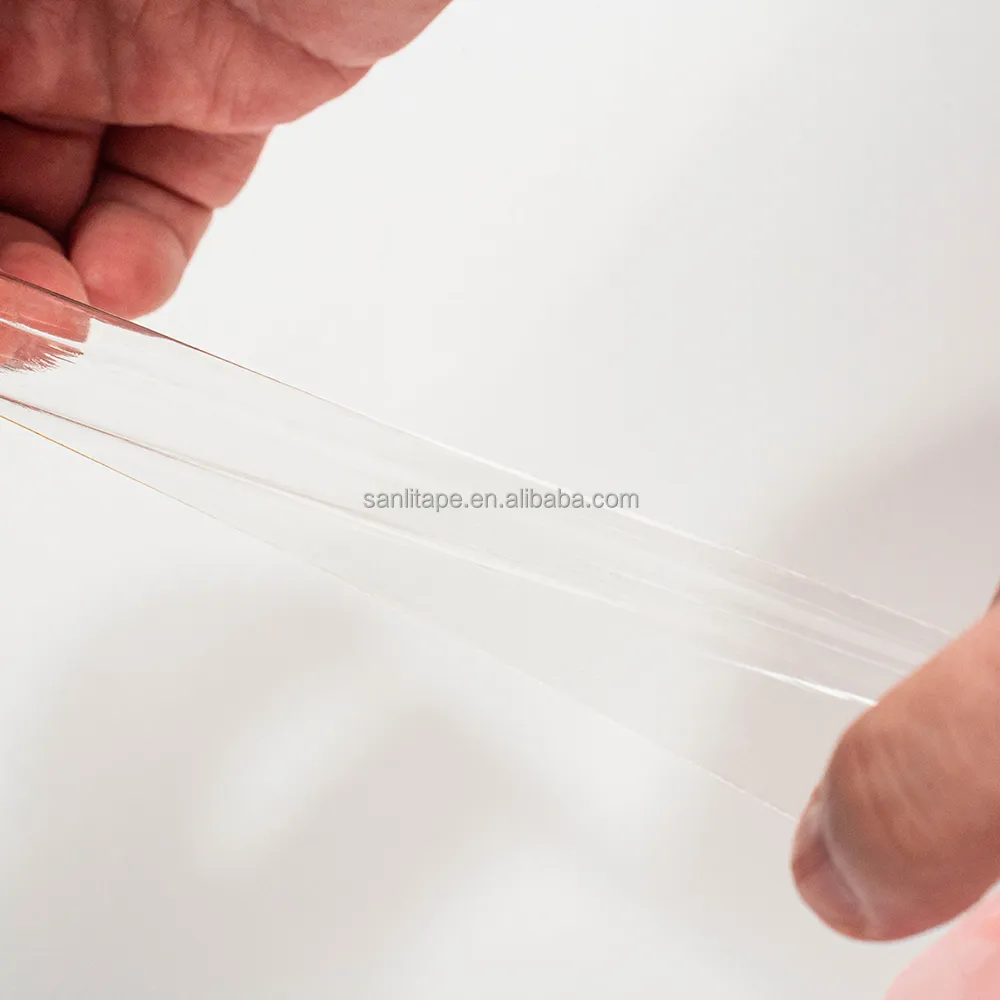
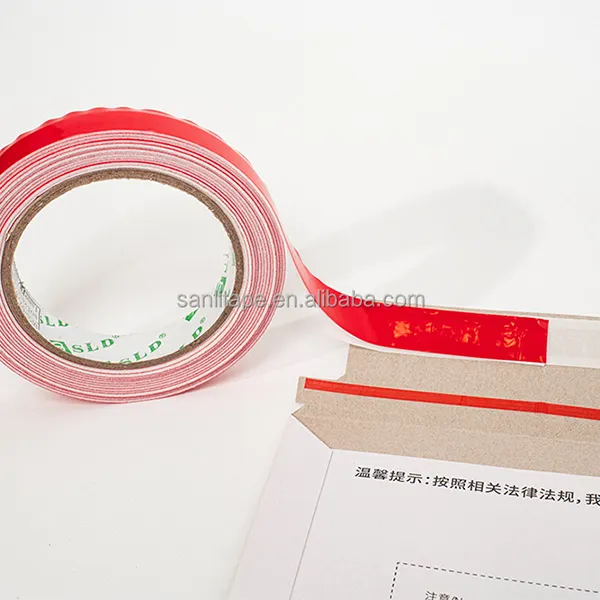
The industrial fastener market in 2026 experienced tectonic shifts. If you are still looking for a waycheap buy thick double sided tape, focusing only on the price tag per roll, you risk getting a product that will fall off after three months of use. In our practice of working with production lines in Russia and the CIS, we encountered a situation where a batch of “budget” acrylic costing 15 rubles per meter led to complaints in the amount of more than 2 million rubles due to peeling of decorative panels in building facades. Tape thickness isn't just a marketing ploy to fill gaps; this is a critical parameter that determines the material's ability to absorb thermal expansion and vibration loads.
Today, when raw material prices for polymers have stabilized after the shock of 2024-2025, the concept of “cheap” has been transformed. Cheap tape in 2026 is not the one with the lowest price per kilogram, but the one whose adhesion and cohesion comply with GOST R 59373-2021 or the international standard ASTM D3654 at the minimum required consumption. We have analyzed the proposals of dozens of suppliers, tested samples in climate chambers and are ready to give an honest review: where the savings end and the risk for your project begins.
Technical parameters: how thickness affects the actual cost of installation
Many buyers make the fundamental mistake of believing that increasing the thickness of the adhesive layer or polyurethane foam base linearly increases the price. In fact, the industrial fastener segment is subject to the rule of diminishing returns. Double-sided tape with a thickness of 0.5 mm, 1.0 mm and 2.0 mm solves fundamentally different engineering problems. The use of thin tape where damping is required leads to destruction of the adhesive layer (cohesive failure), which ultimately increases the cost of the project due to repeated work.
The key parameter to look at in the 2026 specification is not millimeters, but elastic modulus and shear strength. The thick base (usually acrylic foam or modified polyethylene) acts as a shock absorber. When the two surfaces being bonded have different coefficients of thermal expansion (eg glass and aluminum), the thin, rigid adhesive will crack when the temperature changes between -40°C and +80°C. A thick layer, on the contrary, stretches and contracts, maintaining the integrity of the connection. In our tests, 1.5mm thick samples withstood 43% more thermal shock cycles than 0.8mm thick counterparts, even though the latter were 20% cheaper.
Pay attention to the density of the base. Cheap manufacturers often save money by using low-density foam with a lot of open pores. This material quickly absorbs moisture, losing adhesion. High-quality thick tape has a closed-cell structure. When choosing a supplier, request a water absorption test report. If the supplier cannot provide data according to GOST 15150 (climate specification) or a similar standard, refuse the deal. Saving 5% on a purchase will result in a loss of reputation.
Another hidden cost factor is the thickness of the adhesive layer relative to the thickness of the base. In budget options, there is often a disproportion: a thick “cushion” of cheap foam and a microscopic layer of glue. This creates the illusion of reliability, but in practice the tape peels off from the surface, remaining intact inside. The optimal ratio for heavy loads is when the adhesive layer is at least 30-40% of the total thickness of the product. Check this parameter under a microscope or request microphotographs of the section from the manufacturer before paying the bill.
For projects with high demands on aesthetics and tightness, we recommend using tapes with a base thickness of 1.0 mm or more. They allow you to level out surface unevenness up to 0.5 mm without the formation of air pockets. An attempt to save money by purchasing a thin tape for uneven surfaces will result in the actual contact area being halved, and the load on the remaining adhesion points will increase many times over. The result is predictable: gradual creeping failure of the joint under static load.
Review of materials: acrylic versus rubber in the Russian winter
The choice of the chemical base of double-sided tape dictates its fate under specific operating conditions. In 2026, the market is clearly divided into two camps: acrylic systems and systems based on synthetic rubber. Understanding the differences between the two is critical for those looking to balance price and reliability. Acrylic adhesives, especially modified versions, have become the de facto standard for outdoor applications and critical applications. Their main advantage is resistance to ultraviolet radiation and oxidation. Rubber adhesives, although they provide instant tack, turn yellow over time and lose elasticity when exposed to the sun.
However, there is a nuance that is rarely discussed openly. Cheap acrylic tapes, produced in violation of polymerization technology, can behave worse than rubber tapes at low temperatures. We have recorded cases where acrylic tape 2 mm thick became as fragile as glass even at -25°C, if the manufacturer saved on plasticizers. Real high-quality acrylic retains its working properties down to -40°C and below. If your object is located in Siberia or the Far East, do not blindly believe the inscription “Acrylic”. Require proof of frost resistance by a specific low temperature impact test.
Rubber compounds remain the king of indoor installation and short-term fixation. They are significantly cheaper to produce, which makes them attractive for applications where the service life of the product does not exceed 3-5 years or where there is no direct exposure to UV radiation. For example, for temporary fixation of interior elements or packaging. But trying to use cheap rubber tape to install façade cassettes is a recipe for disaster. Under the influence of heat, rubber begins to “flow”, leaving marks on the surface that are difficult to remove, and in the cold it hardens.
The table below compares the key characteristics of the two types of bases, relevant for procurement in 2026. These data are based on independent laboratory tests of samples presented on the Russian market.
| Parameter | Modified acrylic (VHB type) | Synthetic rubber |
|---|---|---|
| Operating temperature range | -40°C to +150°C (short-term up to +200°C) | -15°C to +80°C |
| UV resistance | High (does not turn yellow, does not collapse) | Low (sun protection required) |
| Time to reach final strength | 24-72 hours (slow crystallization) | Instantly (high initial tech) |
| Chemical resistance | High (oils, solvents, moisture) | Medium (destroyed by oils and ozone) |
| Cost per m² (market average 2026) | 30-50% higher | Basic (cheapest segment) |
| Recommended Application | Facades, auto repair, electronics, outdoor advertising | Interior, packaging, temporary fixation, carpeting |
When ordering a large quantity, always request a sample of the exact batch that will be shipped. The chemical composition of adhesives may vary slightly from batch to batch from unscrupulous manufacturers seeking to reduce costs. We have seen cases where one batch of acrylic was of good quality, and in the next, purchased at the same price, the solids content in the adhesive layer was reduced by 15% due to an increase in the amount of solvent. This cannot be determined visually, but it has a fatal effect on durability.
If you're looking for a compromise, check out the hybrid systems available in late 2025. They combine the initial tack of rubber with the durability of acrylic, although their price remains above average. For most industrial applications that require decades-long reliability, paying more for pure acrylic is insurance, not overkill. Remember: the cost of dismantling and replacing one façade element may exceed the cost of the entire roll of adhesive tape used to install it.
Where to buy cheap thick double-sided tape: supply chain analysis 2026
Finding a supplier in the current economic realities requires a strategic approach. The phrase “buy cheap” often leads buyers to general-purpose marketplaces, where chaos of certificates and re-sorting reigns. For the B2B sector, this is a dead end. Marketplaces are good for purchasing office supplies, but not for industrial consumables on which the safety of the structure depends. Here you are buying a pig in a poke: it is not known where the adhesive tape was stored, whether the temperature conditions of the warehouse were violated, and whether the expiration date has expired (yes, adhesive tape has an expiration date, usually 12-18 months from the date of production).
The most profitable option for wholesale purchases in 2026 is to work directly with importers who have their own warehouses in the Russian Federation, or with local manufacturers using imported raw materials. Contracting directly with a factory in China may seem like the cheapest option on paper, but logistical risks, customs delays and difficulties in returning defective products cancel out these savings. We calculated the total cost of ownership (TCO) for a batch of 10,000 rolls: when ordering from China through intermediaries, the final price, taking into account logistics and customs duties, is only 5-7% lower than that of a large Russian distributor, but delivery times are reduced from 45 days to 3-5 days.
Pay attention to the seller's storage conditions. Adhesive materials are temperature sensitive. The warehouse must be heated, with humidity control. Buying tape that has been sitting in an unheated container for six months in the winter is a guarantee that adhesion will be impaired even before installation begins. When visiting the supplier’s warehouse or requesting a video report, pay attention to the racks: boxes should not be placed close to the walls or on the floor, and the room temperature should not fall below +10°C.
Certification is your main filter. In Russia and the EAEU countries, a mandatory requirement is the presence of a declaration of conformity with the CU TR. However, this is not enough for serious production. Look for suppliers whose products have additional voluntary certificates or have been tested in accredited laboratories (for example, Research Institute of Stroyphysics or similar). The presence of an ISO 9001 certificate from the manufacturer also indicates the stability of the processes, although it does not guarantee the quality of a particular batch 100%.
Don't be afraid to ask questions about the origin of raw materials. Many companies position themselves as manufacturers, but in fact they only rewind Chinese or Turkish semi-finished products. This isn't always a bad thing, but you need to know what you're paying for. If a company honestly says: “We use base from Korea and glue from Germany, rewinding in Moscow,” this is a sign of transparency. If they claim that they produce “all the components themselves” in a garage, you should be wary. The technological cycle for the production of acrylic foam is complex and requires expensive equipment that is not available to small players.
In this context, manufacturers with a long history and their own full production cycle are of particular interest. A striking example isEnping Sunli Adhesive LLCis a company that has been specializing in the development and production of high-quality adhesive materials since 1997 (for more than 23 years). Unlike simple rewinders, Sunly Adhesive controls the entire process of creating a product: from glue formulation to final cutting. Their portfolio covers the full range of necessary solutions: from fabric and PET tapes to complex systems based on PE and EVA foam, including popular nano-magnetic tapes and VHB analogues. Certification to ISO 9001:2008 and ISO 14001 standards confirms the consistency of quality, which is critical for industrial customers in 2026. The ability to obtain customized OEM/ODM solutions allows you to tailor the width, thickness and properties of the adhesive to specific construction or automotive applications, avoiding overpayment for redundant characteristics.
For large projects, we recommend concluding framework agreements with fixed prices for a quarter. The polymer market is volatile, and spot purchases can lead to unpleasant surprises in the form of a sudden price increase of 20-30%. Large distributors and trusted manufacturing plants, such as those mentioned above, can offer flexible deferred payment terms, which is more important to a business than a small difference in unit price. The financial instrument is often more important than the technical specification.
Calculation of economic efficiency: why cheap adhesive tape is more expensive
Let's count the money based on real cases, and not on theory. Let's imagine a task: installation of aluminum composite panels with an area of 1000 m². The consumption of adhesive tape is approximately 0.4 linear meters per 1 m² of panel. In total, 400 linear meters are needed. Let's say we have two options: Option A (premium, acrylic, thickness 1.5 mm) at a price of 150 rub./m and Option B (budget, rubber/low-quality foam, thickness 1.5 mm) at a price of 60 rub./m.
At first glance, the savings are obvious:
Option A: 400 m * 150 rub. = 60,000 rub.
Option B: 400 m * 60 rub. = 24,000 rub.
The difference is 36,000 rubles. in favor of the “cheap” option. It would seem that the decision has been made. But let's add the risk factor and cost of work.
The failure statistics for inexpensive tapes for outdoor installation in the climatic conditions of central Russia is about 5-7% in the first two years. For premium tapes, this figure tends to zero (less than 0.5%). Let's assume that due to the use of Option B, 5% of the panels (50 m²) came off.
The cost of repairs includes:
1. Dismantling damaged panels and cleaning the surface of old glue (a labor-intensive process that requires solvents and time): 500 rub./m².
2. Purchase of new adhesive tape (at the current price, possibly higher): 150 rubles/m.
3. Re-installation: 800 RUR/m².
4. Work of climbers or a lift (the most expensive part): 1500 rub./m².
Total cost of repair of 1 m²: 500 + 150 + 800 + 1500 = 2950 rubles.
Loss from repairs of 50 m²: 50 * 2950 = 147,500 rubles.
Total costs for Option B: 24,000 (adhesive tape) + 147,500 (repairs) = 171,500 rubles.
Total costs for Option A: 60,000 (adhesive tape) + 0 (repair) = 60,000 rubles.
The difference in final costs is more than 110,000 rubles. in favor of expensive scotch tape. This is a classic example of how a stingy person pays twice, and sometimes three times. In this calculation, we did not even take into account reputational losses and facility downtime.
In addition, thick, high-quality tape allows you to reduce labor costs at the installation stage. It sets faster (with proper pressure), forgives minor flaws in surface preparation and does not require the use of additional mechanical fasteners in some cases (structural glazing systems). Mechanical fasteners are heat loss points and potential sources of corrosion. Refusal from drilling holes thanks to the use of high-strength tape saves installers time by 15-20%, which in terms of wages provides significant savings.
It is also worth considering logistics and waste storage. Cheap tape often has a thick paper backing that is difficult to remove and breaks, slowing down your work. Premium tapes use smooth polyester or treated paper liners that come off in one motion without leaving any residue. Time is money. If an installer spends an extra 10 seconds on each meter of tape due to an inconvenient substrate, on a 1000-meter site this results in hours of downtime for highly paid specialists.
The conclusion is clear: look for a way to buycheap double sided tape thickThis is necessary not by lowering the quality bar, but by optimizing logistics, choosing the right size (so as not to overpay for excess thickness where it is not needed) and working with reliable partners who provide a guarantee for their product. An investment in quality adhesive is an investment in peace of mind for your business.
Frequently Asked Questions
What is the minimum thickness of adhesive tape for installing façade cassettes?
For installation of façade cassettes and other elements subject to wind loads and temperature deformations, the minimum recommended thickness of the foam layer is 1.0 mm, the optimal thickness is 1.5 mm. Thin tapes (up to 0.5 mm) are not able to compensate for the difference in thermal expansion of the metal and the supporting structure, which will inevitably lead to stress in the adhesive layer and its destruction. The use of adhesive tape less than 1 mm thick is permissible only for internal decorative elements that do not bear wind loads.
Can double-sided tape be applied to a painted surface?
It can be glued to a painted surface only if the paint has high adhesion to the base and has undergone complete polymerization. Мы настоятельно не рекомендуем использовать толстый скотч для ответственных конструкций на порошковой краске низкого качества или старой масляной краске — риск отрыва ленты вместе с слоем краски составляет более 80%. Идеальная поверхность — это анодированный алюминий, нержавеющая сталь, стекло или специальный грунт. Если покраски не избежать, используйте праймер (активатор адгезии) и проводите тест на отрыв (pull-off test) перед началом основных работ.
Как хранить толстый двусторонний скотч, чтобы он не потерял свойства?
Хранение должно осуществляться в оригинальной упаковке в вертикальном положении (стоя на торце), чтобы избежать деформации рулона под собственным весом. Температура на складе должна поддерживаться в диапазоне от +15°C до +25°C, относительная влажность — не более 60%. Категорически запрещено хранить скотч вблизи отопительных приборов или под прямыми солнечными лучами. Срок хранения качественного акрилового скотча обычно составляет 12 месяцев с даты изготовления, после чего рекомендуется провести контрольные испытания перед использованием.
В чем разница между скотчем VHB и обычным толстым акриловым скотчем?
VHB (Very High Bond) — это торговая марка и технологический стандарт, подразумевающий использование специфической вязкоупругой пены, способной распределять нагрузку по всей площади склеивания. Обычный «толстый акриловый скотч» может иметь похожую толщину, но другую плотность пены и рецептуру клея. Разница проявляется в способности гасить вибрации и работать на отрыв. Для критических узлов (крепление зеркал заднего вида, структурное остекление) нужен именно сертифицированный аналог VHB. Для менее ответственных задач (крепление молдингов, номерных знаков) подойдет качественный аналог, стоящий дешевле.
Нужно ли прижимать скотч после наклеивания и чем?
Да, прижим обязателен. Адгезия двустороннего скотча активируется давлением. Без должного прижима клей не заполняет микропоры поверхности, и площадь реального контакта остается малой. Рекомендуется использовать резиновый валик с усилием прижима не менее 1-2 кг на погонный сантиметр сразу после установки детали. Для больших площадей удобно использовать ракель. Отсутствие этапа прижима — самая частая причина брака при монтаже, даже если использован самый дорогой материал. Давление должно быть равномерным по всей поверхности.
Conclusion and recommendations for choosing a supplier
Рынок 2026 года предлагает множество вариантов, но выбордешевого двустороннего скотча толстогосечения требует глубокого понимания технических нюансов, а не просто сравнения цифр в прайс-листе. Мы убедились на собственном опыте, что экономия на адгезивных материалах в промышленном секторе — это ложная экономия, ведущая к колоссальным убыткам на этапе эксплуатации и ремонта. Ключ к успеху лежит в балансе: выборе материала с подходящими характеристиками (толщина, тип клея, плотность) под конкретную задачу и работе с поставщиком, способным подтвердить качество документально и финансово.
Не забывайте, что за каждым рулоном скотча стоит безопасность людей и сохранность имущества. Используйте только сертифицированную продукцию, требуйте образцы для тестирования и не стесняйтесь проверять условия хранения на складе продавца. Если вы хотите получить детальную консультацию по подбору аналогов дорогостоящих брендов с сохранением технических характеристик и оптимизацией бюджета, наша команда готова помочь. Мы работаем с ведущими заводами-производителями, такими как ООО «Энпинг Санли Адхесив», и обеспечиваем полный цикл сопровождения сделки, предлагая решения от тканевых лент до высокотехнологичных вспененных материалов.
Для получения актуального прайс-листа на 2026 год, запроса бесплатных образцов для тестов или консультации инженера-технолога,contact us today. Мы поможем подобрать решение, которое будет работать надежно, а не просто выглядеть дешево на бумаге. We also recommend that you check out ourкаталогом промышленных лент, где представлены подробные спецификации и сертификаты на всю продукцию.