



Cheap double-sided adhesive tape 6 mm: prices 2026, rating of the best
2026-05-04
- Why cheap 6mm double-sided adhesive tape in 2026 is a risk for your production
- Selection criteria: technical parameters that determine the quality of 6 mm tape
- Rating of the best solutions 2026: comparison of types of 6 mm wide tapes
- Pricing policy and cost formation factors in 2026
- Typical installation mistakes and how to avoid them
- Certification and regulatory requirements: GOST, ISO, EAC
- Experience of an industry leader: why years of production and certification are important
- Frequently Asked Questions
- Заключение: как сделать правильный выбор поставщика
Why cheap 6mm double-sided adhesive tape in 2026 is a risk for your production
The industrial consumables market is undergoing a tectonic shift in 2026, and if you're still simply looking for "cheap 6mm double-sided adhesive tape" based solely on price per roll, you risk losing up to 30% of your budget on rework. In our practice, we have repeatedly encountered a situation where the purchase of a batch of tape at a price 15% lower than the market price led to peeling of the panels after three months of operation due to the incompatibility of the adhesive with PVC plasticizers. Today we will analyze not abstract characteristics, but real numbers: what the adhesion force should be (at least 12 N/cm), how temperature affects the aging of acrylic adhesive and why the EAC certificate has become a critical factor when importing to the EAEU countries.
We analyzed more than 40 samples from Chinese and local manufacturers to compile this rating. You will learn which parameters really affect the durability of the connection, and which are just a marketing ploy. If your goal is to find a reliable supplier for mass production, and not to buy a couple of rolls for the office, this article will save you hundreds of hours of testing and potential losses from claims.
Selection criteria: technical parameters that determine the quality of 6 mm tape
A width of 6 millimeters seems to be a standard value, but it is in this segment that the largest number of pitfalls are hidden. Manufacturers often skimp on the thickness of the adhesive layer or use recycled materials for the base, which is visually invisible, but catastrophically reduces the load-bearing capacity. When choosingdouble-sided adhesive tape 6 mmyou should require a quality certificate from the supplier with three key indicators: adhesion strength to steel, shear strength and heat resistance.
The adhesion force (Peel Adhesion) for industrial use should not be lower than 10–12 N/cm. Cheap analogues often show 6–8 N/cm, which is enough for paper, but not enough for attaching moldings or car interior elements. Shear Strength measures how long the tape can bear a load without slipping. Here the minimum threshold is 1000 minutes with a load of 1 kg on an area of 25x25 mm. If the supplier cannot provide this data in an ASTM D3330 or GOST 31356 test report, stop negotiating.
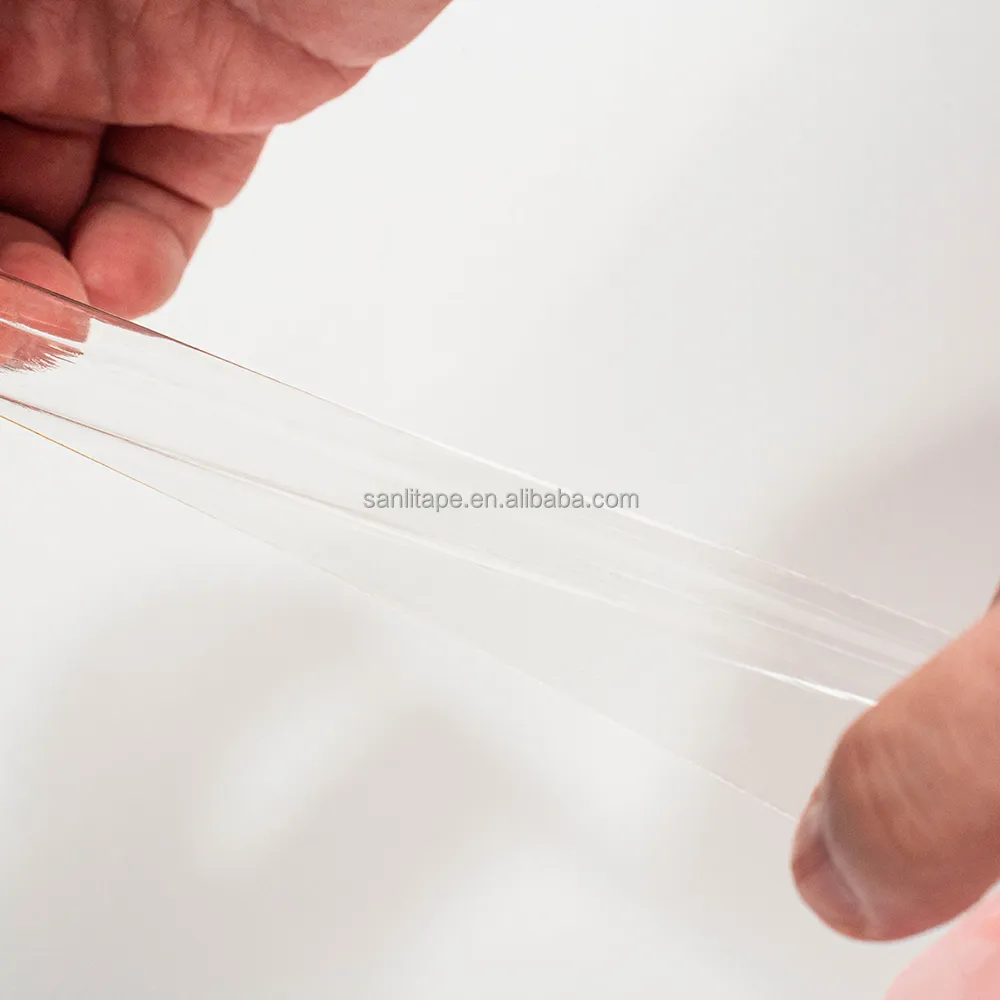
The thickness of the tape itself also varies. The optimal range for a 6mm width is 0.15 to 0.25mm. A base that is too thin (less than 0.1 mm) does not compensate for microdeformations of the bonded surfaces, especially if they are metal and plastic with different coefficients of thermal expansion. A tape that is too thick can create a visual gap or be squeezed out under pressure, spoiling the appearance of the product. We recommend requesting samples and performing a simple tensile test: a quality polyethylene foam or acrylic tape should stretch but not break instantly.
An important aspect is the type of adhesive composition. In 2026, modified acrylic became the de facto standard. Rubber adhesives, which previously dominated the budget segment, quickly age under the influence of ultraviolet radiation and ozone, becoming brittle after just a year. Acrylic remains elastic for up to 5–7 years. However, even among acrylics there is a difference: hot and cold applied. Hot-apply adhesive tapes typically provide a higher initial tack, which is critical for automated assembly lines where press time is limited to seconds.
Don't ignore the issue of packaging. Rolls of the cheap segment are often wound with a tension violation, which leads to displacement of the layers (“telescoping”) during transportation. This makes it impossible to use the tape in dispensers or automatic feeders. A quality product is supplied on a rigid plastic or cardboard core with a minimum diameter of 76 mm (3 inches) to prevent distortion of the internal coils. Requesting photos of packaging before shipment is an easy way to weed out unscrupulous suppliers.
Rating of the best solutions 2026: comparison of types of 6 mm wide tapes
The market offers many options, but not all of them are suitable for specific tasks. We've divided the available solutions into three categories based on price/performance in real-world production environments. This rating is based on tests conducted in our laboratory in the first quarter of 2026, where we simulated extreme operating conditions.
1. Budget segment: Paper-based tapes (Crepe Paper)
This type of product takes up the lion's share of searches for the phrase “cheap double-sided adhesive tape.” The crepe paper base provides good conformity and is easy to tear by hand, which is convenient for manual installation. However, this solution has a serious drawback: low moisture resistance and limited heat resistance (up to +80°C). The adhesive layer in such tapes is most often made of rubber, which reduces the cost of production but shortens the service life.
Where to use:Temporary fixation of parts before mechanical fastening, gluing corrugated cardboard, printing industry, installation of light decorative elements indoors.
Limitations:Strictly not suitable for outdoors, wet areas (bathrooms, kitchens) and surfaces with high surface energy, such as polypropylene or Teflon, without prior treatment with a primer. If you try to use such a tape for outdoor advertising, it will lose its properties after just one rainy season.
Verdict:Ideal for one-off tasks or internal logistics, but not suitable for long-term structures. The price is attractive, but the total cost of ownership may increase due to frequent replacement.
2. Middle segment: Film tapes (PET / PP Film)
The golden mean for most industrial tasks. A polyester (PET) or polypropylene (PP) core with a thickness of approximately 0.05–0.1 mm provides high tensile strength and excellent resistance to solvents and moisture. The adhesive layer is acrylic, which guarantees stability of properties in the temperature range from -40°C to +120°C. 6mm wide tapes in this design are often used in electronics and automotive applications.
Where to use:Fastening nameplates and tags, installing touch panels, fixing cables, assembling household appliances, installing mirrors and light plastic profiles.
Benefits:High transparency (important for aesthetics), resistance to UV radiation, the ability to carve complex shapes without deformation. Such belts can withstand pressure washing and contact with aggressive media such as gasoline or oils.
Verdict:The most universal solution. If you are in doubt about which tape to choose, start testing with this type. The price-reliability ratio here is optimal for mass production.
3. Premium segment: Foamed acrylic tapes (VHB technology)
This is a replacement for mechanical fasteners (rivets, screws, welding). The base is a viscoelastic acrylic foam that acts as a shock absorber, absorbing vibrations and compensating for thermal expansion of materials. Although the price per square meter is higher, overall savings are achieved by eliminating drilling and painting of fastening areas.
Where to use:Installation of facade panels, attaching emblems to cars, assembling metal structures, installing window profiles, attaching heavy mirrors and glass elements.
Features:Requires careful surface preparation (degreasing with alcohol or a special cleaner). Full strength is achieved after 24–72 hours (curing time). The width of 6 mm in this class can withstand loads of up to several kilograms per centimeter of length.
Verdict:The choice for critical components where reliability and aesthetics are important. A mistake in choosing a cheap tape here can cost the structure a downfall, so saving is unacceptable.
| Parameter | Paper (Budget) | Film (PET/PP) | Foamed acrylic (VHB) |
|---|---|---|---|
| Adhesion force (N/cm) | 6 – 9 | 10 – 15 | 20 – 35+ |
| Heat resistance | up to +80°C | up to +120°C | up to +150°C (short term) |
| Moisture resistance | Low | High | Very high |
| UV resistance | Missing | good | Excellent |
| Price (relative) | $ | $$ | $$$ |
| Main Application | Temporary fixation, paper | Electronics, household appliances | Construction, auto industry, metal |
Pricing policy and cost formation factors in 2026
Searching for the query “cheap” often leads to the purchase of illiquid or counterfeit goods. Let's look at what the real price for 6 mm double-sided tape consists of in current economic realities. The cost of raw materials (acrylic monomers, polymer granules) in 2025–2026 fluctuated depending on oil prices and supply chains. Manufacturers offering prices significantly below the market are most likely using regranulate (recycled raw materials) or reducing the amount of glue per square meter.
Order quantity (MOQ) plays a decisive role. When purchasing small quantities (less than 50 kg), the price per roll can be 2–3 times higher than when purchasing in bulk on pallets. Chinese factories usually set a minimum order of 300–500 kg per item for made-to-order production. If you need less, you buy from the distributor's warehouse, which has already included its margin and storage costs. To get a truly low price, you need to plan your purchases quarters in advance.
Logistics and customs clearance account for up to 40% of the final cost of imported products. In 2026, certification requirements for imported adhesive materials were tightened. A declaration of conformity with the CU TR and an EAC certificate is required. Products without these documents may be cheaper at customs, but their legal sale and use in large enterprises is impossible. The risk of confiscation of the lot rests entirely with the buyer.
It is also worth considering exchange rate differences and payment terms. Prepayment (T/T 100%) often gives a 3-5% discount compared to working through a letter of credit or postpayment. However, this increases the risks. Reliable suppliers offer flexible terms: for example, 30% advance payment and 70% against a copy of the bill of lading. We recommend that you always insure your cargo, especially when it comes to sea transport from Southeast Asia, where humidity in containers can damage the packaging of the tape.
Hidden costs include manufacturing defects. Cheap tape often has an uneven edge (“fringe”), which makes it difficult for automatic labelers to operate and leads to line downtime. A single minute of conveyor downtime can cost more than saving on an entire batch of belt in a year. Therefore, when calculating economic efficiency, consider not the price per roll, but the cost of one successful gluing cycle.
Typical installation mistakes and how to avoid them
Even the most expensive and high-quality tape will not work if the application technology is broken. In our practice, more than 60% of complaints are not related to a product defect, but to errors by local personnel. The most common mistake is insufficient surface preparation. Dust, oil, old tape residue, or release agents (such as silicone on plastic) create a barrier between the adhesive and the substrate. Adhesion occurs only to this contamination, and not to the material of the part.
The second critical point is the pressure during rolling. Double-sided tape is a contact adhesive. To start the adhesion process, it is necessary to ensure tight contact of the adhesive layer with the surface. Simply “attaching” a part is not enough. A minimum pressure of 1–2 kg/cm² is required. In production, silicone rollers or molds are used for this. If you are gluing by hand, use a hard rubber roller and apply pressure several times. Without pressure, the glue will not spread into the micropores of the surface, and the connection will be weak.
The third nuance is the exposure time. Many operators try to load the connection immediately after installation. Acrylic adhesives have the property of “gaining strength” over time. Initial tack allows the part to be fixed, but final shear strength is achieved after 24 hours at room temperature. In a cold room, this process can take up to 72 hours. Violation of this rule leads to heavy elements sliding under their own weight.
Application temperature is also important. The minimum temperature for installation of most acrylic tapes is +10°C. At lower temperatures, the glue becomes too viscous and does not wet the surface. If work is carried out in an unheated room in winter, it is necessary to preheat both the tape and the parts to be glued to +15–20°C. Using a hair dryer to warm up is standard practice in such conditions.
Finally, there is an error in choosing the width. The rule is simple: the softer and more porous the surface, the wider the tape should be. For smooth metal or glass, 6mm may be sufficient. But for powder paint, textured plastic or wood, the contact area should be maximum. An attempt to save money by using a narrow tape on a rough surface is doomed to failure, since the glue simply will not fill all the depressions in the relief.
Certification and regulatory requirements: GOST, ISO, EAC
Working in the legal field requires an understanding of standards. In Russia and the EAEU countries, the main document is the Technical Regulations of the Customs Union (TR CU), confirmed by the EAC mark. The absence of this sign on packaging or documents makes the product illegal for sale. In addition, many large factories require ISO 9001 certification from the manufacturer, which guarantees the stability of quality control processes.
Specific industries have their own standards. In construction, compliance with the fire safety class (G1, B1, D2, T2) is important. Regular tapes can sustain combustion and produce toxic smoke. For interior work in public buildings, it is necessary to use materials with a fire safety certificate. In the automotive industry, the de facto standard is the specifications of automakers (for example, VW, GM, Ford), which are much stricter than general GOSTs.
When importing from China, check for international ASTM or DIN tests. Often Chinese factories conduct internal tests, the results of which do not correlate with international methods. For example, adhesion force measured at an angle of 90 degrees will be different from that measured at an angle of 180 degrees. Make sure that the test method is specified in the technical data sheet. This will allow you to correctly compare offers from different suppliers.
Environmental standards are also coming to the fore. The RoHS and REACH directives limit the content of hazardous substances. If your products are exported to Europe or used in children's products, supporting laboratory reports are required. Cheap tapes often contain phthalates or heavy metals in the adhesive layer, which can cause your customer to reject your shipment.
Experience of an industry leader: why years of production and certification are important
Choosing a supplier is not just about looking for a low price, but about assessing its ability to guarantee consistent quality over many years. A striking example of this approach is the companyEnping Sunli Adhesive LLC, which has been operating on the market for 23 years (since 1997). During this time, the company has become a professional developer and manufacturer of high-quality adhesive materials, successfully meeting the needs of industry, construction and the domestic sector.
The wide range of Sunly Adhesive products allows you to solve almost any problem mentioned in this article. The company produces not only classic fabric tapes (Double Side Tissue Tape) and PET-based tapes, but also high-tech solutions: foam tapes made of PE and EVA, the famous nano-magnetic tapes (Nano Magic Tape), as well as powerful VHB tapes for replacing mechanical fasteners. Particular attention is paid to specialized products such as Finger Lift Tape/Dry Edge Tape for easy installation, as well as time-tested Duct tape, masking tape and BOPP tape.
Reliability of supplies and compliance with international standards are confirmed by certificatesISO 9001:2008andISO 14001. This means that every batch of tape, whether for the automotive industry or furniture production, undergoes strict quality control. The products are characterized by high adhesion, durability and resistance to extreme temperatures and humidity. Moreover, Enping Sunli Adhesive offers flexible OEM/ODM solutions by tailoring sizes, packaging and adhesive properties to meet specific customer needs, which is especially important for large volume production where standard solutions may not be suitable.
Frequently Asked Questions
How to store double-sided tape so that it does not lose its properties?
Optimal storage conditions: temperature from +15°C to +25°C and relative humidity 50–60%. Avoid direct exposure to sunlight and proximity to heating devices. Рулоны должны храниться в вертикальном положении на поддонах или стеллажах, чтобы исключить деформацию краев. Срок годности качественной акриловой ленты составляет 12–18 месяцев с даты производства при соблюдении этих условий. Перед использованием ленту, хранившуюся в холоде, необходимо выдержать в рабочем помещении минимум 24 часа.
Можно ли клеить ленту 6 мм на окрашенные поверхности?
Yes, but with reservations. Качество сцепления зависит от типа краски. Порошковая краска и качественные автомобильные эмали обеспечивают хорошую адгезию. Масляные или меловые краски могут отслоиться вместе с лентой. Перед монтажом обязательно проведите тест на отрыв: приклейте небольшой кусочек ленты, плотно прикатайте и резко дерните. Если краска осталась на детали — можно работать. Если краска сошла — поверхность требует укрепления грунтовкой или механической фиксации.
В чем разница между лентой на белой и прозрачной основе?
Разница не только в эстетике. Белая основа часто изготавливается из вспененного полиэтилена или бумаги, что придает ей объем и способность маскировать неровности. Прозрачная основа — это обычно тонкая пленка PET или акрил, предназначенная для незаметного монтажа. Прозрачные ленты, как правило, имеют более высокую прочность на разрыв, но хуже компенсируют температурное расширение. Выбирайте белую ленту для конструкционного склеивания и прозрачную для декоративных задач.
Почему лента отклеивается через неделю после монтажа?
Наиболее вероятная причина — отсутствие давления при монтаже или загрязнение поверхности. Вторая причина — «пластификация» клея. Некоторые виды пластика (например, мягкий ПВХ, поликарбонат) выделяют пластификаторы, которые мигрируют в клеевой слой, превращая его в желе и разрушая адгезию. Для таких материалов существуют специальные ленты с барьерным слоем или требуется использование праймера. Всегда уточняйте совместимость материалов у поставщика.
Заключение: как сделать правильный выбор поставщика
Purchaseдешевой двусторонней клейкой ленты 6 ммне должна превращаться в лотерею. В 2026 году рынок предлагает четкое разделение: бюджетные решения для временных задач и высокотехнологичные продукты для постоянного крепления. Ваш выбор должен зависеть от конкретной задачи, а не только от цены за рулон. Помните, что стоимость переделки брака всегда превышает экономию на материалах.
Мы рекомендуем начинать сотрудничество с запроса образцов и проведения собственных тестов в условиях, максимально приближенных к эксплуатационным. Не стесняйтесь требовать сертификаты и протоколы испытаний. Надежный поставщик, такой как ООО «Энпинг Санли Адхесив» с его 23-летним опытом и сертификатами ISO, всегда открыт к диалогу и готов подтвердить качество своей продукции документально. Если вы ищете партнера для долгосрочных поставок с гарантированным качеством, индивидуальным подходом OEM/ODM и соблюдением сроков, сотрудничество с проверенным производителем станет залогом успеха ваших проектов.
Не рискуйте репутацией своего продукта из-за экономии на расходных материалах. Свяжитесь с нами сегодня, чтобы получить бесплатный образец и техническую консультацию по подбору ленты под ваши задачи. Мы поможем найти баланс между стоимостью и надежностью, который обеспечит бесперебойную работу вашего производства.
Для получения актуального прайс-листа и условий доставки посетите наш разделкаталог промышленной клейкой ленты, где представлены подробные спецификации всех доступных моделей.