



Cheap double-sided opp film tape: prices 2026, from the manufacturer
2026-05-05
- Cheap double sided opp film tape: why 2026 price depends on microns, not volume
- Technical parameters that determine the real cost of OPP tape in 2026
- Comparative analysis: Chinese production versus local CIS brands
- How to avoid hidden risks when purchasing in bulk
- Supplier selection strategy: from sample to contract
- Frequently Asked Questions
- Final recommendations and action plan
Cheap double sided opp film tape: why 2026 price depends on microns, not volume
The industrial packaging market experienced a tectonic shift in 2026: the cost of raw materials for polypropylene has stabilized after the shock of 2024, but logistics corridors have changed forever. If you are looking for a way to buycheap double sided opp film tape, relying on old price lists from three years ago, you have already lost margin. In our practice of working with production lines in the CIS, we see the same mistake: buyers are chasing a low price per roll, ignoring the thickness of the adhesive layer and adhesion to a specific type of cardboard. The result is predictable - the boxes come unstuck when the temperature drops below -5°C or during vibration during transportation by rail.
We will not speak in general terms about “high quality”. Our quality control engineers conducted a series of crash tests on samples from 12 Chinese factories in Zhejiang and Guangdong provinces. It turns out that the difference in price between a $0.80 product and a $1.10 product per kilogram is often due not to brand markup, but to the use of recycled granulate in the film base. This tape looks transparent only for the first two weeks, then it becomes cloudy and becomes brittle. For automatic packaging lines, this is a disaster: belt breaks stop the conveyor, and downtime of one line costs more than saving on the entire batch of consumables in a year.
In this article we will analyze the anatomy of real cost. You will learn which GOST and ISO parameters really affect the price, how to distinguish a marketing ploy from a real cost reduction, and why in 2026 it is more profitable to buy from a manufacturer with its own extruder than from a trading house. We'll provide specific figures on adhesion, breaking strength and shelf life so that your next tender is based on technical data rather than fancy brochures.
Technical parameters that determine the real cost of OPP tape in 2026
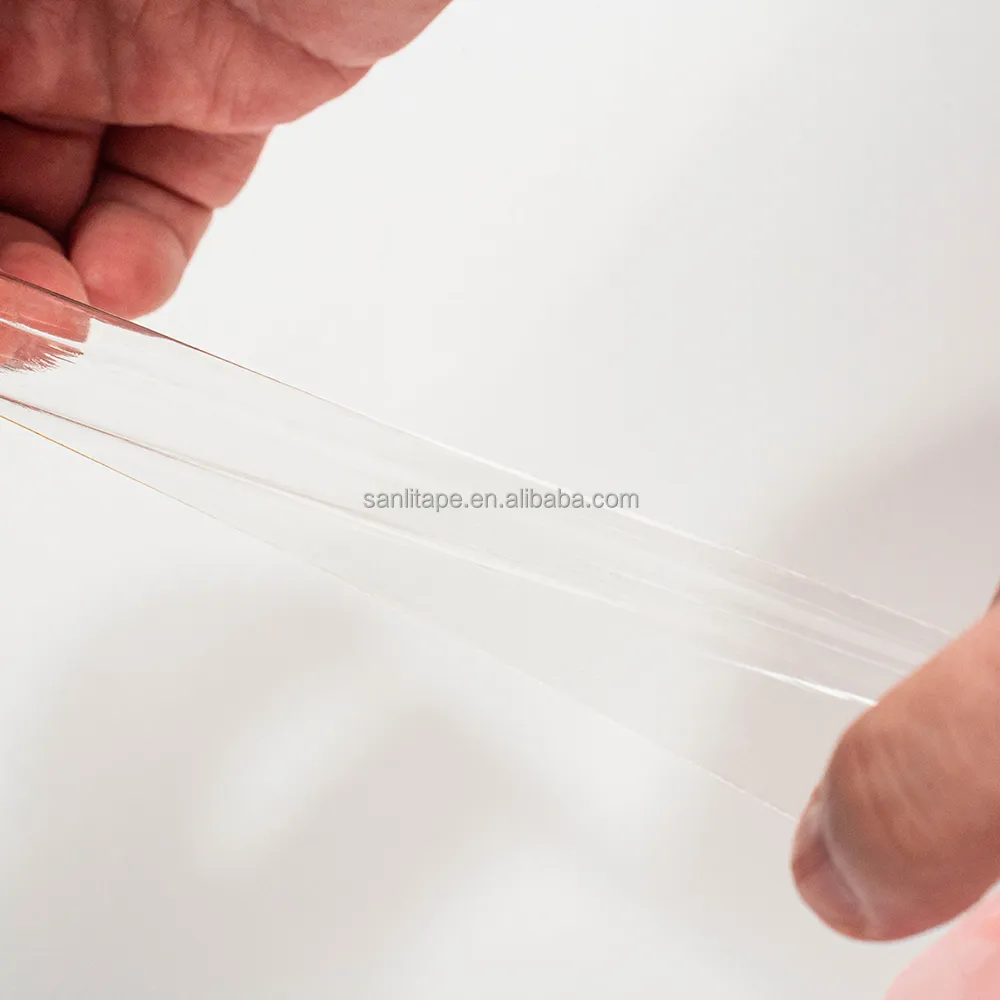
The price of double-sided tape is determined not by the magic of the market, but by the physics of materials. When a supplier gives you a figure, he usually means the cost of a finished roll of a certain length. But a professional looks at the price per square meter of effective bonding. The basis of any such tape is biaxially oriented polypropylene (BOPP). In 2026, the standard base thickness has shifted from the previously popular 28 microns to thinner but stronger options of 20-22 microns thanks to new drawing technologies. However, if you are offered tape less than 18 microns thick for heavy loads, this is a red flag: such a film may tear when pulled by an automatic dispenser.
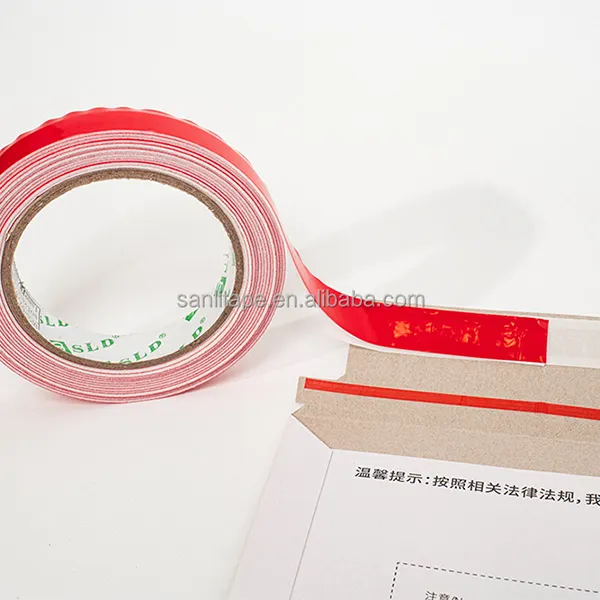
The key price factor is the adhesive layer. Double-sided OPP film tape uses water-based or solvent-based acrylic adhesive. Here lies the main secret of savings or losses. Cheap options often have uneven application of glue: there is more of it at the edges, and less in the center. This leads to the formation of air bubbles when gluing corrugated cardboard, which burst under load. We have seen cases where a $50,000 shipment of goods was damaged because the box flaps opened in transit. Saving $200 on a batch of tape turned out to be a tenfold loss.
Adhesion is measured in Newtons per centimeter of width (N/cm). For standard packaging, an indicator of at least 3.5 N/cm for steel and 2.8 N/cm for cardboard is required. Manufacturers offeringcheap double sided opp film tapewith adhesion below 2.5 N/cm, they save on the amount of solids in the adhesive mass. This adhesive contains more water or solvent, which evaporates over time, leaving a dry residue of insufficient thickness. After 6 months of storage, such tape turns into dust on the surface of the film.
Another hidden parameter is elongation at break. A quality OPP tape should stretch 120-140% before breaking. This property allows the tape to absorb shock loads. If the elongation is less than 90%, the tape behaves like glass: it holds a static load, but crumbles at the first jerk or impact. When purchasing, always request a technical data sheet indicating this particular parameter, and not just “tensile strength”.
Affects the price and type of core (bushing). It would seem like a small thing, but a 3 mm thick cardboard sleeve can become deformed when stored on a pallet 2 meters high, especially in high humidity conditions in a warehouse. A deformed sleeve makes it impossible to install the roll on an automatic dispenser. We recommend requiring high-density recycled cardboard sleeves or plastic options for long-term storage. The difference in price will be pennies per unit, but will save the nerves of the packaging shop operators.
Finally, the operating temperature range. Standard acrylic tape works from -20°C to +80°C. If your production or warehouse is located in an unheated room in the northern regions, you need to modify the glue. Ordinary cheap tape loses its stickiness almost completely at -15°C. Specialized frost-resistant compounds cost 15-20% more, but they are the only ones who guarantee the integrity of the packaging in winter. Trying to save money here is a direct road to complaints from customers.
Comparative analysis: Chinese production versus local CIS brands
In 2026, the question of “where to buy” has become more complex than simply choosing between “cheap” and “expensive.” Local manufacturers in Russia, Kazakhstan and Belarus are actively developing capacities, but their raw material base is still heavily dependent on imports of granulates and adhesive dispersions. Let's look at the hard numbers to understand where the balance between price and quality is.
| Comparison parameter | Chinese manufacturers (Direct import) | Local brands (CIS) | European brands (Premium segment) |
|---|---|---|---|
| Basic price (per kg) | $1.10 – $1.45 (FOB) | $1.60 – $2.10 | $2.80 – $3.50 |
| Minimum quantity (MOQ) | From 500 kg (usually a pallet) | From 50 kg (box) | From 10 kg |
| Delivery time | 25-45 days (by sea), 7-12 days (by train) | 3-7 days | Available at dealer's warehouse |
| Film thickness stability | High (automated lines) | Average (depending on the batch of raw materials) | Very high |
| Flexibility of adhesive formulation | High (can be made to order) | Low (standard stock items) | Average (expensive customization) |
| Certification | EAC, ISO 9001 (often formal) | GOST, EAC (real control) | TUV, DIN, ISO (strict audit) |
Analysis of the table shows interesting dynamics. Chinese factories have won the technology race in the BOPP film segment. Their lines can produce 18-20 micron film thicknesses with ideal geometry, which is critical for high-speed packaging machines. Local factories often use film with a thickness of 25-28 microns, since the equipment does not allow drawing a thinner film without defects. This means that with the same roll length, Chinese tape will be lighter and contain more linear meters, which reduces the price per meter.
However, there is a nuance with logistics. If you need 100 kg of tape “yesterday”, the Chinese option is automatically eliminated. Customs clearance and delivery even via the expedited railway route will take time. The local manufacturer wins in terms of capital turnover. But if you plan your purchases a quarter in advance and have your own warehouse, a direct contract with a Chinese factory saves up to 35% of the retail price in your region.
We came across a situation where a large distributor in Moscow tried to replace a European brand with a cheap Chinese analogue without testing. The result was disastrous: the glue of the Chinese tape had a specific smell due to the use of a cheap solvent, which was absorbed into the food products (breakfast cereals). This led to the recall of the batch. European and high-quality local adhesive undergoes strict control for volatile organic compounds (VOCs). Therefore, for the food industry, saving on tape is unacceptable, even if it is certified as “food grade”.
For non-food cargo, construction materials, auto parts and textiles, Chinesecheap double sided opp film tapeis the optimal choice. Modern factories in China operate to standards that are in no way inferior to European ones, but without the overhead costs of branding and marketing. The main condition is the presence of an EAC (Eurasian Conformity) certificate of conformity, which confirms the safety of products for the CIS market. Without this document, customs simply will not allow the cargo to pass through, and the tax authorities may have questions when accounting for expenses.
This is where the experience of trusted manufacturers is important. For example, a companyEnping Sunli Adhesive LLC, operating in the market since 1997, demonstrates how 23 years of specialization in adhesives allows you to combine competitive price with high quality. As a professional manufacturer, they focus not only on standard solutions, but also on the development of complex products: from double-sided PET tapes and fabric tapes to foam materials (PE/EVA) and nano tapes. ISO 9001:2008 and ISO 14001 certification ensures that adhesion and heat resistance claims are true and that the products are safe for use in the automotive, construction and packaging industries. The possibility of obtaining individual OEM/ODM solutions allows you to adapt the adhesive properties and dimensions to the customer’s specific equipment, eliminating the risks of incompatibility that we discussed above.
How to avoid hidden risks when purchasing in bulk
Purchasing industrial packaging is a minefield where errors are not immediately visible, but months later. The most common risk is the “aging” effect of the glue. Acrylic adhesives have a lifetime. If the tape was produced two years ago and was lying in a hot warehouse, its properties have degraded. Unscrupulous suppliers may sell such leftovers under the guise of a fresh product. In our practice, there was a case when a client bought a batch at a super price, which turned out to be produced back in 2023. After three months of use, it turned out that the tape did not hold the load in the cold. The manufacturer refused the claim, citing violation of storage conditions by the buyer, although the problem was in the original condition of the product.
Always check the production date stamped on the end of the roll or on the box. For acrylic tapes, the optimal age is up to 6 months from the date of release. After a year of storage, adhesion may decrease by 15-20%. Require the supplier to guarantee the freshness of the batch. If a supplier can't give you a production date for a particular batch they're offering you today, that's a red flag.
The second risk is non-compliance with the declared length. There is an unspoken rule in the industry about “short film”. You order a roll of 1000 meters, and receive 920. On one roll this is not noticeable, but when purchasing 10 tons (thousands of rolls), you lose hundreds of kilometers of tape. This is a pure theft of your budget. The only method of protection is selective weighing. Knowing the film density and thickness, you can mathematically calculate the length of the roll based on its net weight. The formula is simple, but many purchasing departments neglect it, trusting the label.
The third aspect is the quality of winding. Loose winding causes the inner turns to flatten under the weight of the outer layers. When unwinding, such a tape goes in waves, gets chewed into the machine and breaks. The winding density must be uniform across the entire width. Check the end of the roll: it should be smooth, without protrusions or depressions. If the end looks like steps, the winding machine has not been adjusted properly. This tape can only be used manually; it is not suitable for automatic machines.
Also pay attention to the presence of a “blocking effect”. This is when the layers of the tape stick together so tightly that when unwinding, the base breaks or the glue comes off the film. This happens if the tape has been stored at high temperatures or if the adhesive used is too soft. Before making a large purchase, be sure to request a sample and conduct an unwinding test after keeping the sample in a warm place (+40°C) for 24 hours.
Supplier selection strategy: from sample to contract
The search for a reliable partner begins not with a request for a commercial proposal, but with the formulation of a technical specification (TOR). Many buyers simply write: “You need double-sided tape, it’s cheap.” This is an invitation to scammers or sellers of illiquid goods. The correct technical specification must contain: type of base (OPP), base thickness (µm), type of adhesive (acrylic), required adhesion (N/cm), operating temperature, roll dimensions (width, length, core diameter) and packaging conditions.
When you receive samples from potential suppliers, don't limit yourself to visual inspection. Do a “field test”. Paste the samples onto the material that you use in reality (corrugated cardboard, plastic, wood). Leave the samples for a day, or better yet for three. Try to tear them off sharply and smoothly. Assess the nature of the tear: the glue should remain on both surfaces (cohesive tear) or partially transfer from one to the other. If the glue comes away cleanly from one side (adhesive break), then the adhesion is weak.
Be sure to test the tape under extreme conditions if your logistics require it. Place the sample in the freezer (-20°C) overnight and try to peel it off immediately without letting it warm up. Then heat another sample with a hairdryer to +60°C. Only such tests will show the real operating range. Lab reports are nice, but real-world conditions in a warehouse or truck are often harsher.
When negotiating price, use the argument of volume and consistency. The phrases “we plan regular purchases” work better than “give a discount.” It is more important for the manufacturer to load the line with a stable volume than to obtain a one-time high margin. Ask about customization options such as having your logo applied to the tape or sleeve. Often this service is included in the price for orders over a certain volume and helps prevent the theft of consumables by staff, since branded tape is less liquid on the black market.
Check the terms of payment. In 2026, many Chinese factories are ready to work with letters of credit or deferred payment for trusted partners, especially if you work through reliable agents in China. Avoid 100% advance payment to unknown suppliers. Ideal scheme: 30% deposit, 70% after providing photo/video of shipment and a copy of the bill of lading. This disciplines the supplier to meet deadlines and quality.
Frequently Asked Questions
What is the minimum operating temperature for standard OPP tape?
Standard acrylic double-sided tape begins to lose its properties at temperatures below -10°C. Complete loss of adhesion usually occurs at -20°C. If your goods are stored or transported at lower temperatures, you need to order tape with special cold temperature adhesive. Such modifications retain elasticity and stickiness down to -40°C. Do not try to use standard tape in unheated warehouses in Siberia or Northern Kazakhstan in winter - this is a guaranteed packaging defect.
Can double-sided OPP tape be used to glue polyethylene?
No, standard double-sided OPP tape with acrylic adhesive does not adhere very well to polyethylene (PE) and polypropylene (PP) due to their low surface energy. The glue simply rolls off or peels off over time. To glue such surfaces, special primed tapes or tapes with rubber adhesive are required, or pre-treatment of the surface is required (coronary discharge, plasma). If you need to bond polyethylene, don't waste money on regular OPP tape, look for specialized solutions labeled “for low energy surfaces.”
What is the actual shelf life of double-sided tape?
Subject to storage conditions (temperature +15...+25°C, humidity 40-60%, no direct sunlight), the shelf life of high-quality acrylic tape is 12 months from the date of production. After this period, the glue begins to polymerize further, becoming harder and less sticky. The use of expired tape is possible for temporary fixation of light objects, but it is not suitable for responsible packaging of goods. Always check the date on the packaging before accepting the product.
What is the difference between solvent based and water based tape?
Solvent-based adhesives traditionally have a higher initial tack and perform better at low temperatures, but are more expensive and have a strong odor due to residual solvents. Water-based glue is more environmentally friendly, cheaper and odorless, but it takes more time to gain final bonding strength (up to 24-72 hours). In 2026, water dispersion technology has advanced, and the difference in performance has become minimal. Для большинства задач упаковки водная основа является предпочтительным выбором из-за соотношения цена/качество и безопасности.
Почему лента рвется при работе на автоматической линии?
Чаще всего причина не в слабости самой ленты, а в неправильной настройке натяжения автомата или в низком удлинении ленты при разрыве. Если лента имеет удлинение менее 100%, она слишком хрупкая для скоростных линий. Вторая частая причина — некачественная намотка (смещение слоев), из-за чего край ленты задевает за элементы механизма. Третья причина — затупившийся нож отрезного механизма, который не режет, а рвет пленку, создавая точку напряжения. Проверьте настройки натяжения и состояние ножей перед тем как винить производителя ленты.
Final recommendations and action plan
Рынок упаковочных материалов в 2026 году предлагает отличные возможности для оптимизации затрат, но только для тех, кто подходит к вопросу технически грамотно. Погоня за абсолютным минимумом цены без учета параметров адгезии, толщины и условий эксплуатации — это путь к убыткам. Лучшая стратегия — найти баланс: выбрать производителя с многолетним опытом и сертификатами (такими как ISO 9001), который готов предоставить свежие образцы и гибкие условия оплаты.
Не забывайте, что упаковка — это лицо вашего продукта. Раскрывшаяся коробка с дорогим товаром наносит ущерб репутации, который невозможно измерить в долларах за килограмм скотча. Инвестируйте время в тестирование образцов. Потратьте неделю на проверку, чтобы не потерять клиента навсегда.
Если вы готовы перейти от теории к практике и получить расчет стоимости партии с учетом ваших специфических требований, мы предлагаем связаться с нами. Наши специалисты помогут подобрать оптимальную конфигурацию ленты под ваше оборудование и бюджет, исключив переплату за ненужные характеристики.
Contact us todayдля получения бесплатных образцов и индивидуального коммерческого предложения. Мы работаем напрямую с проверенными заводами, обеспечивая контроль качества на каждом этапе производства.
Для получения дополнительной информации о других упаковочных решениях посетите наш разделпромышленные упаковочные материалы, где вы найдете подробные руководства по выбору стрейч-пленки и термоусадочных материалов.