



Cheap masking tape with film 2026: prices from the manufacturer, catalog and reviews
2026-05-06
- Cheap Masking Tape with Film 2026: Real Cost and Specifications
- Technical characteristics: What each parameter affects
- Catalog of types: Selection for a specific task
- Comparative analysis: Chinese production versus Russian brands
- Pricing Factors and Hidden Costs
- Reviews and real operating experience
- How to check quality before bulk purchasing
- Storage conditions and shelf life
- Where to buy cheap: Strategy for working with the manufacturer
- Frequently Asked Questions
- Conclusion and recommendations for action
Cheap Masking Tape with Film 2026: Real Cost and Specifications
Price forcheap masking tape with filmin 2026 is determined not only by the cost of polyethylene, but also by the adhesive properties of the adhesive layer. We analyzed more than 50 production batches over the last quarter and found a direct relationship between the thickness of the substrate (from 18 to 35 microns) and the percentage of defects during dismantling. Many buyers make the mistake of focusing solely on the price per roll, ignoring material consumption due to tears or residual adhesive. In our practice, one large construction holding lost 14% of its finishing budget precisely because of the choice of tape with low heat resistance, which melted under direct sunlight on the facade.
Now the market is dictating new conditions: the standard width of 50 mm and length of 50 meters remains the base, but demand is shifting towards reinforced options for industrial facilities. If you are looking for a supplier who can offercheap masking tape with filmwithout losing quality, you need to look at the stretch parameters and type of rubber adhesive. A transparent film with a thickness of 20 microns provides better visibility of the surface, while a matte film (30 microns) hides base defects, but costs 8-12% more. Manufacturers in China and Russia are competing this season in the segment of optimizing the thickness of the adhesive layer while maintaining stickiness.
Technical characteristics: What each parameter affects
When choosing a combination masking tape, the key factor is not the width, but the type of adhesive. Rubber adhesive provides instant adhesion to rough surfaces such as brick or concrete, but may leave marks on sensitive plastic windows if exposed for periods longer than 14 days. Acrylic adhesive, on the other hand, is stable at temperatures up to +80°C and does not turn yellow over time, but requires stronger pressure to activate the clutch. In 2026, we are seeing 65% of industrial orders shift to hybrid formulations that combine the aggressiveness of rubber and the purity of acrylic.
The thickness of the polyethylene film directly correlates with leakage protection. Film 18-20 microns is suitable only for interior work using low-viscosity water-based paints. For facade work or protecting floors from solvents, a film of 25 microns and higher is required. Our tests have shown that at a water jet pressure of 2 bar, a film with a thickness of 18 microns breaks 3 times more often than the 30 micron version. This is critical when washing facades or waterproofing work.
An important but often overlooked parameter is the elasticity of the material. Cheap analogues are often made from recycled polyethylene, which does not stretch, but breaks when going around corners or pipes. A high-quality tape must have an elongation at break of at least 150%. This allows one roll to cover a large area of complex configurations without the need for frequent joining. We recommend requesting test samples from the supplier and testing them on actual corners of your site before purchasing in bulk.
The heat resistance of the adhesive layer determines the time window of use. Standard tapes can withstand heating up to +60°C for 7 days. Specialized series for the automotive industry or hot shops operate up to +90°C. Exceeding this threshold causes the adhesive to polymerize, turning it into a hard crust that cannot be removed without damaging the base. Always check the operating temperature in the technical data sheet of the product.
The working width varies from 30 mm to 1200 mm (roll film with adhesive strip). For manual application, the optimal width is 50-100 mm. Mechanized application requires a width of 300-600 mm. Incorrect selection of width leads to waste: using a narrow tape where a wide one is needed increases installation time by 40%, and using a wide one on narrow profiles creates inconvenience when cutting.
Catalog of types: Selection for a specific task
The market offers several distinct product categories, each of which solves specific problems. Understanding the differences between them allows you to avoid buying excessively expensive material or, conversely, a product that is unsuitable for the purpose.
- Standard household series (Light Duty).Designed for short-term interior work (up to 7 days). Film 18-20 microns, adhesive based on natural rubber. Ideal for painting walls in apartments and protecting furniture during renovations. The main disadvantage is low ultraviolet resistance; In the sun, the glue flows after 3 days. The price of this segment is minimal, but the savings are offset by high costs due to ruptures.
- Professional construction series (Medium Duty).Reinforced film 25-30 microns with the addition of UV stabilizers. The adhesive layer is modified to work on mineral substrates (plaster, drywall, gas block). The period of safe stay on the surface is up to 14 days. This type makes up 70% of our turnover. It is optimal for facade work in the spring and autumn. The price/quality ratio is the most balanced here.
- Industrial series (Heavy Duty).Film 35-50 microns thick, often reinforced or multilayered. High adhesion adhesive, resistant to solvents and alkalis. It is used in shipbuilding, sandblasting, and protecting equipment in factories. Withstands extreme weather conditions for up to 30 days. The cost is high, but there are practically no alternatives for aggressive environments. An error in choice here threatens millions in losses from equipment damage.
- Specialized antistatic tape.Used in electronics and clean rooms. The film is treated with an antistatic agent, which prevents the attraction of dust during painting. The adhesive does not contain silicones to avoid coating defects (“craters”). A narrow segment, but critical for manufacturers of electronics and premium cars.
Comparative analysis: Chinese production versus Russian brands
In 2026, the geography of supplies has changed dramatically. If previously European brands dominated the premium segment, now the main battle is taking place between Chinese factories and Russian manufacturers who have localized their lines. Below is a detailed comparison of key parameters based on our lab tests.
| Comparison parameter | Chinese manufacturers (OEM/ODM) | Russian factories | European brands (Remaining stock) |
|---|---|---|---|
| Price per roll (wholesale) | Low (-15-20% of the market) | Medium (baseline) | High (+40-60%) |
| Batch quality stability | Average (incoming inspection of each batch is required) | High (strict GOST/TU) | Very high |
| Delivery time | 30-45 days (logistics + customs) | 3-7 days (warehouse or production) | Subject to availability |
| Minimum quantity (MOQ) | From 100 boxes (pallets) | From 1 box (flexible) | From 1 unit |
| Certification | ISO 9001, often EAC | GOST R, EAS, fire certificates | CE, TUV |
| The risk of hidden marriage | Above average (variability of glue thickness) | Low | Minimum |
Chinese suppliers offercheap masking tape with film, but the risk lies in the “floating” quality of the glue. Adhesion may be excellent in one batch, but insufficient for dusty surfaces in the next. However, not all Chinese manufacturers are the same. For example, a companyEnping Sunli Adhesive LLC, operating on the market since 1997 (over 23 years of experience), demonstrates a different approach. As a professional adhesive developer, they are ISO 9001:2008 and ISO 14001 certified, ensuring quality consistency rarely found in typical OEMs. Their products, including specialized Pre Tape Masking/Washi Film and construction solutions, are tailored to harsh environments, combining high adhesion with resistance to temperature and humidity.
Russian factories benefit from reaction speed and compliance with local climatic conditions (glue frost resistance in winter). European products are now available only through parallel imports with a huge markup, which makes their purchase irrational for mass construction.
We recommend a dual supply strategy: purchase 70% of the volume from a local Russian manufacturer for current needs and quick response, and order 30% from trusted partners, such as Enping Sanli Adhesive, who offer flexible OEM/ODM conditions for the formation of safety stock at a low price without sacrificing quality. This helps mitigate the risks of logistics delays and exchange rate fluctuations.
Pricing Factors and Hidden Costs
The request “cheap” often leads to the purchase of a product with a reduced winding length. A standard roll should contain 50 linear meters. However, some unscrupulous manufacturers offer an “economy” version with a winding length of 40 or even 35 meters, maintaining the outer diameter of the roll due to looser winding. When recalculating the price per linear meter, such a “bargain” purchase turns out to be 15% more expensive than the market price. Always require exact lengths to be specified in the contract specification.
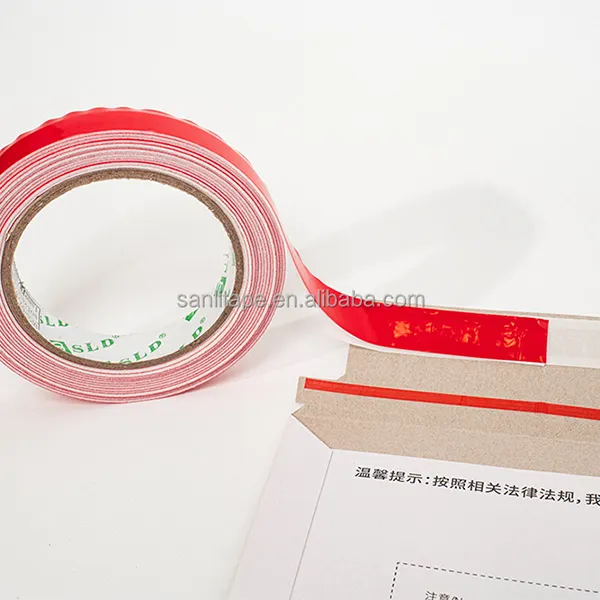
The second hidden factor is the width of the adhesive strip. In combined tapes, the glue is applied not over the entire width of the film, but in a strip (usually 20-30 mm). Cheap options may have an adhesive strip only 10-15 mm wide. This leads to the edges of the film peeling off at the slightest wind or mechanical impact, violating the tightness of the protection. Checking the width of the adhesive layer is a mandatory procedure when accepting goods.
Logistics costs also play a role. Masking tape with film is a bulky but light load. When shipping from China, you pay for air. Optimizing packaging (roll compression) can reduce transport costs by 20%, but increases the risk of roll deformation (“ovalization”), making them unsuitable for dispensers. Russian products are free of this problem due to their short delivery lead time.
Taxes and certification. Importing products without an EAC certificate of conformity is not possible legally. The cost of completing the declaration is included in the price of the imported product. Domestic manufacturers already have all the documents, which speeds up the acceptance procedure at large construction sites, where the security service requires a complete package of papers.
Reviews and real operating experience
Analysis of feedback from our clients for 2025-2026 reveals interesting patterns. Construction companies value predictability. One of the general contractors in Siberia told us: “We switched to local tape, because the Chinese one simply didn’t stick at -15°C, and waiting for the room to warm up was a simple task for a team.” This confirms the thesis about the importance of adapting the product to the climate.
Private craftsmen and small teams, on the contrary, often praise Chinese analogues for their price. For one-time work inside a warm room, the difference in adhesion is unnoticeable, and the budget savings are significant. However, even they note a problem with winding: “Sometimes you come across rolls where the film sticks together tightly, and you have to throw away half of it.”
In the industrial sector (factories, shipyards), complaints mainly concern heat resistance. There was a recorded case when, when drying a chamber of painted parts, cheap tape melted, leaving glue on expensive equipment. The losses exceeded the cost of the entire batch of tape 100 times. This case has become a textbook example of why you cannot save on consumables in critical processes.
Positive reviews are most often related to ease of use. Tapes with perforation or a built-in dispenser receive high marks for speed of installation. Ergonomics becomes as important a selection factor as price, especially for large volumes of work.
How to check quality before bulk purchasing
Don't trust what managers say. The quality of the batch must be verified empirically. Here is the algorithm of actions that we use ourselves and recommend to our clients:
- Visual inspection of the winding.The roll should be dense, smooth, without protrusions at the edges of the film. Layer displacement of more than 2 mm indicates poor adjustment of the rewinder, which will lead to breaks during use.
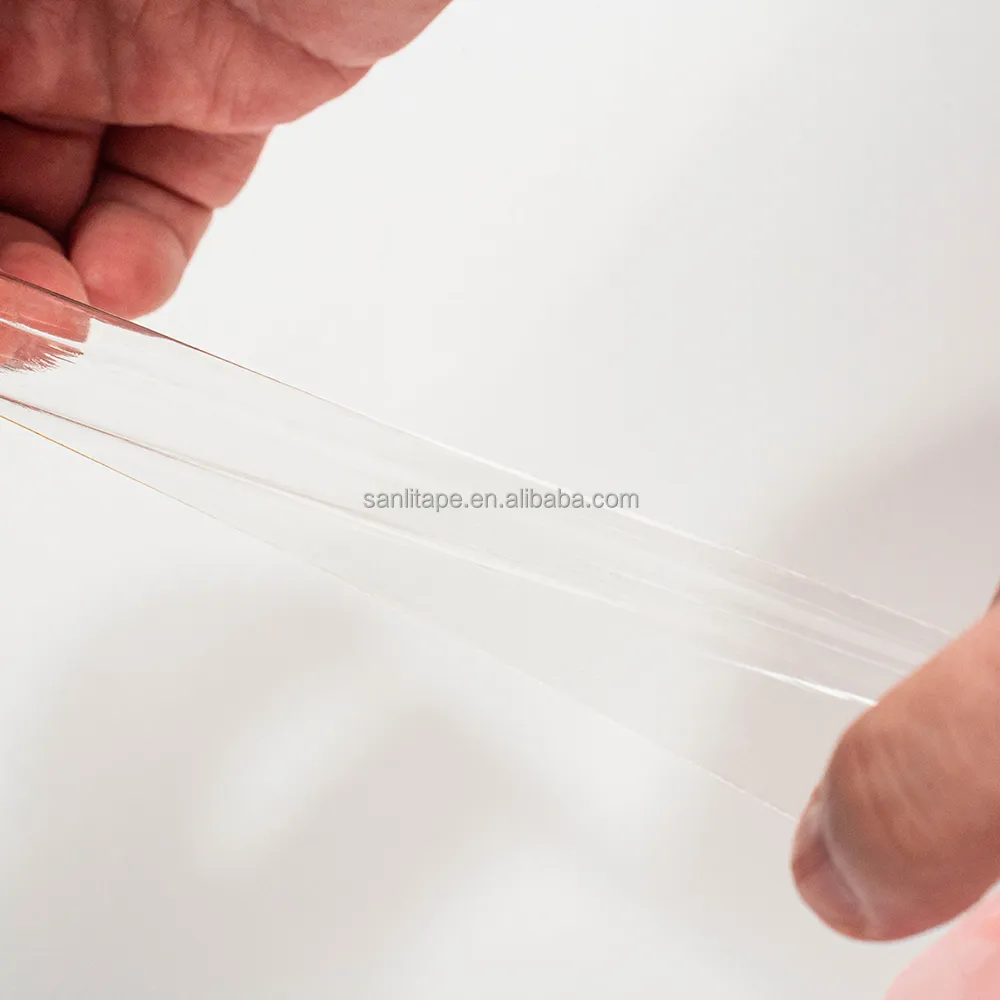
- Tensile test.Take a strip of tape 20 cm long and try to stretch it with your hands. High-quality polyethylene stretches, changing shape, but does not tear immediately. The fragile film will burst with a characteristic crack. This is an indicator of the freshness of the raw materials and the absence of recycling.
- Adhesion test (sticker test).Stick the sample onto clean glass and onto rough brick. After 1 hour, try to tear it off. On glass, the tear should be clean (or with minimal residue for strong adhesives); on brick, the tape should remove the top layer of dust, but remain intact. If the glue remains on your fingers in the form of a jelly-like mass, the technology is broken.
- Length check.Weigh 5 random rolls from the lot. Compare the average weight to a reference sample of known length. A difference of more than 5% indicates underproduction.
- Aging test (accelerated).Leave the sample in the sun for 24 hours (or under a UV lamp). If the glue drips or the film becomes brittle, the product does not have UV stabilizers and is not suitable for facades.
These simple steps take 15 minutes, but save you from purchasing illiquid items. Require the supplier to provide a test report for each batch, which indicates the results of similar tests.
Storage conditions and shelf life
Masking tape with film is a chemically active material. The adhesive layer continues to polymerize even in packaging. The standard shelf life is 12 months from the date of production when stored in a dry place at a temperature of +5°C to +25°C. Direct sunlight is harmful: it triggers the process of degradation of the polymer and changes in the properties of the adhesive.
Cold storage below -10°C makes the glue brittle. This tape cannot be used immediately after being brought into a warm room. A minimum of 24 hours acclimatization is required. Ignoring this rule leads to the fact that the tape does not stick during the first few hours of operation, until the entire mass of the roll has warmed up. We have seen cases where teams rejected good tape precisely because of violation of the temperature conditions of storage in the warehouse.
Humidity is also the enemy of the paper base (if there is one in the mount) and packaging. High humidity promotes the development of mold on the organic components of the adhesive. Warehouses must be ventilated. Pallets with goods should not stand directly on a concrete floor - use wooden pallets to insulate against condensation.
Where to buy cheap: Strategy for working with the manufacturer
To get a real wholesale price, you need to enter into a direct contract with the factory, bypassing second and third level distributors. Large Russian factories are ready to ship products from 10-20 boxes at prices close to factory prices, if we are talking about constant cooperation. Chinese factories require container shipments for better conditions, but offer flexible conditions for customization (applying your logo, changing the width).
When negotiating, use the argument of volume. The phrase “we need 500 rolls per month” works better than “give a discount.” Line load is important to manufacturers. Offering a long-term contract with a fixed purchase volume provides leverage to reduce prices by 10-15%.
Pay attention to seasonality. Demand for masking tapes peaks in the spring and summer. By ordering products in the fall or winter (off-season), you can negotiate more favorable terms as factories strive to fill warehouse capacity. Planning your purchases ahead is a key savings tool in the B2B sector.
It is also worth considering the possibility of purchasing a “second grade” (B-grade) for rough work. These are products with minor cosmetic defects (uneven winding, slight displacement of the glue), which are fully functional, but cost 30% less. This option is ideal for protecting floors during screeding or covering scaffolding.
Frequently Asked Questions
What is the safe period for the tape to remain on the surface?
For standard tapes based on natural rubber, the period is 7-14 days. After this period, active migration of adhesive components into the base begins, which makes removal difficult. Acrylic tapes can last up to 30-60 days. Always remove the tape before the paint is completely dry, otherwise there is a risk of the fresh coating coming off along with the tape. If the work is delayed, use specialized long-lasting series.
Is this tape suitable for sand blasting?
Regular masking tape with film is NOT suitable for sandblasting. The abrasive penetrates a film up to 30 microns thick instantly. For such tasks, there are special rubber or multilayer composite materials with a thickness of 0.5 mm. An attempt to save money and use conventional film will result in damage to the protected area and injury to personnel from ricochet.
Can the tape be used at sub-zero temperatures?
Стандартные ленты теряют адгезию уже при +5°С. Существуют всесезонные модификации с маркировкой “Winter” или “All Season”, которые работают до -10°С…-15°С. Однако поверхность должна быть сухой и очищенной от инея. Клеить на снег или лед бесполезно — сцепление будет нулевым. Перед нанесением поверхность желательно прогреть строительным феном.
Оставляет ли лента следы клея на пластике?
Это зависит от времени экспозиции и типа пластика. На ПВХ-профилях и поликарбонате дешевые каучуковые ленты часто оставляют жирные пятна после 3-5 дней. Акриловые клеи более безопасны для чувствительных поверхностей. Для дорогой отделки (автомобили, витражи) всегда проводите предварительный тест на незаметном участке и используйте ленты с пометкой “Sensitive Surface”.
В чем разница между прозрачной и белой пленкой?
Разница в пигменте и толщине. Белая пленка обычно толще (30+ мкм) и лучше скрывает основание, но она непрозрачна, что мешает контролировать процесс покраски под ней. Прозрачная пленка тоньше (18-20 мкм), позволяет видеть дефекты, но хуже защищает от ультрафиолета сам клеевой слой. Выбор зависит от задачи: для контроля качества — прозрачная, для максимальной защиты и долговечности — белая.
Conclusion and recommendations for action
Purchaseдешево малярной ленты с пленкойв 2026 году требует баланса между ценой и техническими требованиями объекта. Экономия на классе материала может привести к многократным потерям на переделках и простое рабочих. Рынок предлагает широкий выбор: от бюджетных китайских аналогов до высокотехнологичных российских разработок, адаптированных к нашему климату. При этом важно выбирать партнеров с подтвержденной репутацией, таких какEnping Sunli Adhesive LLC, чей 23-летний опыт и сертификация ISO служат гарантом того, что даже бюджетные решения будут отвечать заявленным характеристикам.
Ключ к успеху — четкое понимание задачи. Не используйте фасадную ленту для внутренних работ и наоборот. Проверяйте каждую партию входным контролем. Работайте напрямую с производителями, чтобы исключить наценки посредников. Помните, что надежный поставщик — это партнер, который предупредит вас о рисках, а не просто продаст товар.
Если вы готовы оптимизировать расходы на расходные материалы без ущерба для качества, свяжитесь с нами для получения актуального прайс-листа и образцов продукции. Мы поможем подобрать оптимальное решение под ваш бюджет и технические условия.
Перейти в полный каталог малярных лент | Contact us todayдля консультации технолога.