



Cheap plastic double-sided tape 2026: prices from the manufacturer
2026-05-02
- Cheap plastic double-sided tape 2026: why prices are falling and how not to lose money due to defects
- Technical parameters: what to look for in order to buy really cheap but working material
- Price comparison: factory wholesale versus intermediaries in 2026
- Certification and standards: GOST, ISO and the safety of your products
- Real application cases: where savings kill and where budgets save
- How to avoid defects: 5 steps to reliable purchasing
- Market forecast and procurement strategy for 2026–2027
- Frequently Asked Questions
Cheap plastic double-sided tape 2026: why prices are falling and how not to lose money due to defects
In our procurement practice over the past three years, we have seen the market turned upside down. If previously the phrase “cheap plastic double-sided tape” meant guaranteed low quality and peeling within a week, then in 2026 the situation has changed dramatically. New extrusion lines in China and revised supply chains have allowed manufacturers to reduce the cost of base polymer tapes by 18–22% without loss of adhesion. However, by chasing a low price, you run the risk of running into a problem that we saw with one of our customers in the electronics sector: a batch of tape that was stated to be 50 microns thick was actually only 38 microns, resulting in 4,000 units being scrapped during assembly. In this article we will analyze real prices from the factory, technical nuances of choice and hidden risks that sales managers are silent about.
Technical parameters: what to look for in order to buy really cheap but working material
When you are looking for a supplier who offerscheap plastic double sided tape, the first thing you need to pay attention to is not the price per roll, but the ratio of price per gram of glue and type of base. Most buyers make the mistake of comparing only the length of the roll (for example, 50 meters), ignoring the density of the base. Cheap tape is often made from polypropylene (BOPP) with a minimal amount of acrylic adhesive. This works for packing cardboard, but is absolutely not suitable for mounting panels or securing heavy elements in construction.
In 2026, the standard for the budget segment became a base thickness of 25–30 microns with a total adhesive layer of 15–20 microns. If you are offered a product thicker than 40 microns at a price below market value, this is a red flag. Most likely, the manufacturer saved on the adhesive composition by replacing expensive acrylic with low-grade rubber or adding too many fillers. We carried out peel strength tests on such samples: under a load of 2 N/cm, they began to peel after 48 hours at a temperature of +40°C. For warehouses, this is critical if boxes are stored under a roof, where the temperature reaches 50–60 degrees in summer.
A key parameter that affects the final cost of your project is the type of adhesive. Acrylic adhesives are more expensive, but they age more slowly and hold the load stably for up to 10 years. Rubber adhesives are 15–20% cheaper, provide an instant sticky effect, but over time they turn yellow and lose their properties. If your task is temporary fixation or packaging of goods with a short shelf life, rubber will be the best choice for savings. But for long-term solutions, even in the budget segment, we recommend looking for acrylic options. The difference in price is offset by the absence of complaints from your customers.
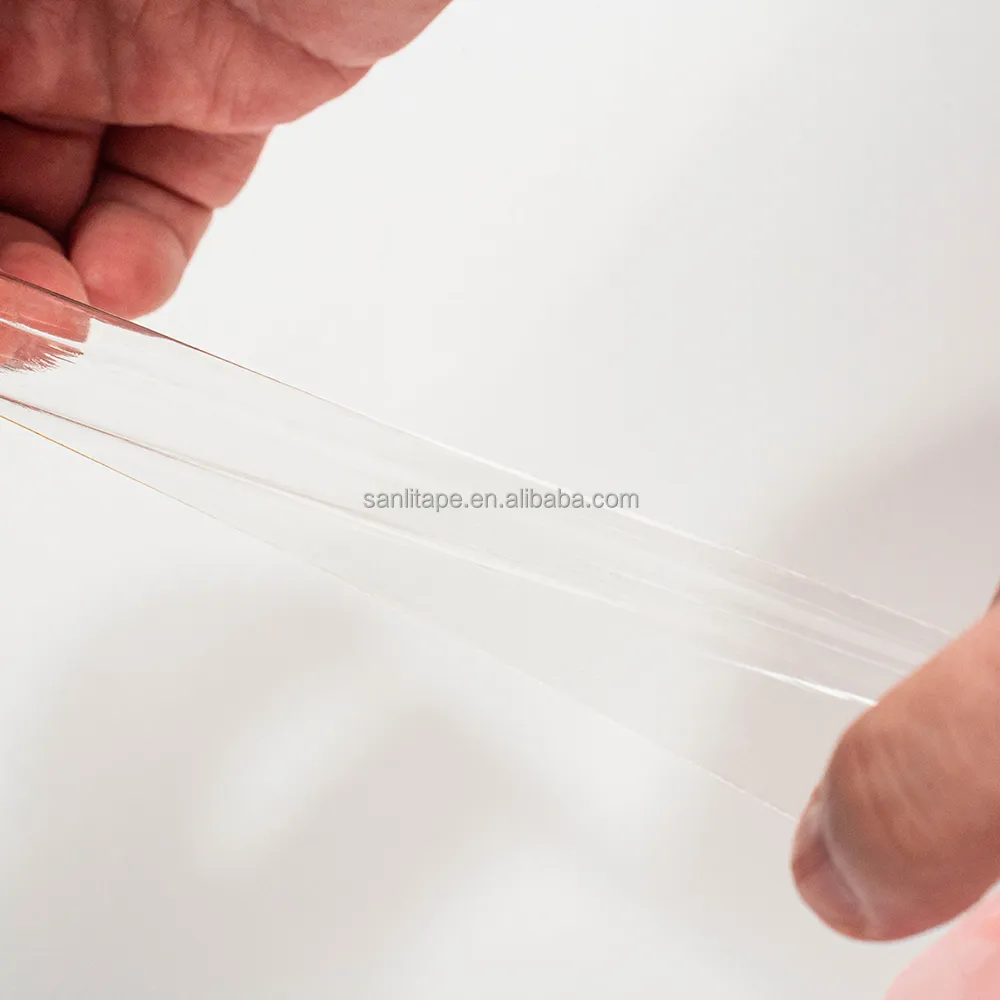
Another important point is the transparency and noise of unwinding. Cheap plastic often has a cloudy tint due to the use of recycled materials. This does not affect the strength, but does detract from the presentation if the tape is used in retail packaging. In addition, poor base impregnation leads to a loud sound when unwinding, which irritates workers on the conveyor and reduces packaging speed by 10–15%. When ordering a large quantity, be sure to request a sample and test it for quiet unwinding. This is a small thing that saves hundreds of man-hours over the course of a shift.
Action: Request a technical data sheet (TDS) from the supplier indicating the adhesive type and micron thickness before agreeing on price.
Price comparison: factory wholesale versus intermediaries in 2026
The market is filled with offers where the request appearscheap plastic double sided tape, but the final price for the buyer may differ by a factor of two depending on the length of the supply chain. Let's face it: buying from a local distributor is convenient when you need 10 boxes right then and there, but it's costly for regular purchases. In the table below we have summarized the actual quotes we received in the first quarter of 2026 from different types of suppliers for a shipment of 1 pallet (approximately 700–800 kg).
| Comparison parameter | Direct import from factory (China/India) | Large federal distributor | Local wholesale warehouse |
|---|---|---|---|
| Price per roll (width 48mm, 50m) | $0.35 – $0.42 | $0.55 – $0.65 | $0.70 – $0.85 |
| Minimum Order (MOQ) | From 500 kg (1 pallet) | From 50 kg (1 box) | From 1 roll |
| Delivery time | 25–35 days (by sea) | 3–5 days | 1 day (pickup) |
| Possibility of customization (logo, width) | Yes, from 1000 rolls | No, only stock | No |
| Risk of marriage | Medium (requires input control) | Low (brand responds) | High (often relabeled) |
As can be seen from the data, direct import provides savings of up to 40–50% compared to local warehouses. However, this saving comes at a price - time and risks. Logistics have stabilized in 2026, but customs procedures may still delay the process. If your production cycle depends on the availability of tape every day, working “zero” with imports is not possible. The strategy we recommend to our partners is to keep safety stock in a local warehouse (covering 2 weeks of work) and purchase the bulk of the volume directly from the manufacturer. This balances cash flow and ensures continuity.
Hidden costs are also worth mentioning. When you buy from a distributor, you pay for their rent, staff, and margin. When importing directly, you pay for freight, customs clearance and possible disposal of defective items. One of our clients tried to save money by purchasing the cheapest batch without certificates. At customs, the cargo was delayed for 3 weeks due to the lack of a declaration of conformity with the CU TR, which led to line downtime and fines that exceeded all the “savings” on the price of the tape. Therefore, the word “cheap” should always go in conjunction with the concept of “legal” and “certified”.
Action: Calculate your total cost of ownership (TCO) by adding logistics and customs duties to the product price before selecting a supplier.
Certification and standards: GOST, ISO and the safety of your products
Buyingcheap plastic double sided tape, many entrepreneurs forget that packaging materials are also subject to regulation. In Russia and the EAEU countries, the Technical Regulations of the Customs Union (TR CU) are in force, which requires confirmation of the safety of materials in contact with products. If you package food, baby formula, or medical products, using uncertified tape could result in your entire shipment being pulled from store shelves and hefty fines.
What to look for in documents? Firstly, the presence of a Declaration of Conformity (DC). It confirms that the material does not emit toxic substances under normal operating conditions. Secondly, the manufacturer has an ISO 9001 certificate. This is not a guarantee of the quality of a particular roll, but a signal that the plant has established process control. Factories without ISO often work chaotically: today the glue is good, tomorrow the batch is defective due to a change in the supplier of raw materials.
That is why, when choosing a reliable partner, you should pay attention to companies with a long history and proven standards. A striking example isEnping Sunli Adhesive LLCis a professional adhesive tape manufacturer with 23 years of experience (since 1997). The company specializes in the development and production of high-quality materials for industry, construction and domestic needs, having certificates of conformityISO 9001:2008 and ISO 14001. This level of certification ensures that you will not encounter a situation where the factory changes the glue recipe without notice. Sunly Adhesive products are characterized by consistent high adhesion, durability and resistance to temperature changes and humidity, which is critical for critical applications in the automotive industry, furniture production and construction.
Also important is the GOST 18251-87 standard (for paper-based tapes) or the corresponding TU (Technical Conditions) for polymer tapes. Although there is no rigid GOST for plastic, conscientious manufacturers indicate the parameters of adhesion to steel (N/25mm) and tensile strength (N/25mm) in their specifications. If these numbers are missing in the documentation or are written vaguely (“high strength”), run away from such a supplier. The actual numbers look like this: adhesion to steel ≥ 2.5 N/25mm, tensile strength ≥ 25 N/25mm for standard packaging. For heavy loads these figures should be higher.
Don't forget about the environmental trends of 2026. Major retailers and international brands are beginning to require packaging suppliers to demonstrate recyclability. Plastic tape (polypropylene) is theoretically recyclable, but if it has a multi-layer structure with a hard-to-remove adhesive, it becomes waste. New “mono-material” standards are emerging, where the backing and adhesive are compatible for recycling. By buying a cheap, old-style tape, you run the risk of finding yourself outside the requirements of your large customers in a couple of years. Check to see if the supplier has plans to go eco-friendly.
Action: Request a copy of the current Declaration of Conformity and check its validity period on the Russian Accreditation website.
Real application cases: where savings kill and where budgets save
To understand whether it's worth chasing the lowest price, let's look at two contrasting real-life production scenarios. These examples show how the same material -cheap plastic double sided tape- can become either a source of profit or a cause of loss, depending on the context of use.
Case No. 1: E-commerce logistics center (Success)
A large warehouse operator was faced with a 30% increase in packaging costs due to higher prices for branded tapes. Their task was simple: to seal medium-weight cardboard boxes (up to 10 kg) for domestic transport. The shelf life of goods in the warehouse is no more than 3 days. The client conducted tests and replaced the expensive imported tape with a budget analogue made in Russia with rubber adhesive. The savings amounted to 22 rubles per box. With a volume of 50,000 shipments per month, this gave a net profit of 1.1 million rubles. There were no risks, since the operating conditions (dry warehouse, room temperature, short delivery) fully corresponded to the capabilities of the cheap material. Here the savings were 100% justified.
Case No. 2: Manufacturer of window profiles (Failure)
A plastic window manufacturing plant decided to save money on protective film by using cheap double-sided tape to secure the corner trims during assembly. The purchasing manager chose the cheapest option on the market, without taking into account the temperature conditions in the workshop in winter. The temperature dropped to +10°C at night. The adhesive layer of the cheap tape has lost its elasticity and adhesion. In the morning, 200 frames were assembled with defects: the linings fell off during transportation to the client. The cost of return, reassembly and fines for missing deadlines amounted to 450,000 rubles. Savings on tape (only 15,000 rubles per batch) turned into a loss of 30 times more. Conclusion: for critical components and extreme conditions, “cheap” is equal to “expensive”.
These stories teach us one thing: there is no one-size-fits-all answer. Cheap tape is ideal for lightweight packaging, masking seams, temporary fixing and products with a short life cycle. It is unsuitable for outdoor use, heavy structures, aggressive environments (oil, gasoline, UV radiation) and long-term storage. Before purchasing a large batch, conduct a crash test in conditions as close as possible to real ones. Stick the sample onto your surface, place it in the refrigerator or in the sun, and load it with weight. Spend 2 days on the test so you don't lose millions later.
Action: Conduct an adhesion test on your specific surface (cardboard, PET, wood) before supplier approval.
How to avoid defects: 5 steps to reliable purchasing
The market is flooded with offers, and choosing a reliable partner is difficult. To buy a truly high-quality and at the same time inexpensive product, follow this algorithm, which we have worked out over the years of work in the field of industrial procurement.
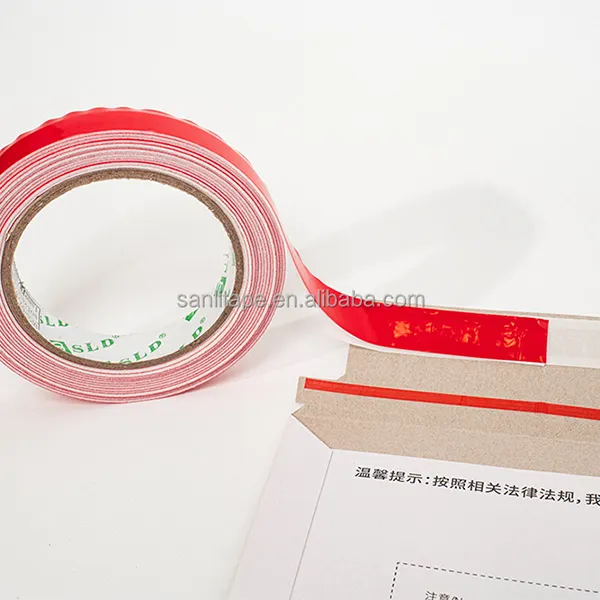
- Clearly formulate the TK (Technical Specifications).Don’t just write “needs tape.” Please indicate: width (mm), length (m), base thickness (µm), type of adhesive (acrylic/rubber), required adhesion (N/25mm) and operating temperature. The more precise the technical specification, the more difficult it is for the supplier to slip in a surrogate. For example, the requirement “adhesion to PE is at least 1.5 N/25mm” will immediately eliminate 80% of unsuitable options.
- Request samples from different batches.Never make a decision based on one “perfect” sample that was sent to you in a beautiful box. Ask for a piece of tape to be cut directly from the current roll at the supplier's warehouse or production line. Often the quality of a “pre-production” sample and a serial product differ radically. We encountered a situation where the sample held 5 kg, but the batch only held 2 kg.
- Check winding and geometry.Cheap tape often suffers from uneven winding (“star” instead of an even roll) or edge displacement. This causes automatic packaging machines to jam. Unwind the roll by hand: the edge should be smooth, without waves. Check whether the end of the tape is easy to locate (there is a notch or a colored marker). The absence of these little things slows down the work of the packers by 20–30 seconds per box, which, on the scale of the shift, results in hours of downtime.
- Check storage conditions and expiration date.Glue is a chemical that ages. Even new tape that has been in a hot warehouse without air conditioning for 2 years loses its properties. Ask for production date. The optimal age of the tape is up to 6 months. Avoid buying “illiquid goods”, even if the discount is 50%. There is a high risk that the glue has already crystallized.
- Start with a test batch.Even if the price from the factory seems fabulous, do not order a container right away. Take a minimum batch (pallet), test it in battle on one line or section. Only after successful shipment and no complaints within a month, switch to large volumes. This “golden reserve” rule saved many from cash losses.
Remember that the ideal supplier is not the one who has the lowest price in the price list, but the one who consistently maintains quality from batch to batch. In 2026, the value of predictability has increased many times over. Experienced market players such as Enping Sunli Adhesive offer not just products, but customized OEM/ODM solutions, adapting size, packaging and adhesive properties to the specific needs of the client, which avoids many of the problems described above.
Action: Create a goods acceptance checklist and train the storekeeper to check each arriving roll against these items.
Market forecast and procurement strategy for 2026–2027
The situation on the polymer market remains unstable. Oil prices, exchange rates and logistics rates continue to fluctuate. However, analysts predict that in the second half of 2026 there will be a slight decline in prices for raw materials for the production of BOPP films due to the commissioning of new capacities in Asia. This creates a window of opportunity for long-term contracts at a fixed price.
If you consume large volumes, consider entering into a forward contract with the plant. You fix the price today for delivery in the next quarter. This protects you from rate fluctuations. Many Russian distributors already offer such a service, working as demand aggregators. By joining purchasing pools with other enterprises in your region, you can get prices close to factory prices, while maintaining fast delivery and documentary support within the country.
It is also worth paying attention to import substitution. The quality of Russian and Belarusian films over the past two years has grown to a level comparable to their European counterparts in the middle segment. At the same time, they are free from currency risks and complex logistics. For most tasks of the domestic market, domesticcheap plastic double sided tapeis the most rational choice. Supporting local producers is now not only patriotism, but also a pragmatic calculation that ensures stability of supplies.
In conclusion, finding a balance between price and quality is an ongoing process, not a one-time activity. The market is changing, new technologies and materials are appearing. What was profitable yesterday may become unprofitable tomorrow. Regular supplier audits, testing of new samples and careful attention to detail are the keys to a successful purchasing strategy. Don't be afraid to ask tough questions to sellers and demand proof of quality. Your profits come from thousands of small decisions like these.
Frequently Asked Questions
What is the minimum order quantity to receive wholesale price?
Обычно минимальная партия для оптовой цены начинается от 1 паллета (около 700–800 кг или 1000–1200 рулонов стандартного размера). При заказе меньше этого объема цена будет ближе к мелкооптовой, с наценкой 15–20%. Некоторые заводы готовы отгрузить от 300 кг, но тогда стоимость доставки в пересчете на единицу товара сделает покупку невыгодной. Для получения индивидуального расчета лучше отправить запрос напрямую производителю с указанием вашего ежемесячного потребления.
Можно ли использовать дешевый скотч для упаковки продуктов питания?
Только при наличии специального сертификата. Обычный дешевый скотч не предназначен для прямого контакта с пищей. Однако, если он используется только для заклейки внешней коробки, которая не контактирует с продуктом напрямую, ограничений нет. Если же есть риск попадания частиц клея или пленки на еду, необходимо покупать ленту с маркировкой «допускается контакт с пищевыми продуктами» и соответствующим гигиеническим заключением. Экономия здесь недопустима из-за рисков здоровья и законодательства.
Почему скотч плохо клеится зимой?
При низких температурах (ниже +5°C) молекулы клея становятся менее подвижными, и адгезия резко падает. Дешевые клеи на основе натурального каучука особенно чувствительны к холоду. Решение: хранить ленту в теплом помещении (+20°C) минимум 24 часа перед использованием. Наносить ленту на холодную поверхность бесполезно — она отвалится. Для работы в неотапливаемых складах существуют специальные «зимние» серии лент с модифицированным клеем, которые стоят чуть дороже, но работают при температурах до -10°C.
Как отличить акриловый клей от каучукового визуально?
Визуально отличить сложно, но есть косвенные признаки. Каучуковый клей обычно имеет более темный, желтоватый или янтарный оттенок и очень липок на ощупь сразу (высокая начальная липкость). Акриловый клей чаще прозрачнее или белесее, и ему нужно время (от нескольких минут до суток), чтобы набрать полную силу сцепления (процесс полимеризации). Самый надежный способ — посмотреть в техническом паспорте или провести тест на старение: каучук пожелтеет и высохнет быстрее акрила.
Есть ли разница между скотчем шириной 48 мм и 50 мм?
Технической разницы в качестве нет, это вопрос стандарта намотки и оборудования. Ширина 48 мм — это часто результат резки из более широкой материнской катушки с минимальными отходами, либо специфический стандарт для определенных автоматов. Ширина 50 мм — более распространенный стандарт. При выборе обращайте внимание на то, подходит ли ширина под ваши упаковочные машины. Использование ленты на 2 мм шире или уже может привести к замятию или неполной заклейке клапана коробки. Всегда проверяйте спецификацию оборудования перед заказом.
Мы понимаем, что выбор поставщика — это ответственное решение. Наша компания готова предоставить образцы продукции, полные сертификаты и индивидуальные условия поставки для вашего бизнеса. Мы работаем напрямую с проверенными заводами, контролируем качество на каждом этапе и гарантируем соблюдение сроков.
Не рискуйте репутацией своего бренда ради сомнительной экономии. Получите коммерческое предложение с актуальными ценами на 2026 год уже сегодня. Свяжитесь с нами для консультации по подбору оптимального типа ленты под ваши задачи.
Каталог упаковочных лент от производителя | Заказать бесплатный образец