



Cheap double-sided polypropylene tape 2026: prices from the manufacturer
2026-05-02
- Why double-sided polypropylene tape in 2026 is not just a consumable, but an engineering solution
- Technical parameters that determine the price: where the savings are hidden
- Comparison of technologies: acrylic versus rubber and choice for the task
- Logistics and delivery conditions in 2026: how to get the real price
- Certification and quality control: guarantee of absence of defects
- Frequently Asked Questions
- Summary and Procurement Strategy
Why double-sided polypropylene tape in 2026 is not just a consumable, but an engineering solution
In our practice of working with production lines, we often encounter situations where buyers are looking for “cheap tape”, not realizing that saving 5% on the price of a roll can result in downtime of the conveyor costing thousands of dollars. Cheap double-sided polypropylene tape today does not mean low quality glue, but optimized production technology, where every gram of polypropylene and millimeter of the adhesive layer is calculated mathematically. We analyzed the supply market in 2026 and see a clear trend: large factories are moving from purchasing “in stock” to direct contracts with manufacturers, where the price is determined by the batch size and technical requirements, and not by the distributor’s marketing margin.
Backbone polypropylene (BOPP) has become the de facto standard for industrial packaging and lightweight construction due to its balance of strength and cost. However, in 2026 the requirements have changed. If previously we only looked at adhesion, now the tensile parameters at low temperatures and the stability of the adhesive layer during storage for more than 12 months are critical. One of our clients, a manufacturer of household appliances, was faced with the fact that a batch of “cheap” adhesive tape lost its stickiness after 3 months of storage in an unheated warehouse, although the passport data promised a year. This resulted in 5,000 units being re-glued before shipping. This is why the concept of “cheap” must be viewed through the prism of the total cost of ownership, and not the price tag per kilogram.
In this article, we will look at how the real price for polypropylene double-sided tape is formed at the manufacturing plant, what technical parameters affect the cost, and why, in the current economic conditions of 2026, direct import or contract manufacturing becomes the only way to maintain business margins. We will not use general phrases - only numbers, specifications and real cases from the workshops.
Technical parameters that determine the price: where the savings are hidden
The price of double-sided tape is never accidental. It is strictly tied to the recipe and physical characteristics of the material. When you see an offer for “cheap double-sided polypropylene tape,” the first thing to do is request a technical data sheet (TDS) and compare four key parameters. A difference in these numbers of 10-15% can reduce the price of a product by 30%, but at the same time kill its functionality.
Base thickness and overall dimensions.Standard industrial tape has a thickness of 80 to 120 microns. Reducing the thickness of polypropylene film from 45 microns to 38 microns actually reduces costs, but sharply increases the risk of tape breaking during automatic winding at high speeds. In 2026, most packaging equipment lines operate at speeds in excess of 60 meters per minute. The thin film breaks, the operator stops the line and changes the roll. Wasting time is worth more than pennies saved. The optimal range for balancing price and reliability is 90-100 microns of total thickness.
Type and weight of the adhesive layer.Here lies the main secret of pricing. Acrylic glue is more expensive than rubber glue (rubber/hot melt), but it is more stable. Rubber adhesive gives a high initial tack, which is good for manual packaging, but it ages faster, turns yellow and loses its properties at temperatures above +50°C. Acrylic takes time to achieve full adhesion (up to 24 hours), but holds the load for years. If you are offered a very cheap option, most likely they use glue with a low dry matter content (less than 25 g/m²). This is not enough for heavy boxes or panel mounting. We recommend a minimum adhesive weight of 28-30 g/m² for guaranteed adhesion.
Adhesion to steel (N/25mm).This is the main metric indicator of grip strength. Budget options usually show 4-5 N/25mm. Professional series for construction or the automotive industry produce 8-12 N/25mm. It is important to understand the context: if you are gluing corrugated cardboard, 4 N will be enough for you. If you are mounting a mirror or a plastic profile in a car, 4 N will not be enough, the structure will fall off in a week due to vibration. Request test samples and conduct your own peel tests on your specific surface material.
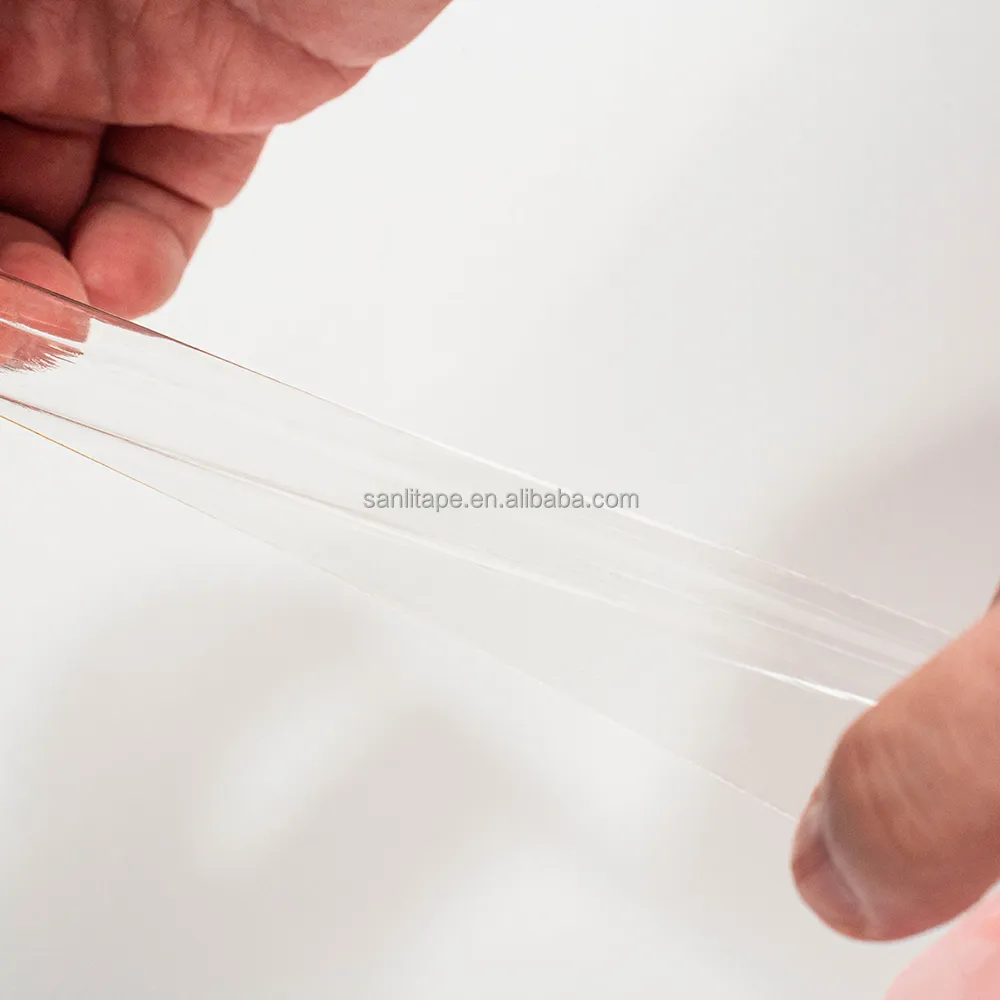
Elongation at break.Polypropylene is flexible, but cheap films are often brittle. The elongation parameter must be at least 150%. If the tape breaks at the slightest tension without stretching, it will not be able to compensate for the thermal expansion of the parts being glued. In the winter period of 2025-2026, we recorded an increase in complaints specifically for this parameter, as some manufacturers saved on plasticizers in the film composition.
Ask the supplier for a comparison chart of these four parameters before signing a contract. If the seller cannot provide numbers or says “everything is according to the standard,” this is a red flag. A true manufacturer knows his products down to the micron.
Comparison of technologies: acrylic versus rubber and choice for the task
The choice between acrylic and rubber adhesive is not a matter of preference, but a matter of the physics of the operating process of your product. An error in choosing the type of glue leads to the fact that even the most expensive adhesive tape will not fulfill its function. Let's break this down with specific examples and numbers so you can make an informed decision for your production.
| Comparison criterion | Acrylic glue | Rubber/Hot Melt |
|---|---|---|
| Initial Tack (Tack) | Average. It requires pressure and time (up to 24 hours) to gain full strength. | Very tall. Instant grip on light contact. |
| Heat resistance | High. Operates stably from -40°C to +150°C. | Low. Softens at +60…+70°C, becomes brittle below -10°C. |
| Aging and UV resistance | Excellent. Does not turn yellow, retains its properties for 5-10 years. | Bad. Under the influence of the sun it oxidizes, darkens and crumbles in 6-12 months. |
| Raw material cost | 15-20% higher. | Lower, more available in the market. |
| Recommended Application | Exterior work, auto industry, electronics, long-term storage. | Internal packaging, temporary fixation, working with rough surfaces. |
In our practice, there was a significant case with a manufacturer of window profiles. They tried to save money and purchased a large batch of rubber-based double-sided tape for installing seals. In the summer, when transported by vans under the sun, the temperature inside the body reached 65°C. The glue melted and half of the seals were dislodged before arriving at the assembly site. The losses from the rework amounted to three times the cost of the adhesive tape itself. If they had chosen the acrylic series, having overpaid 10 rubles per roll, the problem would not have arisen.
On the other hand, for the task of quickly packing boxes in a warehouse, where the goods go to the consumer in 2 weeks, there is no point in overpaying for acrylic. Rubber adhesive benefits here due to the speed of the operators’ work: you don’t need to press the tape hard, it sticks on the fly. With high employee turnover in warehouses, this is an important productivity factor.
It is also worth considering the type of surface. Rubber adhesives penetrate better into the micropores of rough surfaces (kraft paper, concrete, untreated wood). Acrylic requires a smoother, cleaner surface to work effectively. If your process does not include mandatory cleaning and degreasing of parts before gluing, acrylic tape may perform worse, despite its excellent performance in the laboratory.
For 2026, we are seeing increased demand for hybrid solutions and modified acrylics that attempt to combine the high tack of rubber with the durability of acrylic. However, for now, the classical division remains the most reliable guideline for purchasing. Determine the operating temperature of your product and its service life - these are two filters that will immediately cut off 50% of unsuitable options on the market.
Logistics and delivery conditions in 2026: how to get the real price
The concept of “factory price” in 2026 has become much more complex than just the cost per unit of goods leaving the factory. Global supply chains have transformed, and the logistics component now accounts for up to 40% of the final cost of a roll of tape delivered to your warehouse. To really buy cheap double-sided polypropylene tape, you need to optimize not only the purchase price, but also the delivery conditions.
The first critical point isminimum shipment quantity (MOQ). Factories for the production of adhesive tapes operate on continuous cycle extruders. Changing the line to a different width or type of glue takes from 2 to 4 hours of downtime. Therefore, manufacturers are interested in large quantities. The standard MOQ for factory price is usually from 500kg (about 1 pallet) or from 1000 roll box. An order of a smaller volume automatically transfers you to the “warehouse balance” category with a distributor’s markup of 20-30%. If your consumption is lower, consider consolidating orders with other parts of the company or planning purchases quarterly in advance.
Second aspect -packaging and safety. Polypropylene tape is sensitive to transportation conditions. The rolls should not be compressed, otherwise a “blocking” effect will occur (the layers will stick together and will not unwind). In 2026, the standard for quality delivery is the use of reinforced cardboard boxes with palletization and stretch wrapping. Cheap suppliers often save on packaging by sending cargo in soft bags or weak boxes. As a result, by the time of receipt, 10-15% of rolls may be deformed (“flattened”) and unsuitable for use in machines. Always include a requirement for rigid packaging in the specification and inspect the shipment upon acceptance.
Third factor -production times and availability. The market for raw materials (polypropylene granules and acrylic emulsion) is volatile. During periods of rising oil prices or seasonal peaks (August-October, preparation for New Year's sales), production times can extend from 7 to 21 days. Plan your purchases in advance. The presence of a product “here and now” with an intermediary almost always means that this product was produced six months ago. For acrylic tape this is not critical, but for rubber tape the shelf life has already begun. Check the production date on the box.
We recommend concluding framework agreements with a fixed price for the volume of consumption for six months. This protects you from market fluctuations and ensures priority production of your products during busy periods. The manufacturer gets predictability of capacity utilization, and you get a stable price and guaranteed quality. In the current conditions of instability, such a model of cooperation is more profitable than one-time spot purchases at the lowest price on the exchange.
Certification and quality control: guarantee of absence of defects
In the industrial sector, the word “cheap” should not be associated with a lack of documents. On the contrary, purchasing from an official manufacturer gives you access to a full certification package that protects you from claims from your customers and regulatory authorities. In 2026, material safety requirements have become more stringent, especially in the food processing, children's products and construction sectors.
The mandatory minimum for legal circulation on the market is a certificate of compliance with national standards (for example, GOST or technical regulations of the Customs Union). However, a real indicator of quality is whether the plant has a quality management system certificateISO 9001. This standard ensures that the plant has established control processes: incoming control of raw materials, control of extrusion parameters every 2 hours, testing of the finished batch before shipment. If the supplier does not have ISO 9001, you are buying a “lottery ticket”: in one batch the glue will be great, in the next it will fall off in an hour.
A striking example of this approach is the companyEnping Sunli Adhesive LLC. For over 23 years (since 1997), this professional manufacturer has specialized in the development and production of high-quality adhesive materials. Their production is certified according to standardsISO 9001:2008 and ISO 14001, which confirms the stability of processes and environmental safety. The company's portfolio includes a wide range of solutions: from classic fabric and paper tapes to high-tech products based on PET, PE foam, EVA foam and the famous VHB tapes. Sunly Adhesive products are successfully used in the automotive industry, furniture manufacturing and construction due to their resistance to extreme temperatures and humidity. An important advantage is the possibility of ordering customized solutions (OEM/ODM), when the size, packaging and properties of the adhesive are adapted to the specific needs of the client, providing an ideal balance of price and performance.
Additional certifications are required for specific industries:
- Food approval (FDA/EU 10/2011):Necessary if the tape is used to seal boxes of food or cosmetics. The adhesive must not contain toxic migratory substances. Cheap analogues often ignore this requirement, using technical glue with a pungent odor.
- Fire certificate:Important for construction and transport. Polypropylene is flammable, but special additives can increase the fire resistance class. If you use tape in electrical panels or ventilation systems, ask for confirmation of the flammability class.
- Environmental Standard (RoHS/REACH):Confirms the absence of heavy metals and hazardous substances. Critical for exporting products to Europe and working with large international customers.
In our practice, there was a case when a batch of adhesive tape without proper food approval was used for packaging confectionery products. During inspection by Rospotrebnadzor, the products were rejected due to migration of glue components in laboratory samples. Fines and disposal of the batch exceeded the packaging budget by 50 times. Savings on the “correct” tape turned out to be illusory.
When requesting a quote, always indicate which certificates must accompany the shipment. An honest manufacturer will provide copies without any problems. If they answer you “the certificate will come later” or “it’s just paper,” look for another partner. In 2026, supply chain transparency is as important an asset as the price of a product.
Frequently Asked Questions
What is the minimum order quantity (MOQ) to receive wholesale price?
To obtain the actual factory price, the minimum order is usually one full pallet (about 500-600 kg) or 100 cartons. Smaller volumes are considered retail and include logistics extra charges. However, for regular customers, we can consider prefabricated shipments subject to a long-term contract.
Is it possible to use polypropylene tape outside in winter?
Yes, but only if you choose the right adhesive base. Standard rubber adhesive loses effectiveness at temperatures below -10°C. For outdoor work in winter, it is necessary to use a special frost-resistant acrylic glue that maintains adhesion down to -40°C. Be sure to check the temperature range in the technical data sheet before purchasing.
How to visually distinguish high-quality tape from a fake?
Pay attention to the winding: with high-quality adhesive tape, the turns lie tightly and evenly, without gaps or displacements. The cardboard sleeve must be rigid and not deform when squeezed by hand. The color of the adhesive layer must be uniform, without bubbles or foreign inclusions. Also check the labeling on the box: the production date, batch and manufacturer contacts are required.
Does the color of the tape affect its strength?
No, the color of the polypropylene base (transparent, white, blue, etc.) is determined by the addition of dye at the film production stage and does not affect the mechanical strength or adhesion of the adhesive. The choice of color depends solely on the objectives of branding or masking the seam. The technical characteristics of the colored and transparent versions of the same series are identical.
What is the shelf life of double-sided tape?
When stored in original packaging in a dry place at a temperature of +15 to +25°C, the shelf life of acrylic tape is 24 months, rubber tape - 12 months. After this period, the glue may lose its stickiness or, conversely, harden so much that it will not release the layer when unwinding. Do not use expired material in critical areas.
Summary and Procurement Strategy
The packaging materials market in 2026 dictates new rules: the winner is not the one who offers the lowest price per roll, but the one who ensures the stability of the client’s technological process. Cheap double-sided polypropylene tape can only be purchased under the condition of a direct partnership with the manufacturer, a clear understanding of the technical requirements and competent logistics planning. Попытка сэкономить на параметрах клея или толщине основы ведет к скрытым издержкам, которые многократно перекрывают первоначальную выгоду.
Мы предлагаем подход, основанный на аудите ваших потребностей. Прежде чем выставить счет, наши инженеры анализируют условия эксплуатации, тип оборудования и требуемую скорость линии. Это позволяет подобрать оптимальную спецификацию, которая обеспечит надежность крепления без переплаты за избыточные характеристики. Наш опыт показывает, что правильный подбор скотча снижает процент брака на упаковке на 15-20% и ускоряет работу персонала.
Не рискуйте репутацией своей продукции из-за некачественного расходного материала. Получите профессиональную консультацию и расчет стоимости партии под ваши задачи. Мы готовы предоставить бесплатные образцы для тестирования на вашем производстве, чтобы вы убедились в качестве прежде, чем сделаете заказ.
Изучить полный каталог двусторонних лентили свяжитесь с отделом продаж для обсуждения условий поставки. Помните: надежное склеивание начинается с правильного выбора партнера.