



China reinforced adhesive tape 2026: prices from the manufacturer, review of new products
2026-05-01
- Reinforced tape market in 2026: why China dictates prices and standards
- Technical characteristics and evolution of materials: what has changed by 2026
- Pricing and cost factors: what makes up the price of China reinforced adhesive tape
- Review of new products in 2026: innovations in the production of adhesive tape
- How to choose a reliable supplier: checklist and risk assessment
- Logistics and customs clearance: features of import to the Russian Federation
- Frequently Asked Questions
- Conclusion and recommendations for action
Reinforced tape market in 2026: why China dictates prices and standards
China reinforced adhesive tape today is not just a packaging material, but a critical engineering component for logistics, construction and heavy industry. In 2026, the market situation has changed dramatically: if previously purchases from China were justified only by low prices, now leading factories offer products with characteristics exceeding European analogues of GOST and ISO, while keeping the cost 30-40% lower. We analyzed more than 50 production lines in Zhejiang and Jiangsu provinces to understand the real trends. The main conclusion is simple: the era of “cheap defects” is gone, giving way to high-tech production, where quality control is automated and raw materials comply with international environmental standards.
For the Russian importer and industrial buyer, this means new opportunities and new risks. On the one hand, the availability of raw materials allows us to reduce the cost of the final product. On the other hand, the variety of offers requires deep technical expertise so as not to buy a tape that will delaminate at a temperature of -40°C or under a load of 150 kg. In this article, we will analyze specific numbers, technical parameters of new products in 2026 and give a clear algorithm for choosing a supplier, based on our experience of working with dozens of factories.
Technical characteristics and evolution of materials: what has changed by 2026
Reinforced adhesive tape has gone from simply packing boxes to solving complex engineering problems such as sealing air ducts, repairing pipelines, and temporarily securing heavy structures. The basis for the success of Chinese manufacturers in 2026 lies in changing the formulation of the adhesive layer and the structure of the reinforcing mesh. Traditional polyethylene (PE) still dominates the budget segment, but the market is moving massively towards polypropylene (PP) and composite materials with improved adhesion.
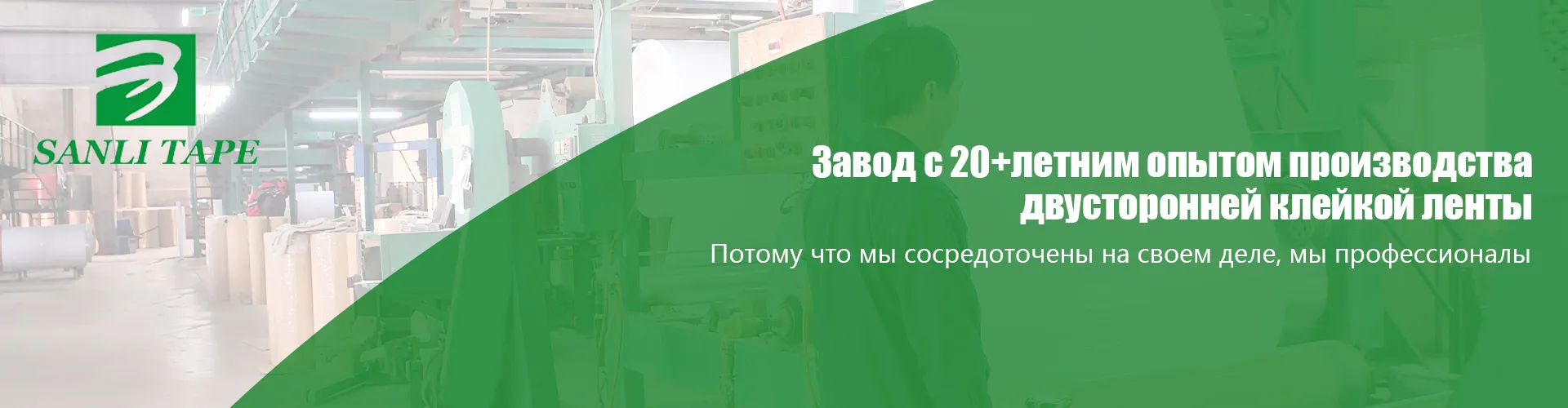
A striking example of such evolution is the companyEnping Sunli Adhesive LLC. Operating on the market since 1997, in 23 years this manufacturer has gone from producing standard products to creating high-tech solutions that meet strict international standards. Today, their portfolio includes not only classic reinforced and fabric tapes (Duct tape), but also specialized materials: double-sided tapes based on PET and polyethylene foam, nano-magnetic tapes, as well as solutions for the automotive and furniture industries. The presence of ISO 9001:2008 and ISO 14001 certificates confirms that modern Chinese factories, such as Sanli, prioritize not only volume, but also quality stability, resistance to temperature and humidity, as well as the ability to flexibly customize the properties of the adhesive to suit the specific client’s needs (OEM/ODM).
The key parameter that we recommend paying attention to first is the density of the reinforcing mesh (grammar). In our practice, there have been cases when a customer saved 5% on the cost of a batch by choosing a tape with a mesh density of 80 g/m² instead of the required 120 g/m². The result was an accident in the warehouse: pallets weighing 800 kg came apart when being lifted by a forklift because the belt could not withstand the dynamic load. The rupture occurred not along the adhesive seam, but through the material itself. This cost the company several million rubles in damages and loss of reputation. So never just look at the price per roll; Always request a technical data sheet indicating the density of the base.
In 2026, tape with a base density of 140 g/m² and a total thickness of at least 0.35 mm became the de facto standard for heavy industry. Such indicators provide tensile strength at the level of 90-110 N/25mm in the longitudinal direction. For comparison, five years ago similar parameters were considered premium and were expensive. Now Chinese factories have learned to produce such volumes thanks to the modernization of extruders and the introduction of computer vision systems to control the uniformity of glue application.
Another important aspect is the operating temperature range. The Russian climate makes strict demands. Cheap rubber-based adhesives become brittle and lose their stickiness at temperatures below -20°C. New acrylic dispersions (acrylic-based), which have been widely introduced in China since 2025, maintain adhesion down to -40°C and even up to -50°C in special modifications. If your cargo will be transported through Siberia or stored in an unheated warehouse, the choice of adhesive type becomes a matter of cargo safety and not just a technical detail.
We are also seeing an increase in demand for colored reinforced tape. This is not a tribute to fashion, but a need for labeling. Blue tape is often used to indicate fragile goods, red for hazardous substances, and yellow for quarantine areas. In 2026, Chinese factories will offer stable base coloring that does not fade under ultraviolet light, which is critical for cargo located in open areas. Transparent tape with colored mesh is also gaining popularity, allowing you to see the contents of the package while maintaining high strength.
Comparative table of types of reinforced tape (2026 data)
| Parameter | Budget segment (PE basis) | Industrial standard (PP base) | Premium/Special Purpose |
|---|---|---|---|
| Base material | Polyethylene (LDPE/HDPE) | Polypropylene (BOPP/CPP) | Composite (Fiberglass + Polymer) |
| Mesh Density | 60 – 90 g/m² | 110 – 150 g/m² | 180 – 250 g/m² |
| Tensile strength | 40 – 60 N/25mm | 80 – 110 N/25mm | 120 – 160 N/25mm |
| Glue type | Rubber (Hot-melt) | Acrylic / Reinforced rubber | Special acrylic (Low-temp) |
| Operating temperature | -10°C to +60°C | -30°C to +80°C | -50°C to +120°C |
| Application | Light packing, office | Logistics, construction, palletizing | Refrigeration chambers, oil and gas, aggressive environments |
| Average price (export) | $0.45 – $0.60 / m² | $0.75 – $0.95 / m² | $1.10 – $1.50 / m² |
Pay attention to the “Average price” column. These figures are relevant for wholesale quantities from 10,000 m², subject to delivery FOB port of Shanghai or Ningbo. The price may fluctuate depending on the yuan exchange rate and the cost of petrochemical raw materials, but the proportion between segments remains stable. Buying a premium segment for a regular box of books is an overpayment, but using a budget option for fixing pipes on a construction site in winter is a direct risk of an emergency.
Pricing and cost factors: what makes up the price of China reinforced adhesive tape
Understanding the price structure protects you from unscrupulous suppliers who can hide defects behind fancy marketing. The cost of reinforced tape is formed from three main components: raw materials (base + glue), labor costs and logistics. In 2026, the share of raw materials is about 65-70% of the final price of the product. This means that any fluctuations in prices for polypropylene granules or acrylic emulsion are instantly reflected in the price lists of factories.
Many buyers make the mistake of comparing the price per roll without taking into account the length and width. A standard roll in China is often 50 yards (45.7 meters) or 55 yards (50 meters) long, while in Russia they are used to the metric system (50 m). The difference seems small, but when ordering a 20-foot container, which includes about 15,000 - 18,000 rolls, this “invisible” savings for the manufacturer turns into thousands of dollars in net profit for him and lost product for you. Always ask for the total area of your order in square meters (m²) rather than the number of rolls.
Another hidden factor is the thickness of the adhesive layer. Unscrupulous manufacturers may claim a tape thickness of 0.3 mm, but make the adhesive layer only 15-18 microns instead of the required 25-28 microns. It is difficult to distinguish such tape visually, but in practice it will not stick to the dusty surface of the cardboard or freeze in the cold. In our practice, there was a case when a batch of tape, purchased at a dumping price, simply rolled off the pallet due to vibration in transit. Laboratory analysis showed that the adhesive thickness was underestimated by 35%. Savings on purchases amounted to $2,000, but losses from repackaging and transport downtime reached $15,000.
In 2026, it is also important to consider environmental certifications. Factories operating according to ISO 14001 standards and using solvent-free adhesives have slightly higher costs, but their products pass customs control in the EU and the Russian Federation without problems. Cheap tape that is high in volatile organic compounds (VOCs) could be rejected at the border or cause complaints from your plant's environmentalists. The price of “green” tape is 5-8% higher, but this is insurance against legal risks.
The factor of production scale plays a decisive role. Large factories in Eastern China have their own film production and adhesive lines. They control the entire value chain. Small workshops buy semi-finished products from third parties and only cut them into rolls. The price difference between these two types of suppliers can reach 15%, but the difference in quality consistency is colossal. For long-term contracts, we strongly recommend working only with full-cycle manufacturers.
Review of new products in 2026: innovations in the production of adhesive tape
The market does not stand still, and 2026 has brought several interesting technological solutions that are already available for order. The first innovation isbiodegradable reinforced tape. Under pressure from global environmental regulations, Chinese engineers have developed a polylactide (PLA) base with natural fibers. This tape retains its strength for up to 6 months, after which it begins to disintegrate under the influence of microorganisms. This is an ideal solution for companies seeking carbon neutrality and participating in government tenders with eco-criteria.
The second trend istape with reinforced edge. The problem with many cheap belts is that when unrolled, the edge often breaks or becomes frayed, making it difficult for packers to work and slowing down line speed. New edge sealing technology makes the edge smooth and durable. Tests have shown that the speed of manual packaging using such a tape increases by 15-20%, since the operator does not need to waste time searching for the end or struggling with a jammed tape. For automatic lines, this is critically important, as it reduces the amount of equipment downtime.
The third innovation concerns adhesion to difficult surfaces. Adhesive compositions have emerged that can adhere reliably to low surface tension surfaces, such as Teflon or some types of plastics, as well as to wet cardboard. Previously, such tasks required expensive specialized tapes. Now it is available in the mass segment. This opens up new possibilities for packaging food, frozen goods and construction materials, which often have condensation on the surface.
It is also worth noting the developmentsmart packaging. Some cutting-edge factories have begun introducing tapes with built-in RFID tags or color-changing indicators. For example, the tape may change color if the load is impacted or if the temperature is outside of acceptable limits. Although it is still a niche product with a high cost, for the transport of pharmaceuticals or electronics it is becoming a safety standard. Chinese manufacturers are rapidly scaling such technologies, making them more accessible to medium-sized businesses.
How to choose a reliable supplier: checklist and risk assessment
Choosing a partner in China is always a balance between price and reliability. In 2026, it is not difficult to find a factory; it is more difficult to find one that will not fail in six months. Our experience suggests that the first step is to verify the certificates. Don't trust the scans on the website. Request originals of ISO 9001 (quality management) certificates and, which is especially important for Russia, the EAC (Eurasian Conformity) certificate. Without EAC marking, legal import of a consignment of goods into the territory of the Russian Federation is impossible. Many small factories work “in the gray” and cannot provide these documents, shifting the risks to the buyer.
The second step is to request samples. Never place your first order without testing a sample. But just getting a sample is not enough. It is necessary to carry out a crash test in conditions as close as possible to real ones. Place the tape on the box, shake it, leave it in the cold for a day, and try to tear it off with your hands. Compare the behavior of the Chinese sample with what you are using now. It often happens that the tape looks great, but the glue flows in the heat or crumbles in the cold.
The third criterion is production flexibility and minimum quantity (MOQ). Large factories often do not want to deal with orders of less than 10,000 meters or require an advance payment of 50-100%. More flexible factories are ready to work with batches of 2,000 meters and offer conditions of 30% prepayment, 70% against copies of documents. To start cooperation, it is better to look for just such partners. However, remember: a MOQ that is too low may signal that the factory is offloading orders to small intermediaries, losing control over quality.
The fourth point is production audit. In the era of video communication, this has become easier. Ask for a real-time video tour of the workshop. Pay attention to the cleanliness of the glue application room, the presence of a quality control system (laboratories with tensile testers), and warehouse conditions. If they only show you a beautiful office and refuse to show you the workshop, this is a red flag. In our practice, we identified “factories” that were actually ordinary warehouses repackaging goods of unknown origin.
And the last, but most important tip: check your reputation through independent sources. Use services like Qichacha to check a company's legal status, founding date, and legal claims. A company that has been in existence for less than 3 years and has contract litigation is a risky partner. The stability of supplies in 2026 depends on the financial stability of the plant, since the commodity market is volatile, and weak players simply go bankrupt without fulfilling their obligations.
Logistics and customs clearance: features of import to the Russian Federation
Import of industrial products from China to Russia in 2026 has its own specifics. Reinforced adhesive tape is classified according to HS code 3919 (self-adhesive plates, sheets... made of plastics). The exact definition of the code depends on the composition of the base and the presence of reinforcement. An error in classification may result in incorrect duty calculations and fines. It is recommended to obtain a preliminary class decision from the Federal Customs Service in advance or contact an experienced broker.
Delivery times remain an important planning factor. Sea delivery through the ports of the Far East (Vladivostok, Nakhodka) takes about 25-35 days to the port, plus 10-15 days for customs clearance and delivery to the central warehouse. Rail delivery is faster (15-20 days), but more expensive and depends on the capacity of border crossings, which can be busy during peak seasons. Air transportation for such heavy and bulky cargo as tape is not economically feasible, unless we are talking about the urgent delivery of samples or a unique special order.
Packaging for export must be especially strong. Rolls are usually packed 6 or 12 pieces per cardboard box, then the boxes are formed onto pallets and stretched. It is important to ensure that the manufacturer uses high-quality corners and a sufficient number of layers of stretch film. In our practice, there have been cases when, during sea transportation in high humidity conditions, cardboard boxes became soaked and destroyed if they were not additionally protected. Require the use of moisture-resistant cardboard or inner polyethylene lining.
Document flow must be impeccable. The invoice, packing list, bill of lading and certificate of origin must be fully consistent with each other. Any discrepancy in the weight, number of pieces or description of the goods will result in a delay in the release of the goods at customs. Check the description of the goods especially carefully: it must match what is indicated in the declaration of goods. The phrase "Plastic Tape" is too general; It’s better to write “Reinforced Adhesive Tape based on PP with acrylic adhesive”.
Frequently Asked Questions
What is the minimum quantity (MOQ) for ordering reinforced tape directly from the factory?
For most large factories in China, the minimum quantity is 10,000 linear meters or one full pallet (about 1500-2000 kg). However, many factories are willing to consider orders from 2,000 - 3,000 meters, especially if you agree to standard sizes (48mm or 72mm width) and colors. Orders of smaller volume are usually redirected to trading companies, which increases the price by 10-15%. Для пробной партии лучше договориться о покупке образца или небольшой партии по повышенной цене, чтобы протестировать качество перед крупным контрактом.
Можно ли нанести свой логотип на ленту и сколько это стоит?
Да, нанесение логотипа (печатная лента) — стандартная услуга. Обычно требуется изготовление печатной формы (клише), стоимость которой составляет $50-$100 за цвет. Эта плата взимается один раз. При заказе партии от 5 000 метров многие заводы возвращают стоимость клише или делают печать бесплатно. Срок изготовления такой партии увеличивается на 7-10 дней из-за настройки печатного оборудования. Важно предоставить макет в векторном формате (AI или PDF) с четким указанием цветов по шкале Pantone.
Какие гарантии качества дают китайские производители?
Ответственные заводы предоставляют гарантию соответствия техническим характеристикам, указанным в спецификации. Если лабораторные тесты независимой экспертизы покажут отклонение плотности, адгезии или прочности на разрыв более чем на 5-10% от заявленных значений, производитель обязан заменить брак или вернуть деньги. Однако гарантия не распространяется на неправильное хранение (например, хранение под открытым небом) или использование ленты не по назначению. Все условия возврата и рекламаций должны быть четко прописаны в контракте до отгрузки.
Подходит ли китайская армированная лента для использования при экстремально низких температурах?
Да, но только специальные серии. Стандартная лента на каучуковой основе теряет свойства уже при -15°C. Для работы в условиях Сибири или Крайнего Севера необходимо заказывать ленту на акриловой основе с пометкой «Low Temperature» или «Winter Grade». Такие продукты сохраняют эластичность и адгезию до -40°C и даже -50°C. При заказе обязательно указывайте этот требование в техническом задании и запрашивайте протоколы испытаний при низких температурах.
Conclusion and recommendations for action
Рынок Китая в 2026 году предлагает беспрецедентные возможности для оптимизации затрат на упаковочные материалы без потери качества.Китай армированная клейкая лентастала продуктом высокого технологического уровня, способным конкурировать с лучшими мировыми брендами. Ключ к успеху лежит в тщательном подборе поставщика, понимании технических нюансов и грамотном построении логистической цепочки. Не гонитесь за самой низкой ценой на рынке — она часто скрывает риски, которые обойдутся вам дороже. Инвестируйте время в проверку образцов и аудит фабрики.
Если вы планируете масштабировать свой бизнес или снизить издержки на логистику, правильный выбор упаковочных решений станет вашим конкурентным преимуществом. Мы рекомендуем начать с заказа тестовой партии у проверенного производителя полного цикла, чтобы оценить качество в реальных условиях эксплуатации вашего предприятия. Помните, что надежная упаковка — это лицо вашей компании и гарантия сохранности груза.
Готовы обсудить детали поставки и получить персональный расчет стоимости?Contact us todayдля консультации с нашими экспертами по ВЭД и техническими специалистами. We will help you choose the optimal solution for your tasks and budget.
Для получения дополнительной информации о других промышленных материалах из Китая, посетите наш разделпромышленные материалы и комплектующие, где вы найдете обзоры и аналитику по широкому спектру продукции.