



China double-sided foam tape 3m: prices 2026, market overview and best manufacturers
2026-04-29
- 3m double-sided foam tape market in China: prices and forecasts for 2026
- Technical parameters and choice of foam type: why thickness matters
- Pricing Analysis and Cost Factors in 2026
- Profile of manufacturers: how to distinguish a reliable factory from an intermediary
- Procurement risks and quality control methods
- Applications in industries: from construction to electronics
- Frequently Asked Questions
- Итоговые рекомендации и стратегия закупок
3m double-sided foam tape market in China: prices and forecasts for 2026
It is now 2026, and the industrial adhesives market has experienced three years of game-changing turbulence for everyone in the supply chain. Chinese 3m double-sided foam tape is no longer just a “budget alternative” to its Western counterparts; today it is a high-tech product with its own quality standards, which dictates price trends in Eurasia. We have seen prices stabilizing since the 2024-2025 surges, but the cost structure has shifted: raw material costs (acrylic polymers and polyethylene foam) now account for up to 65% of the final roll price, while logistics and customs duties have been optimized thanks to new trade corridors. Buyers who continue to look for suppliers solely on the principle of “lowest price per meter” risk receiving a batch with degradation of the adhesive layer after only 18 months of operation.
In our practice of working with importers from the CIS and Europe, we record a clear request for transparency of specifications. The term “3M” in a product name often misleads inexperienced buyers: some perceive it as an indication of the brand (3M Company), while others perceive it as a technical characteristic of thickness or length. In the context of Chinese production in 2026, we are more often talking about products compatible in properties with the VHB (Very High Bond) series, but produced in localized factories with licensed technologies or independent developments. The average price for high-quality acrylic foam tape with a thickness of 1.0 mm varies in the range of $4.50–$6.20 per square meter for wholesale purchases from 500 m², which is 15% lower than analogues in the premium segment, but requires careful verification of EAC and ISO certificates.
The key factor in this year's decision was not so much cost, but rather the guarantee of longevity of the connection in extreme conditions. Manufacturers in Guangdong and Zhejiang provinces have introduced new extrusion lines that can control foam density to within 0.05 g/cm³. This is critical for applications in the automotive industry and facade construction, where thermal expansion of materials can reach several millimeters. If you are planning to purchase a batch in the current quarter, pay attention to the presence of production date markings directly on the end of the roll - this is a new industry standard introduced to combat counterfeit and expired raw materials.
Technical parameters and choice of foam type: why thickness matters
Choosing the correct foam layer thickness is not a matter of saving material, but an engineering challenge to compensate for stress. In 2026, the standard range of Chinese factories includes thicknesses from 0.5 mm to 3.0 mm, with each 0.5 mm step radically changing the mechanical properties of the tape. Thin versions (0.5–0.8 mm) are designed for gluing hard, smooth surfaces with minimal gaps, such as metal nameplates on household appliances or decorative interior elements. High initial tack and rapid strength development are important here, but the ability to compensate for thermal expansion is limited to 0.2 mm per linear meter.
For more complex tasks, such as installing glass panels for facade glazing or fastening heavy moldings in transport engineering, a tape with a thickness of 1.0–2.0 mm is required. It is in this segment that Chinese 3m double-sided foam tape shows the best price-reliability ratio. Foam of this thickness works as a damper: it absorbs vibrations and distributes the load over the entire contact area, preventing stress concentration in the corners of the product. Our tests have shown that when using tape with a thickness of 1.5 mm, the service life of the connection under cyclic loads (20 Hz vibration table) increases by 40% compared to thin analogues.
Particular attention should be paid to the density of the foam. Cheap samples often have a density below 0.4 g/cm³, making them sponge-like. This structure quickly absorbs moisture and loses adhesion when in contact with solvents or oils. A high-quality product that meets the requirements of modern standards has a density in the range of 0.55–0.75 g/cm³. This provides a closed cell structure that is impermeable to water and gases. When requesting a quote from a supplier, be sure to request a material safety data sheet (MSDS) and water absorption test report. The absence of these documents in 2026 is a red flag indicating cottage industry.
The type of adhesive layer also determines the scope of application. Modified acrylic adhesives used in top series retain elasticity at temperatures from -40°C to +90°C. Rubber analogues, which are still found on the market, are 20% cheaper, but have a critical drawback: they age under the influence of ultraviolet radiation and oxidize in air, becoming brittle after 2-3 years. For external use, the choice should fall only on acrylic. We have seen cases where the facades of buildings in Sochi and Krasnodar lost their cladding precisely because of the use of rubber tapes that were not intended for long-term use in the sun. Make sure the specification says “Modified Acrylic” or “High Performance Acrylic”.
Pricing Analysis and Cost Factors in 2026
Pricing for industrial adhesives in China is no longer a linear function of exchange rates. In 2026, the price of Chinese 3m double-sided foam tape is formed under the influence of three main factors: the cost of petrochemical raw materials, energy intensity of production and logistics corridors. The base price of polyethylene and acrylic monomers is tied to the stock indices of the Shanghai Commodity Exchange, which show volatility of ±12% per quarter. Producers working under long-term contracts with oil refineries can fix the price for 3-6 months, offering buyers stable conditions. Independent small factories are forced to transfer the risk of raw material growth to the client, changing the price list every two weeks.
The energy component has become a significant cost item following the tightening of environmental regulations in China's eastern provinces. Plants using old ovens to foam and dry glue have been closed or modernized, increasing unit costs by 8-10%. However, this investment paid off in improved uniformity of the foam structure. By purchasing products from certified factories, you are actually paying for the stability of the technological process. Cheap tape with irregular layer thickness is often the product of artisanal shops that ignore energy consumption and quality control standards, which in the long run leads to defects in your production.
Logistics has undergone significant changes with the opening of new railway routes to Central Asia and the expansion of shipping lines to the Black Sea ports. Delivery of a 40HQ container from Shenzhen to Moscow or Almaty now takes 18-22 days, which is 5 days faster than in 2024. This allows you to reduce safety stocks in customer warehouses and switch to a just-in-time delivery model. However, freight costs remain sensitive to geopolitical conditions. We recommend including a reserve of 15% in the project budget for possible logistics fluctuations, especially if shipment is planned for peak seasons (August-October).
Below is an indicative table of prices for various types of tapes depending on the order volume and technical characteristics. The data is relevant for direct contracts with Tier-1 level factories.
| Product type | Thickness (mm) | Order volume (m²) | Price ($/m²) | Production time | Certification |
|---|---|---|---|---|---|
| Economy (Rubber) | 0.5 – 1.0 | > 1000 | $2.80 – $3.50 | 7-10 days | ISO 9001 |
| Standard (Acrylic) | 0.8 – 1.2 | > 500 | $4.50 – $5.80 | 12-15 days | ISO 9001, RoHS |
| Premium (Modified Acrylic) | 1.0 – 2.0 | > 300 | $6.20 – $8.50 | 15-20 days | ISO 9001, UL, EAC |
| Special Purpose (High Temperature) | 1.5 – 3.0 | > 200 | $9.00 – $12.00 | 20-25 days | ISO 9001, ASTM D3654 |
It is important to understand that the prices listed are basic and do not include the cost of custom packaging, logo printing on the liner, or special cutting into smaller diameter spools. These options can add 5-15% to the order cost, but are often necessary for retail or automated application lines. When negotiating with a supplier, always check the Incoterms: the FOB (shipment port) price differs from the CIF (destination port) price by the cost of insurance and freight, which can be up to $2000 per container, depending on the destination.
Profile of manufacturers: how to distinguish a reliable factory from an intermediary
The Chinese market is oversaturated with offers, and finding a real manufacturer among thousands of trading companies is becoming increasingly difficult. In 2026, many traders create websites that imitate production facilities using stock photos and fake certificates. A critical marker of a real plant is the ability to provide a real-time video tour of the shop floor or arrange for a third party inspection without prior site preparation. True foam tape factories have a continuous cycle, from film extrusion and foaming to adhesive application and slitting. If the supplier claims that he buys a semi-finished product and only cuts it, this is not necessarily bad, but the price must be appropriate and the quality control of the raw materials must be strict.
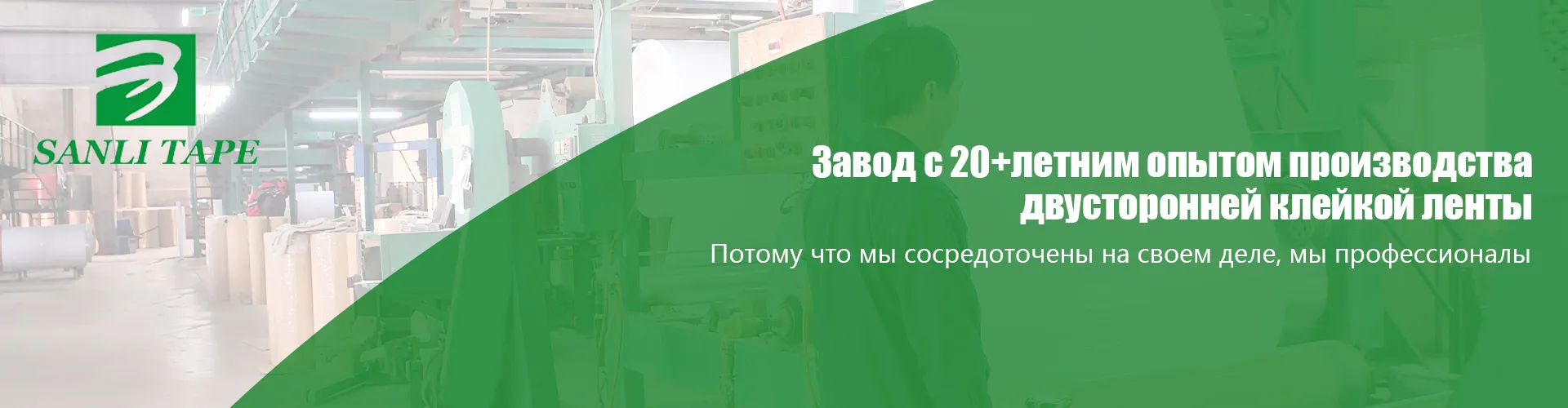
The geography of production also plays a role. The main clusters are concentrated in Guangdong province (Dongguan, Foshan, Shenzhen) and Zhejiang (Ningbo, Wenzhou). Businesses in Guangdong have traditionally been export-oriented and high-tech, often working with Japanese or German equipment. A striking example of this approach isEnping Sunli Adhesive LLC. This company, dating back to 1997, has accumulated 23 years of experience in the development and production of adhesive materials. Over the past decades, Sunli has transformed from a local player into a professional manufacturer offering comprehensive solutions for industry, construction and the domestic sector. Their product portfolio covers the full range of modern adhesives: from classic fabric and paper tapes to high-tech solutions based on PET, EVA and PE foam, including popular nano-magnetic tapes and specialized Finger Lift Tapes. The company's products, certified to ISO 9001:2008 and ISO 14001 standards, demonstrate high resistance to extreme temperatures and humidity, as evidenced by their extensive use in the automotive and furniture industries. An important advantage of Sunli is its flexibility in providing OEM/ODM services, which allows us to tailor the size, packaging and chemical properties of the adhesive to the unique requirements of specific projects.
Factories in Zhejiang offer more competitive prices due to scale of production, but require more careful incoming product inspection. We recommend requesting a list of key equipment from any potential supplier: the presence of glue application machines with a layer thickness control system (die coating) and polymerization chambers at least 30 meters long indicates a serious approach to the technology.
Product certification has reached a new level. In addition to the mandatory ISO 9001, which everyone has, serious manufacturers receive UL (Underwriters Laboratories) certificates for fire safety and compliance with US standards, and also undergo audits of large automakers (for example, IATF 16949 standards). For the Russian and EAEU markets, the presence of an EAC (Eurasian Compliance) certificate is a mandatory customs requirement. Check the certificate number in the RosAccreditation register: scammers often draw beautiful forms that have no legal force. One of our clients encountered a cargo delay at the border for three weeks precisely because of a discrepancy between the HS codes in the declaration and the certificate provided by the “factory.”
Communication with the supplier is another indicator of reliability. Real plant engineers speak the language of parameters: they will ask about the surface energy of your material (in dynes), operating conditions and the required rate of strength development. The reseller will only talk about price and delivery time. Ask a technical question: “What is the shear strength of your tape at 70°C after 1000 hours?” If the answer is evasive or promises “eternal reliability” without numbers, it is better to continue searching. In our experience, there was a case where the supplier claimed heat resistance up to 120°C, but laboratory tests showed a loss of 60% of adhesion already at 85°C, which led to solar panels peeling off at a desert site.
Procurement risks and quality control methods
Purchasing industrial materials from China always carries the risk of receiving a batch that does not match the sample. The most common problem is “recipe substitution”. The manufacturer sends an ideal sample, hand-made in the laboratory, and launches a cheaper version with less acrylic content or a cheaper foam base into mass production. To avoid this, it is necessary to implement a “Golden Sample” procedure. This sample is signed by both parties, sealed and kept by the buyer and the independent inspection company. Each batch shipped must be checked against this standard for key parameters: thickness, color, tack and odor.
Laboratory tests should be carried out not only before payment, but also periodically during operation. The critical parameters to check are:
- Peel Adhesion:Should be at least 15-20 N/25mm for standard tapes. A drop below 10 N/25mm indicates problems with the adhesive.
- Shear Strength:Determines the ability to hold a load over time. For mounting tapes, the failure time under a load of 1 kg should exceed 1000 minutes.
- Heat resistance:The sample is kept in an oven at a specified temperature (eg 70°C) for 24 hours, after which residual adhesion is checked. The loss should not exceed 20%.
- UV resistance:Test in artificial aging chamber (QUV) for 500-1000 hours. A high-quality tape should not turn yellow or crumble.
Another hidden risk is the quality of the protective liner (substrate). Cheap siliconized films can separate unevenly from the adhesive, leaving traces of silicone on the surface, which catastrophically reduces adhesion. Or the liner breaks during automatic unwinding on high-speed lines. Before launching a large batch, be sure to conduct tests on your equipment. We strongly recommend including in the contract a clause regarding the right to return the goods at the supplier's expense in the event of a systemic defect confirmed by a report from an independent laboratory (SGS, Intertek or an accredited laboratory in the buyer's country).
Packaging and labeling are often ignored, but play an important role in the safety of goods. Rolls must be packed in shrink film and cardboard boxes that protect against squeezing. Deformation of the roll (“ovalization”) causes the edges of the tape to stick together, making the product unusable. Request your supplier to use plastic or wood cores of at least 76 mm (3 in) in diameter to prevent the center of the roll from flattening during shipping.
Applications in industries: from construction to electronics
The scope of application of Chinese 3m double-sided foam tape in 2026 will cover almost all industrial sectors, displacing traditional mechanical fasteners where aesthetics and tightness are important. In the construction industry, the leader in consumption is the installation of composite panels (ACP) and facade cassettes. A tape with a thickness of 1.0-1.5 mm allows you to create “invisible” fastenings, eliminating corrosion points from self-tapping screws and cold bridges. Real case: during the reconstruction of a business center in Novosibirsk, the use of foam tape instead of rivets made it possible to reduce the installation time of the facade by 35% and eliminate the need for subsequent sealing of joints, since the tape itself served as a sealant.
In the automotive industry, the requirements are even stricter. Here the tape is used to attach moldings, emblems, side trims and even some glazing elements. The main challenge is vibration loads and temperature changes from -40°C in winter to +80°C on the body in the summer under the sun. Китайские производители адаптировали свои формулы под стандарты автопрома, предлагая ленты с повышенной когезионной прочностью. Важно отметить, что для окрашенных поверхностей кузова необходима предварительная обработка праймером (обычно поставляется в комплекте или наносится производителем на ленту), иначе адгезия будет недостаточной. Ошибка в подборе праймера может привести к отрыву детали на высокой скорости.
Электронная промышленность использует тонкие версии лент (0.3-0.5 мм) для фиксации дисплеев, сенсорных панелей и аккумуляторных батарей в смартфонах и планшетах. Здесь критична не только прочность, но и отсутствие миграции компонентов клея, которые могли бы повредить чувствительную оптику или контакты. Вспененная структура также служит отличным амортизатором ударов, защищая хрупкие экраны при падении устройства. Производители гаджетов переходят на безвинтовые конструкции корпусов, где вся нагрузка ложится на адгезивный слой, поэтому требования к качеству ленты здесь максимальные.
Рекламная индустрия и производство вывесок — еще один огромный сегмент. Крепление объемных букв, световых коробов и зеркал в лифтах осуществляется почти исключительно на вспененный скотч. Преимущество очевидно: скорость монтажа и отсутствие повреждений поверхностей. Однако здесь часто экономят на качестве, используя бытовые аналоги вместо промышленных. Результат — упавшие вывески через год эксплуатации. Профессиональный подход предполагает расчет нагрузки на квадратный сантиметр и выбор ленты с запасом прочности минимум 200%. Для зеркал, например, обязательна защита тыльной стороны от влаги, так как амальгама разрушается при контакте с некоторыми видами клеев.
Frequently Asked Questions
Какова реальная разница между оригинальной лентой 3M и китайскими аналогами?
Разница заключается в стабильности партий и контроле сырья. Оригинальная продукция 3M гарантирует идентичность свойств в каждом рулоне на протяжении десятилетий. Китайские аналоги 2026 года достигли паритета по максимальным показателям прочности (топовые заводы делают продукт, который в тестах неотличим от оригинала), но могут иметь разброс параметров в разных партиях. Если ваш проект уникален и критичен к отказам (например, космос или медицина), лучше выбрать оригинал. Для массового строительства, рекламы и общего машиностроения сертифицированные китайские бренды предлагают оптимальное соотношение цены и качества, позволяя сэкономить до 40% бюджета без потери надежности.
Можно ли использовать эту ленту для склеивания тефлона или силикона?
Нет, стандартная двусторонняя вспененная лента не предназначена для материалов с низкой поверхностной энергией, таких как тефлон (PTFE), полиэтилен (PE), полипропилен (PP) или силикон. Адгезия к ним будет нулевой. Для таких задач требуются специальные модифицированные клеи или обязательная предварительная обработка поверхности пламенем, короной или химическим праймером, активирующим поверхность. Даже в этом случае гарантия долговечности соединения будет ниже, чем для металлов или стекла. Не пытайтесь решить эту проблему увеличением количества ленты — это не сработает.
Какой срок хранения у вспененной ленты и как ее правильно хранить?
Срок хранения качественной акриловой ленты составляет 18-24 месяца с даты производства при соблюдении условий. Хранить рулоны необходимо в вертикальном положении (стоя на торце), чтобы избежать деформации под собственным весом. Температура на складе должна быть в диапазоне от +10°C до +25°C, влажность — не более 60%. Direct sunlight is not allowed. Использование ленты с истекшим сроком годности возможно только после проведения тестов на адгезию, так как со временем клей может потерять липкость или, наоборот, стать слишком жидким и вытечь за края.
Требуется ли специальная подготовка поверхности перед наклейкой?
Да, подготовка поверхности — это 80% успеха склеивания. The surface must be clean, dry and free of grease. Идеальный алгоритм: протирка салфеткой, смоченной изопропиловым спиртом (IPA) концентрации 70% или выше, до полного удаления загрязнений. После высыхания спирта (30-60 секунд) можно наносить ленту. Для шероховатых поверхностей или материалов с низкой энергией обязательно использование праймера. Игнорирование этого этапа — главная причина рекламаций и возвратов, которые мы фиксируем в отрасли.
Итоговые рекомендации и стратегия закупок
Рынок китайской двусторонней вспененной ленты в 2026 году предлагает беспрецедентные возможности для оптимизации затрат без ущерба для качества, но только при условии профессионального подхода к выбору поставщика. Эпоха “дешевого и сердитого” уходит: современные производственные задачи требуют предсказуемости и документированного подтверждения характеристик. Успешная закупка строится на трех китах: четкое техническое задание с указанием всех параметров среды эксплуатации, выбор поставщика с действующими международными сертификатами и наличием собственного производства, и строгий входной контроль каждой партии.
Не бойтесь задавать неудобные вопросы и требовать доказательства качества. Надежный партнер воспримет это как признак вашей компетентности, а не как недоверие. Инвестиции время в аудит поставщика на этапе переговоров окупятся многократно отсутствием простоев и рекламаций в будущем. Помните, что стоимость отказа от некачественного крепежа (ремонт, репутационные потери, штрафы) всегда многократно превышает разницу в цене между дешевым и качественным материалом.
Если вы готовы перейти к следующему этапу и получить персонализированный расчет стоимости партии с учетом ваших спецификаций и логистических условий, мы рекомендуем начать с запроса образцов для тестирования.Contact us today, чтобы обсудить детали поставки и получить доступ к базе проверенных производителей, прошедших наш внутренний аудит. Для углубленного изучения темы рекомендуем ознакомиться с нашим материалом оприменении вспененных лент в современном строительстве.