



China double-sided adhesive tape 19mm: prices 2026 and market overview
2026-04-28
- 19mm double-sided tape market in 2026: why prices are rising and quality is falling
- Technical decomposition: what makes up the price of 19 mm tape
- Analysis of price segments: where is the risk line?
- Risk factors for imports from China in 2026
- How to choose a reliable supplier: audit checklist
- Frequently Asked Questions
- Conclusion: Investing in Reliability
19mm double-sided tape market in 2026: why prices are rising and quality is falling
It's 2026, and the industrial tape market in China is experiencing tectonic shifts. If you are lookingChina double sided adhesive tape 19mm, then forget about the prices from three years ago - they are no longer relevant. The 2024-2025 commodity crises and stricter environmental regulations in Jiangsu and Zhejiang provinces caused the cost of acrylic adhesives to increase by 18% and PET base film by 12%. In our practice, we see many buyers making a fatal mistake: they compare current quotes with the 2023 price lists and consider the offer to be too high. It's a trap. A cheap tape today is an almost guaranteed defect after 6 months of use.
The real picture is this: the average price range for high-quality 19 mm wide tape is now from $0.45 to $0.85 per roll (standard 50 meters), depending on the thickness of the adhesive layer and the type of base. Any offer below $0.35 should be taken as a red flag. Most likely, the manufacturer replaced imported acrylic with cheap low-grade rubber or used recycled materials for the substrate. One of our clients, an electronics manufacturer in Novosibirsk, experienced this personally: a batch of “economy” tape costing $0.28 per roll began to peel off at temperatures above +40°C right on the conveyor. Losses from line downtime exceeded the cost of saved material by 40 times.
In this article we will not rehash marketing brochures. We will analyze the anatomy of the price, show where manufacturers save money to your detriment, and provide a checklist for checking the supplier before sending a deposit. The Chinese market in 2026 requires not just attention, but technical literacy. Read on to understand exactly what you're paying for and how to avoid buying a pig in a poke.
Technical decomposition: what makes up the price of 19 mm tape
19 mm wide (often referred to as 3/4 inch) is one of the most popular formats for mounting profiles, fastening panels and assembling electronic components. However, it is in this format that it is most difficult to visually distinguish a quality product from a fake. The price is formed from three key components: backing, adhesive and coating process. Understanding the physics of these layers is critical to justifying budgets to your procurement department.
Backing: the battle between PET and PVC
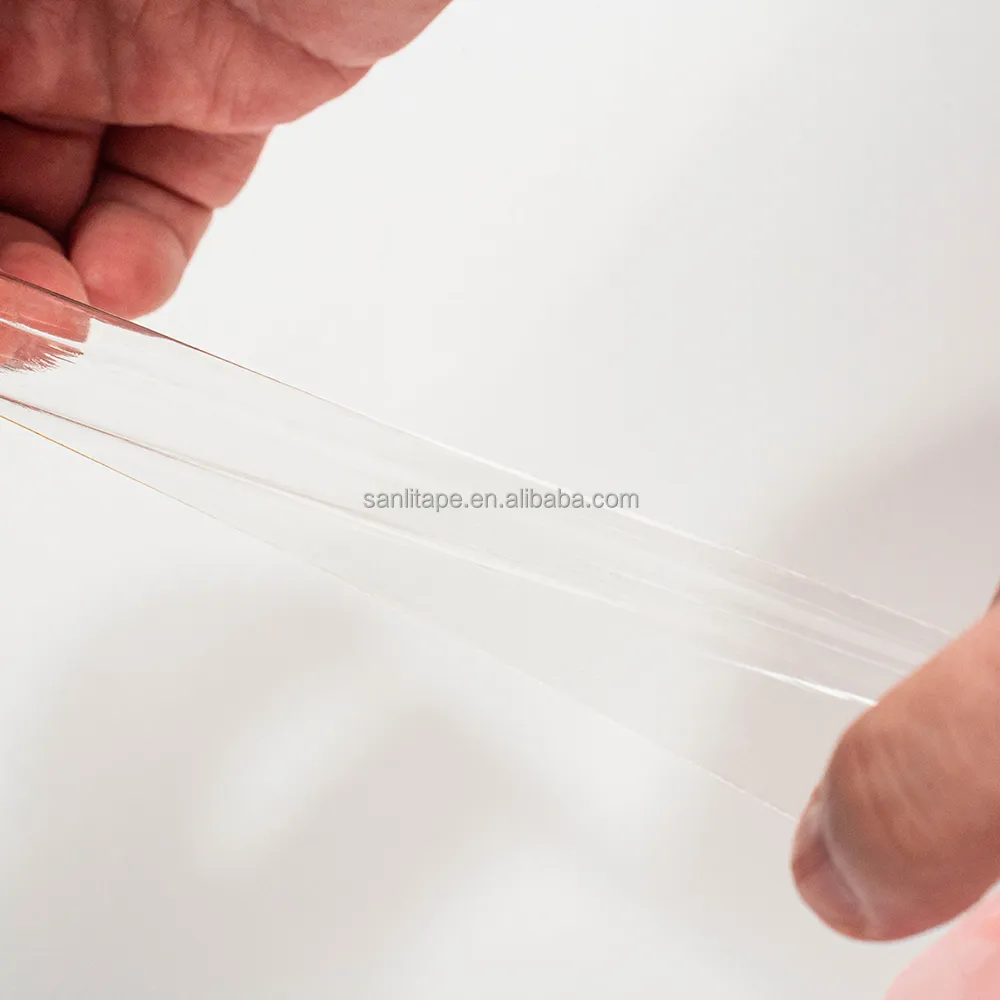
In 2026, PET (polyester) film remains the de facto standard for industrial applications. It provides dimensional stability and heat resistance up to 150°C. Some suppliers try to offer PVC or even paper based tape, disguising it as a “universal solution”. The price difference can reach 30%, but the consequences are catastrophic. PVC shrinks over time (“memory effect”), creating tension that tears off the fasteners. The paper absorbs moisture and loses adhesion. If your project involves outdoor use or vibration conditions, request a certificate indicating the type of substrate. In our laboratory, we tested samples where the declared PET actually turned out to be a mixture with polypropylene - such a tape broke with manual force after just a week.
Adhesive layer: thickness matters
This is where the main savings for manufacturers lie. The standard thickness of the adhesive layer for installation tasks should be at least 80-100 microns (the total thickness of the tape is usually 0.15-0.2 mm). Unscrupulous factories reduce this parameter to 50-60 microns. Visually, the roll looks the same, but the contact area with the surface is reduced by 40%. For a tape with a width of 19 mm, this is critical: a narrow strip already has a small adhesion area, and any decrease in the thickness of the adhesive leads to a drop in the peeling load. Ask the supplier: “What is the total thickness of the tape and the thickness of the adhesive layer?” If the answer is evasive or the phrase “standard thickness” sounds, prepare for problems.
Winding density and roll length
Another hidden parameter is the actual length of the roll. Claimed 50 yards (45.7 meters) or 50 meters often turns out to be a fiction. The winding can be free-winding, which is why the roll actually contains only 40 meters of material. When purchasing thousands of rolls in bulk, this difference turns into direct financial losses. Require net weight to be indicated on packaging. For 19 mm tape, the standard roll weight (50 m) must be within a strictly defined corridor. A deviation of more than 5% downwards indicates under-production.
Action Now: Request a technical data sheet (TDS) for the tape from your current supplier and compare the specified adhesive and backing thicknesses to what you physically receive. If there are no documents, this is a red flag.
Analysis of price segments: where is the risk line?
The Chinese market is heterogeneous. Conventionally, we divide all manufacturers of double-sided tape into three echelons. The choice of echelon determines not only the price, but also your risks, the need for incoming control and the likelihood of complaints.
Budget segment (up to $0.35 per 50m roll)
This is a high risk area. Factories operating here are focused on the Chinese domestic market or export to countries with low levels of quality control. The main methods of saving: the use of regranulate for the base, adhesive compositions with a high solvent content (strong odor, toxicity), lack of thickness control. This tape may be suitable for temporary fixation of packaging or decorative elements that do not bear load. Using it to mount structures, automotive parts or electronics is reputation suicide. In 2025, we recorded an increase in the number of complaints specifically about this segment due to the fact that the glue “dried out” and crystallized after 3 months.
Middle segment ($0.45 – $0.70 per roll)
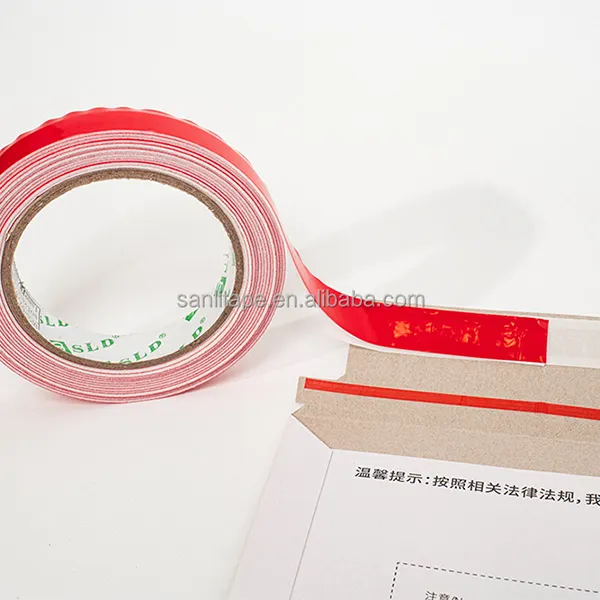
The golden mean for most industrial tasks. Manufacturers at this level have ISO 9001 certificates, use imported adhesive dispersions (often from Japan or Korea) and high-quality Chinese bases. The tape has stable characteristics, good initial tack and final adhesion. This is where the bulk of the demand forChina double sided adhesive tape 19mmfor construction and furniture production. The risk of defects is minimal, but still requires random testing of batches. This segment offers the best price-reliability ratio.
Premium segment (from $0.80 and above)
This includes joint ventures with Japanese or American brands located in China, as well as top local factories exporting to the EU and the USA. Products comply with UL, REACH, RoHS standards. Adhesive systems are designed for extreme conditions: temperatures from -40°C to +150°C, aggressive environments, high shear loads. An overpayment of 30-50% compared to the average segment is justified if we are talking about critical components, where the cost of an error exceeds the cost of the material. For example, fastening elements in electric vehicles or facade systems of skyscrapers.
A striking example of a player that successfully combines the reliability of the premium segment with the flexibility of the average segment is the companyEnping Sunli Adhesive LLC. Operating on the market since 1997, this manufacturer has accumulated 23 years of experience in the development and production of high-quality adhesive materials. Unlike many newcomers, Sunli does not specialize in one type of product, but offers comprehensive solutions: from classic fabric and paper tapes to high-tech double-sided tapes based on PET, PE and EVA foams, as well as nano-magnetic tapes and VHB analogues. ISO 9001:2008 and ISO 14001 certification confirms their commitment to international quality and environmental standards. For projects that require an individual approach, the company provides OEM/ODM services, adapting sizes, packaging and adhesive properties to the specific needs of the client - be it the automotive industry, furniture production or construction. This approach allows you to avoid the risks inherent in the budget segment without overpaying for the excessive characteristics of Western brands.
| Parameter | Budget segment | Middle segment | Premium segment |
|---|---|---|---|
| Base type | PVC, rPET, paper | Virgin PET (Chinese production) | Premium grade PET (imported raw materials) |
| Glue type | Rubber / Cheap acrylic | Acrylic water dispersion | High Density Acrylic / Special Formulations |
| Heat resistance | Up to +60°C (short term) | Up to +120°C | Up to +150°C and above |
| Smell | Harsh, chemical | Weak or absent | Missing |
| Certification | Missing or fake | ISO 9001, basic tests | UL, EAC, REACH, SGS reports |
| Application | Packaging, decor | Furniture, construction, general installation | Automotive industry, electronics, facade work |
The choice of segment should be dictated not by the desire to save money here and now, but by the cost of possible product failure in the future. For long-term projects, we strongly recommend avoiding the lower price threshold.
Risk factors for imports from China in 2026
Importing industrial chemicals and consumables in 2026 is fraught with new challenges. Logistics have become more predictable, but documentation and quality requirements have become more stringent. BuyingChina double sided adhesive tape 19mm, you should consider the following risks that can turn a good deal into a headache.
1. The problem of the “golden sample”
A classic deception scheme: the supplier sends an ideal premium sample, you approve it, place an order, and the product arrives of average or low quality. Factories often have several production lines: one for samples and exhibitions, the other for mass orders. How to protect yourself? Request that the sample be cut directly from the batch that will go into production (if the order is large), or conduct an independent examination of the first batch shipped before paying the balance. In our practice, there was a case when the composition of the glue in the sample and in the container differed in viscosity by 25%, which became clear only after the start of use.
2. Certification and customs barriers
For import into the Russian Federation and the EAEU countries, a declaration of conformity with the CU TR is required. Chinese suppliers often provide certificates that are not valid in our region, or even falsify laboratory reports. Lack of the correct HS code or incorrectly executed documents can lead to cargo being delayed at customs for weeks. Fines for non-compliance of products with safety requirements can be significant. Always check with the supplier for a valid EAC certificate for a specific tape model or be prepared to obtain it yourself at your own expense.
3. Seasonality and production time
Don't forget about Chinese New Year (February) and the summer heatwave. In July-August, many factories reduce shifts due to energy consumption restrictions, and in January-February they shut down completely. An order placed in December without taking these factors into account risks arriving only in April. In addition, high temperatures in summer affect the storage of glue in warehouses without air conditioning - the tape may lose its properties even before shipment. Plan your purchases at least 3 months before the peak consumption season.
4. Currency fluctuations and payment terms
Payments in yuan have become the standard, but exchange rate volatility remains. Fix the rate in a contract or use hedging instruments. Avoid 100% prepayment. The gold standard for new suppliers is 30% deposit, 70% against a copy of the bill of lading (B/L) or after inspection of the goods at the warehouse in China. Never agree to payment through personal accounts of managers, only corporate accounts of the factory.
Action now: check your current contract with your Chinese partner for liability clauses for non-compliance with sample quality and cargo storage conditions.
How to choose a reliable supplier: audit checklist
Finding a supplier in 2026 isn't just about browsing through a directory on Alibaba. This is detective work. Here is the algorithm we use to select double-sided tape factories, allowing us to weed out 90% of unreliable partners.
- Checking legal purity and specialization.
Request a Business License. Please note the registration date and authorized capital. A factory registered 3 months ago with a capital of $50,000 is most likely a fly-by-night trader. Look at the scope of business: it should indicate “production of adhesive tapes”. If there is only “trade” (sales), you are dealing with an intermediary. Intermediaries do not provide quality guarantees and do not control the technology. - Request Test Reports.
A real manufacturer will easily provide recent reports from reputable laboratories (SGS, Intertek, TUV) for the last 6-12 months. The reports must indicate: adhesion to steel (peel adhesion), tensile strength, heat resistance. Compare the numbers in the report with what is written in their catalog. Discrepancies of more than 10% are a reason to be wary. Ask for originals or links to check reports on laboratory websites. - Video inspection of production.
In the era of 2026, there is no excuse for not making a video call. Request a live broadcast from the workshop. Pay attention to the availability of coating machines, slitting machines and cleanliness of the premises. Dust is the enemy of glue. If the video shows only a warehouse with finished products or an office, it means they do not have production. We often ask to see the specific machine on which our order will be produced and to check the date of its last service. - Raw material supply chain audit.
Ask: “Where do you buy acrylic glue and PET film?” Large factories work with well-known suppliers of raw materials (for example, 3M, Henkel, or large Chinese chemical holdings). If a supplier can't name the raw material supplier or says “that's a trade secret” in response to a simple question about the brand of film, they're probably using the cheapest raw material on the market. - Trial batch testing.
Never place a full container without first testing. Order a small batch (for example, 50-100 rolls) by air delivery or by sea as part of a groupage shipment. Conduct your own tests in your real conditions: stick the tape on the desired material, leave it for a day, try to tear it off, heat it with a hairdryer. Only successful completion of this stage gives the right to a large contract.
This approach takes time, but it saves millions. One of our clients spent two weeks auditing a factory in Guangzhou, but received a product that fit perfectly into their production line without a single complaint for two years.
Frequently Asked Questions
What is the minimum order quantity (MOQ) for 19mm tape?
For standard products (transparent acrylic PET tape), most factories are willing to ship from 500 to 1000 rolls. This is approximately 1-2 pallets. If you need less, the unit price will increase by 20-30% due to the cost of retooling the cutting line. For customized products (with your logo, special color or thickness), MOQ usually starts from 3000-5000 rolls. In 2026, some flexible production facilities offer a “low start” of 200 rolls, but the production time for such a batch may take up to 3-4 weeks.
Is it possible to get tape with adhesive that is resistant to low temperatures?
Yes, it is possible, but requires a special order. Standard acrylic adhesive begins to lose its tack at temperatures below -10°C. To work in the conditions of the Russian north or unheated warehouses, a modified acrylic or a special rubber composition is required that retains properties down to -40°C. Be sure to indicate this parameter in the technical specifications. Ordinary tape simply won’t stick in cold weather or will fall off within an hour.
What is the shelf life of double-sided tape?
When stored correctly (in the original packaging, at a temperature of +15...+25°C and a humidity of 40-60%), the shelf life of high-quality tape is 12-24 months from the date of production. After this period, the glue may polymerize more strongly, making initial adhesion more difficult, or, conversely, lose its properties. Always check the manufacturing date on the box. Don't buy tape that's more than a year old unless you plan to use it immediately.
What is the difference between paper-based and film-based tape?
Paper-based tape (masking tape type) is cheaper, easily torn by hand and suitable for painting work or temporary fixation of light objects. It is not moisture resistant. Film-based tape (PET, PVC) is stronger, resistant to moisture, UV radiation and stretching. For permanent installation, external work and loaded connections, only a film base is used. They cannot be confused - the paper tape will collapse in the rain in one season.
Conclusion: Investing in Reliability
PurchaseChina double sided adhesive tape 19mmin 2026 is a strategic decision. Saving a few cents per roll can result in lost contracts, reputational risks and costs of reworking the work. The market offers options for any budget, but your task is to clearly understand where savings end and risk begins. We recommend focusing on the middle and premium segments, working only with verified factories and never neglecting incoming quality control.
Your products deserve the best ingredients. Don't let little things sabotage big projects. Если вы хотите получить актуальный прайс-лист на 2026 год, образцы для тестирования или консультацию по подбору аналогов дорогих европейских брендов, наша команда готова помочь. Мы работаем напрямую с проверенными заводами и берем на себя контроль качества.
Contact us todayдля обсуждения вашего проекта и получения коммерческого предложения с учетом всех логистических нюансов текущего года.