



China double-sided mesh tape 2026: prices from factory, catalog and wholesale
2026-04-29
- China Double-Sided Mesh Tape Market: Price Forecast and Specifications to 2026
- Technical parameters: why the thickness of the glue is more important than the width of the tape
- Pricing and cost factors in 2026
- Certification and compliance with GOST and EAEU standards
- How to choose a reliable supplier: red flags and selection criteria
- Practical cases: implementation errors and their costs
- Frequently Asked Questions
- Conclusion and next steps
China Double-Sided Mesh Tape Market: Price Forecast and Specifications to 2026
The situation in the industrial fasteners market will change dramatically by 2026. Chinese double-sided mesh tape is becoming a critical element for logistics and manufacturing, but the rules of the game have changed. If three years ago buyers were simply looking for “cheap tape,” today the priority has become stability of adhesion at extreme temperatures and compliance with new environmental standards of the EAEU. We are seeing a shift: large factories in the provinces of Zhejiang and Jiangsu are switching to new generation acrylic adhesives, completely abandoning rubber analogues in the premium segment. This is not a marketing ploy, but a necessary measure due to stricter fire safety requirements in Class A warehouses.
In our practice of working with Russian distributors, we have encountered a paradox: clients are willing to overpay 15-20% for a certificate of conformity, but lose millions of rubles due to incorrect selection of the thickness of the adhesive layer. One of our clients, a large operator of sorting centers, lost an entire batch of boxes in the winter of 2024 precisely because he saved on tape with a temperature range of up to -20°C, while the actual temperature in an unheated hangar dropped to -35°C. The glue crystallized and the boxes opened up on the conveyor belt. This article was written to help you avoid similar mistakes when planning purchases for 2026.
Technical parameters: why the thickness of the glue is more important than the width of the tape
When choosing Chinese mesh tape, most buyers make the same mistake: they focus on the width (48 mm, 60 mm) and length of the roll, ignoring the thickness of the adhesive layer. This is a fundamental misconception. It is the thickness of the adhesive (usually from 20 to 28 microns) that determines the ability of the tape to penetrate the pores of corrugated cardboard and hold the load during vibration. In 2026, leading Chinese factories standardized the thickness of the overall tape at 50-55 microns, where the share of glue is at least 23 microns. If you are offered a tape 42 microns thick at a “promotional price,” you should know: they saved on glue, leaving only a thin base film.
The base material has also undergone changes. Polypropylene (BOPP) used to dominate, but for heavy loads and automated lines, reinforced polyester or fiberglass-infused composites are increasingly being used. Such tapes have a tensile strength of up to 180 N/25mm, while standard polypropylene rarely exceeds 120 N/25mm. For automatic packaging machines, tear-off speed plays a decisive role. Cheap tape often breaks or gets jammed in the mechanism at speeds above 40 cartons per minute, stopping the entire line. A simple line costs more than savings on consumables.
The adhesive layer is the heart of the product. In 2026, the market was clearly divided into two types: acrylic and hot melt. Acrylic adhesives provide transparency and aging up to 3-5 years, which is critical for shelf-stable goods. Hot melt gives instant tack, ideal for fast lines, but suffers from low temperatures below -10°C. We recommend that you always request a rheology chart of the adhesive from your supplier. If the factory cannot provide data on how the glue behaves at -30°C, do not risk buying a winter batch from them. In Russia, climatic conditions require a safety margin, which cheap Chinese brands often do not provide.
Another parameter that is often overlooked is the type of winding. For manual use, winding with the adhesive layer outward is suitable (to easily find the end), but for dispensers and machines, winding inward is critical to avoid sticking of the layers during storage in a warehouse. Incorrect winding results in the operator spending up to 15 seconds searching for the end of the tape, which, on a shift scale, results in hours of downtime. Specify this parameter explicitly in the order specification, without relying on the “factory standard”.
Action:Request a datasheet from your potential supplier indicating the exact thickness of the adhesive layer in microns and the results of a shear test at -20°C.
Pricing and cost factors in 2026
The price of Chinese double-sided mesh tape in 2026 is determined not only by the cost of raw materials, but also by logistics corridors. The cost of polypropylene granules fluctuates depending on oil prices, but the main volatility now comes from the cost of acrylic emulsion. Factories that have their own glue production lines can keep prices 10-12% below the market, since they do not depend on third-party chemical suppliers. When requesting a quote, always ask: “Do you make the glue yourself or do you buy it?” The answer to this question will tell you more about the real margin of the transaction than the final figure on the invoice.
Logistics from China to Russia has changed. Direct railway deliveries through Kazakhstan have become the main channel, reducing delivery time to 14-18 days. However, this has led to an increase in freight rates during peak seasons (August-October). The optimal procurement strategy for 2026 is the conclusion of annual contracts with a fixed volume, but with a floating price for raw materials. An attempt to fix a price for a year in advance in an unstable market often leads to the supplier either disrupting shipments or supplying a product of lower quality (“downgrade”) to cover its losses.
Currency risks remain a significant factor. Payments in yuan (CNY) have become the standard, but exchange rate fluctuations can eat up to 5% of the budget per quarter. Large importers use hedging or work through agency schemes with prepayment in rubles at the Central Bank exchange rate on the day of shipment. Small batches going through marketplaces or small intermediaries always include a hidden margin for currency risk, which can reach 20%. A direct contract with the plant allows you to transparently see the price structure: cost of raw materials + processing + logistics to the border + margin.
The order quantity (MOQ) directly affects the unit price. The standard minimum order for customization (logo application) is 500-1000 boxes (about 3-5 tons). If your volume is smaller, the plant will offer you goods from its stock items, which will be cheaper to produce, but more expensive per unit due to the lack of a wholesale discount. Interesting fact: sometimes an order for a full container (20 feet, approximately 12-14 tons) is cheaper than a lesser cargo (LCL), even taking into account the cost of storing surplus in your own warehouse for six months.
Action:Calculate your total cost of ownership (TCO), including not only the cost per roll, but also the cost of line downtime due to breaks and the percentage of packaging defects.
Certification and compliance with GOST and EAEU standards
Working on the Russian market in 2026 is impossible without proper paperwork. Customs authorities have tightened control over industrial products. For packaging tapes, the key document is the Declaration of Conformity TR CU 005/2011 “On Packaging Safety”. Many Chinese suppliers only provide ISO 9001 certificates, which confirm the quality of the plant's management system, but not the safety of a particular product for the consumer. Having ISO 9001 is good, but it is not enough to pass customs and legally sell in the Russian Federation.
Test reports must be issued by an accredited laboratory recognized in the EAEU countries. Often Chinese factories send beautiful certificates from private European agencies that have no legal force in Russia. We have seen cases where cargo was detained at the border for 3 weeks due to the fact that the test report contained incorrect coding of the HS or there was no translation into Russian with notarization. Always request a sample declaration before shipping the goods.
Product labeling is also subject to strict control. Each roll or box must contain information in Russian: name of the product, date of manufacture, expiration date (for adhesive tapes this is important, since the glue degrades over time), information about the importer. The absence of Russian markings is a direct violation of the law, resulting in fines and confiscation of goods. Some suppliers offer to apply labels already in China, others insist on sticking them in Russia at a customs warehouse. The first option is more reliable and cheaper if the circulation is large.
Environmental standards are becoming a new barrier. The European Green Deal also affects Asian producers exporting to Russia. More and more large Russian retailers are demanding confirmation that packaging is recyclable. Tapes with a paper backing or special biodegradable polymers are beginning to occupy a niche in the premium segment. If your company declares sustainable development (ESG), having a certificate of tape recyclability will be a competitive advantage in tenders.
Action:Check the current status of the declaration of conformity in the RosAccreditation register before signing a contract with a new supplier.
| Comparison parameter | Budget segment (China, mass market) | Premium segment (China, export quality / Russian Federation) | Impact on business |
|---|---|---|---|
| Glue thickness | 18-20 microns | 23-28 microns | Low adhesion leads to the opening of boxes during transportation (risk of loss of goods). |
| Noise when unwinding | High (>60 dB), harsh sound | Low (<45 dB), quiet unwinding | High noise causes operator fatigue and reduces manual packaging speed by 15-20%. |
| Temperature range | from +5°C to +40°C | -30°C to +80°C | Inability to use in unheated warehouses and winter transportation. |
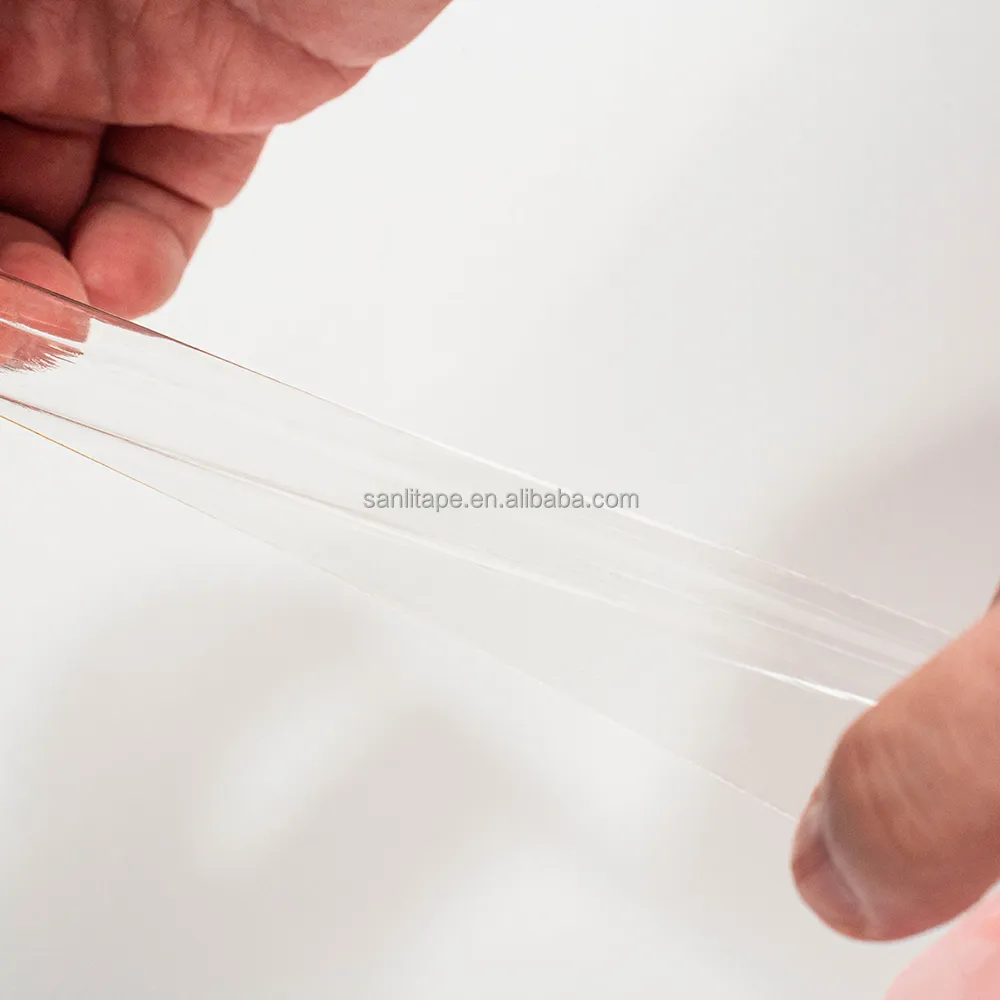
| Transparency | Cloudy, yellowish tint | High transparency, no print distortion | Affects the end consumer's perception of the brand (the packaging looks cheap). |
| Certification | Only internal factory tests | TR CU, ISO, independent laboratory tests | Risk of delays at customs and fines if the correct documents are not available. |
How to choose a reliable supplier: red flags and selection criteria
Finding a partner in China is a minefield. Thousands of trading companies pretend to be factories. How to distinguish a real manufacturer from a reseller? The first sign is assortment. A real tape manufacturing plant usually specializes in 2-3 types of products (for example, only packing tape and masking tape). If the company’s catalog contains everything from nails to LED lamps and strips, you have a trader in front of you. Traders add their own markup (sometimes up to 30%) and do not control the quality of production. In case of marriage, they will simply disappear or shift responsibility to the “factory”.
That is why the experience and specialization of the manufacturer play a decisive role. A striking example of a reliable partner isEnping Sunli Adhesive LLC. The company has been on the market for 23 years (since 1997) and has focused its efforts exclusively on the development and production of high-quality adhesive materials. Unlike general traders, Sunly Adhesive has deep expertise in creating specialized solutions: from double-sided fabric-based tapes and PET to foam materials (PE, EVA), nano-tape and VHB series products. This narrow profile allows the company to control every step of production, ensuring stable adhesion and durability even in the extreme conditions of the automotive and construction industries. The presence of ISO 9001:2008 and ISO 14001 certificates confirms that quality here is not just a word, but a built management system.
The second criterion is the willingness to send samples. A reliable supplier will send samples of different batches free of charge, understanding that testing is a mandatory step. If a manager starts stalling, asks for $50 shipping for samples, or claims that “everyone has the same quality,” this is a wake-up call. We always test samples under real conditions: we glue them to different types of cardboard, leave them in the freezer for 24 hours, and check the pullout force with a dynamometer. This is the only way to identify hidden defects. It is important to note that professional manufacturers such as Sunly Adhesive often offer OEM/ODM services, customizing the size, packaging and properties of the adhesive to the specific needs of the client, which is not possible when working with intermediaries.
The third point is the production audit. In 2026, a video call from the shop floor has become the norm. Ask for a live tour. Pay attention to the cleanliness of the workshop, the presence of quality control systems (laboratories inside the plant), and the age of the equipment. Old extruders produce unstable film thickness. Also ask about production capacity. A factory capable of shipping 10 containers per month has completely different economics and supply stability than a workshop with three machines.
Communication is also important. Managers who respond with boilerplate phrases and do not delve into the technical details of your request are most likely incompetent. A good specialist will ask clarifying questions: “What type of cardboard do you use?”, “What is the speed of the packaging line?”, “Where will the goods be stored?” These questions show that the person understands the specific application of the product and wants to find the right solution, and not just sell any tape.
Action:Request a video tour of the facility and ask to see the quality control area and testing laboratory before entering into a contract.
Practical cases: implementation errors and their costs
Let's consider a real case from the practice of one of our partners in the field of e-commerce. The company decided to optimize costs and switched from European tape to a cheap Chinese analogue without lengthy preliminary tests. Savings amounted to 18% on purchases. However, after two months, massive complaints from customers began: the boxes arrived opened. It turned out that the new adhesive did not interact well with the dusty cardboard that was being used in the client's warehouse. The dust created a barrier layer, and adhesion was zero. The total losses from returns, re-sending and damaged reputation exceeded the annual savings on tape by 10 times.
Another example concerns automation. A home appliance factory has introduced a new high-speed packaging line. They purchased a tape with high initial tack, but did not take into account the “elongation at break” parameter. The tape was too stiff. When the conveyor started abruptly, the belt did not absorb the shock, but tore, or, worse, tore off the top layer of cardboard, damaging the product. We had to urgently change the tension settings of the machine and look for a supplier with a more elastic film, which led to a downtime of the line for 4 days.
A successful case looks different. The logistics operator conducted a three-month pilot project before switching to a new supplier. They took three batches of tape with different characteristics and tested them in different areas: in a cold warehouse, on a heat-shrink hot line, and in manual packaging of fragile goods. Based on the results of the tests, they chose a supplier whose price was not the lowest, but whose tape showed the best stability at low temperatures. This allowed them to guarantee the safety of cargo during the winter without increasing insurance reserves.
The main lesson of these stories: tape is not just a consumable, it is an element of the cargo security system. Savings at the stage of selecting a supplier always leads to a multiple increase in risks at the operation stage. Don't be afraid to pay for quality if it is confirmed by tests and guarantees. A cheap tape works until the first stress test, which will inevitably happen along the way.
Action:Conduct an internal audit of current packaging problems (unstuck, breaks, complaints) and compare them with the characteristics of the tape used.
Frequently Asked Questions
What is the minimum order quantity (MOQ) for custom logo?
The standard minimum order for custom printed tape is 500-1000 boxes (depending on the plant this is from 3 to 5 tons of finished products). This is due to printing technology: setting up a flexographic machine requires time and material consumption for makeready. If your volume is smaller, many factories will refuse the order or offer exorbitant prices for cliche changes and customization. There is a compromise option: order printing on finished tape in standard colors (for example, a red logo on a transparent background), which is sometimes possible in smaller quantities, but the choice of colors will be limited. To start, it is better to order the maximum volume that you can sell in 6-8 months in order to fix the price and avoid differences in shades between batches.
What is the difference between acrylic glue and hot melt?
The difference is fundamental and determines the scope of application. Acrylic glue (acrylic) is chemically stable, does not turn yellow over time, can withstand UV radiation and temperatures from -40°C to +80°C. It gains full bond strength (adhesion) within 24 hours of application. Это идеальный выбор для долгосрочного хранения, наружной упаковки и экстремальных условий. Клей горячего расплава (hot melt) на основе синтетических каучуков дает мгновенную липкость (схватывается за секунды), что критично для скоростных автоматических линий. Однако он боится низких температур (становится хрупким ниже -10°C) и высоких (может потечь выше +50°C), а также подвержен старению. Выбирайте hot melt для быстрой внутренней логистики и акрил для внешних отправок и хранения на неотапливаемых складах.
Как проверить качество ленты без лабораторного оборудования?
Существует несколько экспресс-методов, которые можно применить прямо на складе. Во-первых, тест на запах: качественная лента не должна иметь резкого химического запаха; сильный запах свидетельствует о использовании дешевого растворителя или некачественного сырья. Во-вторых, тест на прозрачность: положите ленту на газету с мелким шрифтом; если текст читается четко без искажений и молочного оттенка, пленка качественная. В-третьих, тест на растяжение: попробуйте растянуть ленту руками; хороший полипропилен тянется равномерно и не рвется сразу, а дешевая пленка с большим содержанием мела ломается или рвется неравномерно. И наконец, тест на адгезию: приклейте кусок ленты к чистой поверхности картона и резко дерните под углом 90 градусов; если оторвался только верхний слой бумаги картона — клей отличный, если лента отошла чисто — адгезия слабая.
Сколько времени хранится упаковочная лента?
Срок годности упаковочной ленты зависит от типа клея и условий хранения. Для лент с акриловым клеем стандартный срок хранения составляет 12 месяцев с даты производства при условии хранения в оригинальной упаковке при температуре от +15°C до +25°C и влажности не более 60%. Ленты с клеем hot melt имеют меньший срок стабильности свойств — около 6-9 месяцев, так как со временем пластификаторы могут мигрировать, снижая липкость. Хранение на прямом солнечном свете или вблизи источников тепла категорически запрещено: ультрафибет разрушает полимерную основу, а тепло ускоряет деградацию клея. Всегда проверяйте дату производства на коробке перед использованием, особенно если закупаете товар “про запас”. Использование просроченной ленты — это гарантия того, что она не приклеится в нужный момент.
Можно ли использовать обычную ленту для упаковки замороженных продуктов?
Нет, обычная универсальная лента категорически не подходит для упаковки замороженных продуктов или работы в морозильных камерах. При температурах ниже -15°C стандартные клеи теряют эластичность, стеклуются и перестают держать нагрузку. Коробка откроется самостоятельно под весом продукта или при вибрации. Для таких задач необходимо использовать специализированные морозостойкие ленты (freezer grade tape). Они изготавливаются на основе специальных модифицированных акриловых клеев, сохраняющих адгезию до -40°C и ниже. Кроме того, сама пленка-основа в таких лентах часто делается более прочной, чтобы не трескаться на морозе. При заказе обязательно указывайте условие эксплуатации “для глубокой заморозки”, чтобы поставщик отгрузил соответствующую спецификацию.
Conclusion and next steps
Рынок упаковочных материалов в 2026 году требует от закупщиков не просто внимания к цене, а глубокого понимания технических нюансов. Китайская двусторонняя сетчатая лента остается одним из самых эффективных решений для логистики, но только при условии правильного подбора параметров под конкретные задачи. Ошибка в выборе типа клея или толщины может стоить компании репутации и денег, многократно превышающих экономию на закупке. Мы рекомендуем не полагаться на удачу, а выстроить систему входного контроля и работать только с проверенными производителями, готовыми подтвердить качество документами и тестами.
Если вы планируете обновление парка расходных материалов или ищете надежного партнера для долгосрочных поставок, важно действовать проактивно. Не ждите, пока закончится текущая партия или произойдет инцидент с грузом. Проведите аудит своих потребностей, определите критические параметры для вашего бизнеса и запросите образцы у нескольких поставщиков для сравнительного тестирования. Правильно подобранная лента — это незаметный, но надежный гарант сохранности вашего товара от завода до двери клиента.
Свяжитесь с нами сегодня для получения консультации по подбору оптимальной спецификации ленты под ваши задачи и запроса актуального прайс-листа на 2026 год. Наши эксперты помогут проанализировать ваши текущие затраты и предложить решение, которое снизит риски и оптимизирует бюджет.Каталог промышленной упаковочной ленты от производителя