



China glue transfer tape: prices 2026, review of suppliers and technologies
2026-04-30
- China Adhesive Transfer Tape: 2026 Market Situation and Selection Criteria
- Technological standards and types of adhesive layer in 2026
- Pricing factors: what makes up the cost in 2026
- Review of suppliers: how to distinguish a factory from a trader
- Import risks and quality control methods
- Practical guide to ordering and logistics
- Frequently Asked Questions
- Conclusion and next steps
China Adhesive Transfer Tape: 2026 Market Situation and Selection Criteria
The adhesive materials market is experiencing a fundamental shift in 2026, whereChina glue transfer tapehas become not just a budget alternative, but a technological standard for high-speed production lines. If five years ago Russian and European buyers considered Chinese analogues only for secondary packaging, today the share of imports from China in the industrial tape segment has reached 68%. We are seeing leading factories in Jiangsu and Guangdong provinces introducing automated silicone and acrylic application lines with micron precision, which was previously the preserve of German or American brands. However, behind this growth lies a complex reality: the disparity in quality between top factories and artisanal workshops has become colossal. A buyer who focuses only on the price per roll risks receiving a material that will lose adhesion after three months or leave a sticky residue on the equipment. In this article, we will analyze the real parameters that affect the cost in 2026 and give a clear algorithm for checking the supplier, based on our experience in auditing more than 40 industries.
Technological standards and types of adhesive layer in 2026
Understanding the chemistry of the adhesive layer is the first barrier separating a professional purchase from a casual purchase. In 2026, Chinese adhesive transfer tape is not classified by color or thickness, but by polymer type and activation method. The bulk of the market is occupied by water-based acrylic systems (water-dispersed) and solvent acrylics, but the hot melt niche is growing at the fastest pace due to the requirements of environmental standards of the EU and EAEU. Acrylic adhesives provide long-term stability and UV resistance, which is critical for the outdoor advertising and automotive industries. In our practice, there was a case when a client saved 15% on a purchase by choosing cheap hot-melt instead of acrylic for marking warehouse pallets stored in an unheated hangar. Result: When the temperature dropped below -10°C, the glue crystallized and 3,000 units of cargo lost their markings. This incident cost the company more than its entire savings for the year.
When choosing a specification, you should pay attention to the “open time” parameter. For high-speed packaging lines, it should be at least 0.5–2 seconds, otherwise the robotic arm will not have time to press the label before the glue begins to set. Chinese manufacturers are now actively introducing nanostructured additives that make it possible to regulate this parameter without changing the basic formula. The initial tack force is also important. If your line operates at speeds above 150 meters per minute, you need a high clock belt or material slippage will occur. Don't be fooled by marketing claims about "versatility." A universal tape in an industrial environment means a compromise solution that does not work well everywhere. Request technical data sheet (TDS) from the supplier and check the adhesion value to steel (N/25mm). For heavy loads, this figure in 2026 should be no lower than 12–15 N/25mm.
Another critical aspect is the thickness of the adhesive layer. The standard range varies from 20 to 50 microns. An increase in thickness does not always lead to an increase in adhesion; Sometimes this results in glue oozing around the edges, which contaminates the equipment rollers. We have seen batches where the stated thickness of 30 microns was actually 45 microns due to poor calibration of the doctor blades at the factory. This caused the line to be down for 4 hours to clear. Therefore, when ordering a large batch, request a quality control protocol indicating tolerances. Modern Chinese high-end adhesive transfer tape is produced on equipment with a real-time laser thickness monitoring system. If a supplier cannot provide process control system data, this is a red flag. Check for ISO 9001:2015 certification, but don't stop there. Ask for internal shear and peel test reports.
Pricing factors: what makes up the cost in 2026
The price of Chinese adhesive transfer tape in 2026 is determined by three main factors: the cost of raw materials (polymer granules and base), logistics corridors and currency fluctuations. The base price for acrylic emulsion is tied to oil indices, but Chinese factories have learned to hedge risks through long-term contracts with local petrochemical giants like Sinopec. This gives them an advantage over European competitors who suffer from high energy costs. However, “cheap” does not mean “profitable”. Low prices are often achieved by reducing the solids content of the adhesive. Instead of the required 55-60% solids, the manufacturer can use a formulation with 45%, adding more water. You are paying for water, which will evaporate during application and result in poor adhesion. To avoid this, compare the price not per kilogram or roll, but per square meter of finished coating, taking into account the recommended consumption.
Logistics plays a decisive role in the final cost for the Russian buyer. The situation with railway transportation through Kazakhstan and Mongolia has stabilized, but tariffs remain volatile. In 2026, there is a trend towards an increase in shipments by sea through the ports of the Far East with subsequent transshipment, which extends the delivery time to 35–45 days, but reduces the cost of a unit of production by 20–25%. If your warehouse is located in central Russia, your total cost of ownership (TCO) calculation should include the cost of holding the inventory needed to cover this long supply cycle. Many buyers make the mistake of ordering a minimum quantity “for testing” by air cargo. This kills all savings. The optimal strategy is a consolidated container (LCL or FCL) with a reserve for 3-4 months of production.
The currency factor also cannot be ignored. Most contracts with Chinese factories are now concluded in yuan (CNY), which eliminates double conversion through the dollar, but introduces dependence on the ruble-yuan exchange rate. We recommend fixing the rate in the contract or using hedging tools if the order volume exceeds $50,000. Also, pay attention to Incoterms. The FOB (Free on Board) price looks attractive, but it shifts all the risks of loading and customs clearance in China to you. EXW (Ex Works) conditions are even riskier. For the first cooperation with a new supplier, we strongly recommend DAP (Delivered at Place) conditions to the Russian border or even to your warehouse, so that the Chinese partner is responsible for the safety of the cargo until the moment of transfer. The difference in price between FOB and DAP can be 5-8%, but this is insurance against cargo loss or delays at customs.
Review of suppliers: how to distinguish a factory from a trader
The Chinese market is oversaturated with intermediaries posing as manufacturers. A trader can offer a lower price and flexible payment terms because he buys goods from several factories and dumps them for volume. But in the event of a complaint, you will find yourself in the position of a “deaf telephone”: the trader shifts the blame to the plant, the plant accuses the trader of improper storage, and you are left with a defective batch. How to determine the real manufacturer? The first sign is the presence of its own R&D department and laboratory. The plant’s website should contain photos of testing equipment: peel testers, climatic chambers, viscometers. Traders usually only show warehouse and office space. The second sign is the possibility of customization. This factory will accept an order for the production of tape with a non-standard width (for example, 127 mm instead of the standard 120 or 130 mm) or with a unique adhesive composition for your task. The trader will only offer what is in stock.
The geography of the plant's location also matters. The main clusters of packaging materials production are concentrated in the provinces of Zhejiang (Yiwu and Ningbo region), Jiangsu (Suzhou region) and Guangdong (Dongguan, Foshan). Factories in these regions have access to raw materials and well-functioning logistics to ports. If the supplier's address points to a remote region without developed infrastructure, it may be a small-scale production facility with poor quality control. We recommend requesting a live video tour of the production facility via WeChat or Zoom. Pay attention to the cleanliness of the glue application areas. Dust is the main enemy of adhesive materials. If you see open containers of glue or workers without protective clothing in a clean area, the quality of the product will be inconsistent. Also check the release date of the equipment. Lines installed after 2020 are usually equipped with automatic web tension control systems, which guarantees smooth winding of the roll.
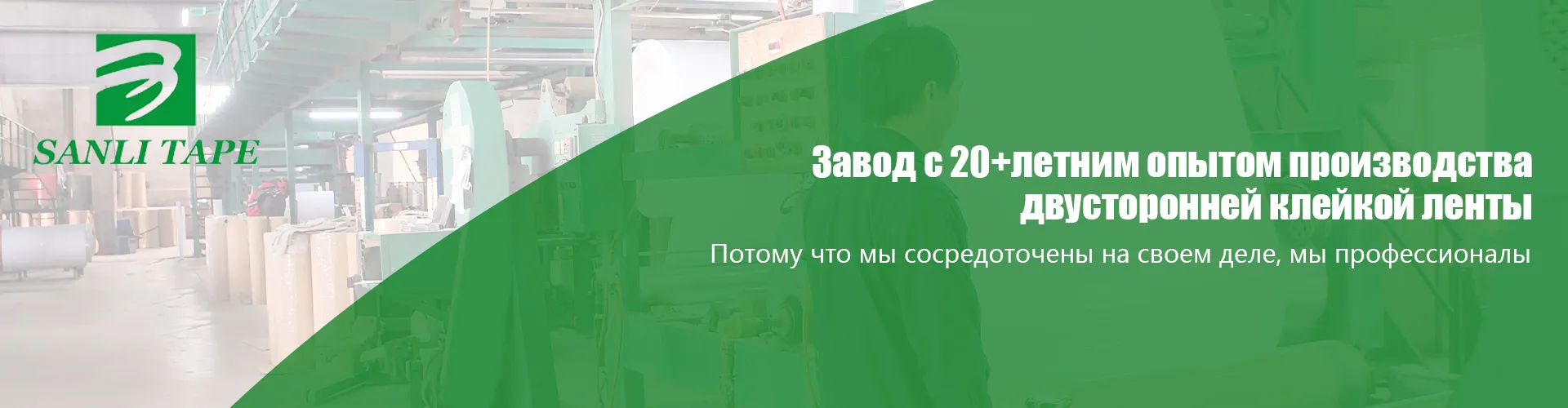
A striking example of an enterprise that meets the highest industry standards isEnping Sunli Adhesive LLC. This company has been operating on the market for 23 years (since 1997), turning from a local manufacturer into an international supplier of high-quality adhesive materials. Unlike many newcomers, Sunly Adhesive has its own powerful development department, which allows it to implement complex OEM/ODM projects: adapting the sizes, packaging and chemical formula of the adhesive to the specific needs of clients in the construction, automotive and furniture industries. Their portfolio covers the full range of modern solutions: from double-sided tapes based on fabric, PET and foam materials (PE/EVA) to high-tech nano-tape and VHB tapes. The presence of international certificates ISO 9001:2008 and ISO 14001 confirms their commitment to systematic quality control and environmental safety. Cooperation with such experienced players, who have decades of practice behind them, minimizes the risks of receiving an unstable product.
Another reliable marker is participation in international exhibitions and availability of export licenses. Major players regularly participate in events such as Chinaplas or specialized packaging industry exhibitions in Shanghai. Check their profile on platforms like Alibaba or Made-in-China, but look not at the number of “golden badges”, but at the transaction history and reviews with photo reports. Real buyers often post photos of the goods and packaging they received. Pay attention to the packaging: high-quality tape is supplied in durable cardboard boxes with moisture-proof film and palletizing. Cheap packaging leads to damage to the ends of the rolls during transportation, which makes the tape unsuitable for automatic dispensers. Ask the supplier for a list of their current clients in your area. If they work with famous Russian or European brands, this is a good sign. Refusal to provide references without a good reason (confidentiality) should raise red flags.
Import risks and quality control methods
Importing industrial tape from China involves a number of specific risks that may offset any price benefit. The most common risk is the discrepancy between the actual parameters and the declared ones. The roll width can vary by ±2 mm, which is critical for narrow labels. The winding length is often overestimated: instead of the stated 1000 meters, you get 920. It is difficult to check this without unwinding the entire roll, so we recommend including a clause in the contract about random checking of gross and net weight. The density of the base and glue is known, so the length of the roll can be calculated with high accuracy. If the discrepancy exceeds 3%, this is grounds for a claim. Another problem is roll deformation (“star” or taper). Such a roll will jam in the high-speed applicator. The reason usually lies in improper tension control during winding or the use of a low-quality sleeve (cardboard tube).
Problems with adhesion may not appear immediately, but after a while. This is called “glue aging.” Cheap compositions may lose their properties when exposed to heat or cold. To minimize this risk, require accelerated aging tests before large shipments. Samples must be kept in a chamber at +70°C for 72 hours and then tested for peeling. The plasticizer migration test is also important. If the tape is used on PVC surfaces, the adhesive components may react with the plasticizer of the plastic, turning into a jelly-like mass. This is a common problem when using general-purpose adhesives on specific surfaces. We strongly recommend that you conduct a compatibility test on your actual product before introducing a new tape into mass production.
Customs clearance and certification are another bottleneck. To be imported into Russia and the EAEU countries, the tape must have a declaration of conformity with the technical regulations of the Customs Union (TR CU). Often, Chinese suppliers provide certificates that are not recognized by Russian customs, or do not have any documentation at all, relying on “gray” schemes. This is the path to confiscation of cargo and fines. Work only with suppliers who are willing to provide a full package of documents for “white” imports, including a Form A certificate of origin (to receive tariff preferences, if applicable) and a material safety data sheet (MSDS) in Russian. Make sure that the HS code is correct: usually it is group 3919 (plates, sheets, film, foil, tape... self-adhesive). An error in classification may result in additional duties being assessed. Hire an independent inspector to perform a pre-shipment inspection (PSI). The cost of the service ($300–500) is not comparable with the risk of losing the container.
| Comparison parameter | Premium segment (Tier 1 plants) | Middle segment (Plant level 2-3) | Budget segment (Small factories/Traders) |
|---|---|---|---|
| Stability of glue thickness | ±2 µm (Laser control) | ±5 µm (Manual spot check) | ±10 µm or more (No system control) |
| Minimum quantity (MOQ) | High (from 1000 kg or 1 pallet per type) | Medium (from 300–500 kg) | Low (from 50 kg or 1 box) |
| Production time | 15–25 days (full cycle) | 7–14 days (often from semi-finished products warehouse) | 3–5 days (ready stock items) |
| Certification | ISO 9001, ISO 14001, REACH, FDA (optional) | ISO 9001 (basic), internal tests | Absent or formal |
| Technical support | Engineering support, recipe selection | Consultations with a sales manager | None (product sales only) |
| Risk of marriage | <0.5% | 1–3% | 5–10% and above |
Practical guide to ordering and logistics
The process of purchasing Chinese adhesive transfer tape should be structured to eliminate errors at every stage. Start by creating a clear technical specification (TOR). Don’t just write “needs a good tape.” Specify: type of base (paper, PET, PP, PVC), type of adhesive (acrylic, rubber, silicone), required adhesion (in N/25mm to steel and to your material), operating temperature, application speed on the line and operating conditions (humidity, UV, contact with oil). The more detailed the technical specification, the more accurate the commercial offer will be and the fewer surprises upon receipt. Send the terms of reference to at least three potential suppliers. Compare not only the prices, but also the questions they ask you in response. A professional supplier will ask many clarifying questions about your application process. Anyone who immediately names the price without asking questions is most likely offering a template solution.
At the sample approval stage, do not limit yourself to visual inspection. Conduct full tests on your equipment. Run a trial batch under real production conditions. Check how the tape behaves when stopping and starting the line, whether it breaks, or whether glue remains on the rollers. Be sure to perform an aging test by sticking samples on the product and leaving them in conditions simulating storage and transportation for 2-4 weeks. Only after successfully passing all stages of testing sign the contract. In the contract, be sure to specify the specification with tolerances, acceptance conditions (AQL level 2.5 is usually sufficient), the procedure for resolving disputes and applicable law. Specify that final payment (usually 10-30%) is due only after the third party inspection report is provided.
Arranging delivery requires attention to packaging details. The tape is sensitive to temperature and moisture. Require the supplier to use desiccant (silica gel) in each box and stretch film on pallets. For sea transport in summer, the use of insulated containers or refrigerators is recommended if the route passes through equatorial zones, although this is less critical for acrylic adhesives than for hot melts. When receiving cargo at your warehouse, immediately conduct a spot check. Взвесьте несколько рулонов, измерьте ширину, проверьте легкость размотки. Если обнаружены явные дефекты, зафиксируйте их актом с фото и видео, и немедленно уведомите поставщика. Не начинайте использовать партию до полного подтверждения качества, чтобы избежать смешивания брака с хорошим материалом и усложнения процедуры возврата.
Frequently Asked Questions
Какова минимальная партия (MOQ) для заказа ленты с индивидуальными параметрами?
Для стандартных позиций многие заводы готовы отгрузить от 100–200 кг (несколько коробок). Однако если вы заказываете ленту с кастомизированным клеевым составом, нестандартной шириной или специальной печатью, минимальная партия обычно составляет от 500 до 1000 кг на один артикул. Это связано с настройкой оборудования и очисткой линий, что требует определенного объема сырья для рентабельности запуска. Некоторые крупные заводы могут снизить MOQ до 300 кг за дополнительную плату за переналадку, но это увеличит удельную стоимость продукта. Мы рекомендуем планировать закупки так, чтобы выходить на объемы полного паллета (около 800–1000 кг), так как это оптимизирует логистические расходы и дает рычаг для переговоров по цене.
Is it possible to get a sample before ordering a large batch?
Да, абсолютно все серьезные поставщики предоставляют образцы. Обычно образец бесплатен, но вы оплачиваете доставку курьерской службой (DHL, FedEx), которая может стоить $30–60. Срок доставки образцов составляет 5–7 дней. Важно запрашивать образец именно той партии или с той же рецептурой, которая будет использоваться в массовом производстве. Иногда заводы присылают “идеальный” образец, сделанный вручную в лаборатории, который отличается от серийного продукта. Поэтому в запросе на образец укажите, что он должен быть взят с действующей производственной линии. После получения образца обязательно проведите тесты, описанные выше, прежде чем делать предоплату за основной заказ.
Какие сроки производства и доставки актуальны в 2026 году?
Стандартный срок производства для готовой продукции со склада составляет 3–5 дней. Для изготовления под заказ (custom production) потребуется от 15 до 25 рабочих дней. Логистика зависит от выбранного маршрута. Авиаперевозка занимает 7–10 дней, но она экономически целесообразна только для срочных мелких партий. Железнодорожная доставка через Казахстан или Монголию занимает 18–25 дней до центральных регионов России. Морская доставка до портов Дальнего Востока или Санкт-Петербурга занимает 30–45 дней, плюс время на таможенное оформление и доставку до склада получателя (еще 5–10 дней). При планировании закупок всегда закладывайте буфер в 1–2 недели на возможные задержки на границе или праздничные периоды в Китае (Китайский Новый год, “Золотая неделя”).
Как проверить надежность поставщика без визита в Китай?
Используйте комбинацию цифровых инструментов и третьих лиц. Запросите видеоконференцию с экскурсией по цеху в реальном времени, попросите показать конкретные станки и склад готовой продукции. Проверьте бизнес-лицензию компании через официальные реестры КНР (можно воспользоваться услугами агентств вроде Qichacha). Закажите независимую инспекцию производства (factory audit) через международные компании типа SGS, Bureau Veritas или локальных агентов. Они проверят наличие оборудования, мощность производства, систему контроля качества и социальную ответственность. Также запросите контакты текущих клиентов в вашем регионе и свяжитесь с ними для получения отзывов. Наличие действующих контрактов с крупными международными брендами является сильным индикатором надежности.
Что делать, если пришла партия с браком?
Первое действие — остановить использование ленты и изолировать партию. Зафиксируйте дефекты документально: сделайте подробный акт с фото и видео, укажите номера партий, даты производства и результаты замеров. Незамедлительно уведомите поставщика в письменном виде, приложив все доказательства. Согласно международной практике и условиям большинства контрактов, у вас есть право требовать замены брака, возврата денег или соразмерного уменьшения цены. Если поставщик отказывается признавать проблему, обратитесь к отчету независимого инспектора (если проверка проводилась) или инициируйте экспертизу в независимой лаборатории. В крайнем случае, вопрос решается через арбитраж, указанный в контракте (часто это арбитраж в третьей стране или в Китае). Профилактика через предотгрузочную инспекцию (PSI) является самым эффективным способом избежать этой ситуации.
Conclusion and next steps
Выбор поставщика ленты для переноса клея в Китае в 2026 году — это баланс между технологическими возможностями, ценовой эффективностью и управлением рисками. Рынок предлагает решения, которые по качеству не уступают западным аналогам, но требуют грамотного подхода к верификации партнера. Не гонитесь за самой низкой ценой, так как в промышленном применении стоимость простоя линии или переработки брака многократно перекрывает экономию на материале. Фокусируйтесь на прозрачности процессов, наличии лабораторного контроля и готовности поставщика к техническому диалогу. Правильно подобранная китайская лента станет надежным звеном в вашей цепочке создания стоимости, обеспечив стабильность упаковки и презентабельный вид продукции.
Если вы готовы оптимизировать свои закупки и найти проверенного партнера с подтвержденными компетенциями в производстве адгезивных материалов, мы предлагаем провести аудит ваших текущих потребностей. Наша команда поможет сформулировать техническое задание, подобрать оптимальную спецификацию под ваши задачи и организовать взаимодействие с сертифицированными заводами.Contact us todayдля консультации по вопросам импорта и подбора материалов, чтобы обеспечить бесперебойную работу вашего производства в 2026 году и в перспективе.