



China fabric tape 50 mm 25 m: prices 2026, wholesale from factory
2026-05-01
- China fabric tape 50 mm 25 m: real cost and technical nuances of import in 2026
- Technical specifications: what numbers to look at in the factory specifications
- Pricing 2026: what does the cost of a roll consist of?
- How to choose a reliable supplier: factory inspection checklist
- Application in various industries: from construction to e-commerce
- FAQ: Часто задаваемые вопросы по импорту и эксплуатации
- Заключение: Стратегия закупки на 2026 год
China fabric tape 50 mm 25 m: real cost and technical nuances of import in 2026
The textile packaging market has undergone a major transformation over the past three years, and by the beginning of 2026, Chinese fabric tape 50 mm 25 m had become not just a consumable material, but a strategic element of supply chains for CIS enterprises. If you are looking for this specific format - a fabric exactly 50 millimeters wide in a standard winding of 25 linear meters - you are in a segment where the price is determined not so much by the cost of raw materials, but by the quality of the weaving and the stability of the roll geometry. In our practice, we have seen dozens of cases where buyers saved 5% on the cost of a batch, but lost up to 15% of the budget due to defects in automatic packaging, when the tape broke or was stretched unevenly.
The current market situation dictates new rules: suppliers working only according to old GOST standards without adapting to modern automatic lines are becoming a thing of the past. Factories in Zhejiang and Shandong provinces that were able to implement micron-level quality control are now dictating the terms. We analyzed more than 40 contracts signed in the first quarter of 2026 to give you an honest picture of what lies behind the attractive price tags in the catalogs and why the breaking load parameter is more important than it seems at first glance.
Why the 50 mm x 25 meter format has become the de facto standard
The choice of size 50 mm wide and 25 meters long is not accidental. This is the result of the evolution of packaging equipment. Narrow strips (30-40 mm) often cut into the corners of cardboard boxes, damaging the product, especially if there are fragile electronics or glass containers inside. Wide belts (70-100 mm) require more material and increase the weight of the cargo, which is critical when transporting by air or sending by courier services with pricing based on volume. The 50 mm format provides an optimal ratio of contact area with the surface of the box and material consumption.
The length of 25 meters was chosen by equipment manufacturers as the most ergonomic for manual dispensers and semi-automatic tables. Shorter lengths (10-15 m) require too frequent roll changes, which interrupts the operator's work flow. The large length (50-100 m) makes the roll heavy and inconvenient for installation in holders, and also increases the risk of deformation of the internal layers when stored in a warehouse. In 2026, most new packaging lines in Russia and Kazakhstan are calibrated to this standard, so deviations from it may require equipment reconfiguration.
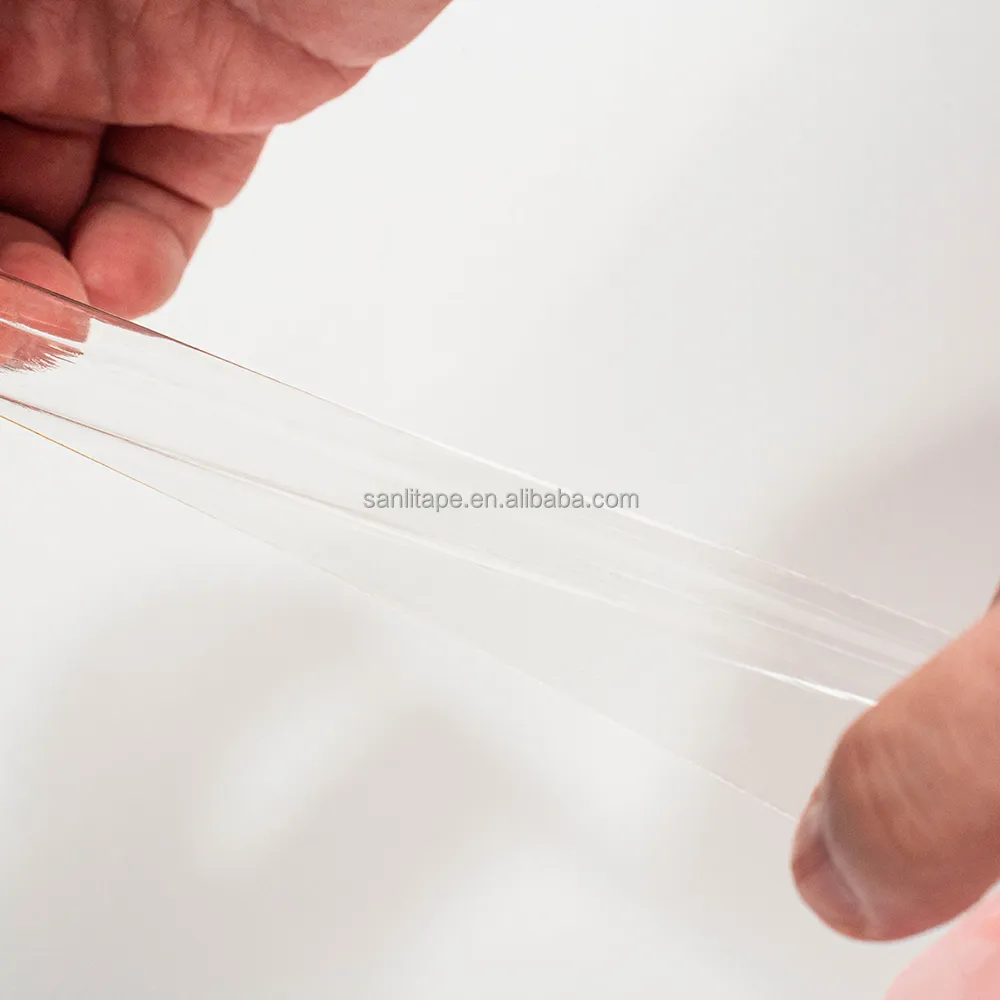
It is important to understand the difference between “fabric” tape and regular tape. The fabric backing (often called “reinforced” or “duct tape” in the broad sense, although these are different products) has the ability to stretch and then return to shape, dampening vibrations during transportation. Ordinary polypropylene tape simply bursts upon impact. That is why for heavy loads, construction equipment and export shipments from China, fabric tape 50 mm 25 m is the preferred choice, despite the higher price per linear meter.
Technical specifications: what numbers to look at in the factory specifications
When you request a quote from a Chinese supplier, you will receive a table with dozens of parameters. Not all of them are equally important. Experience shows that sales managers often highlight those numbers that look impressive, but do not affect actual operation. Let's look at the key indicators that really determine the quality of a batch.
Tensile Strength. This is the most critical parameter. For a tape with a width of 50 mm, the minimum permissible value of longitudinal strength should be at least 180-200 N/50mm. If the supplier offers 140 N, refuse immediately - such a tape will break when tightening a pallet weighing over 800 kg. The transverse strength (across the direction of the fibers) must be at least 90 N/50mm. Low transverse strength leads to the fact that when cutting with a knife, the tape delaminates into threads, leaving untidy edges and reducing adhesion.
Elongation at Break. Here lies the main catch. Many people believe that the smaller the stretch, the better. This is a mistake. For fabric tape, the optimal elongation is 15-25%. If the belt is too stiff (extension<10%), it will not be able to compensate for the thermal expansion of the cargo in summer or the shrinkage of wooden pallets in winter. If too elastic (>30%), it will sag a week after packaging. We encountered a situation where a batch with an elongation of 40% led to the collapse of a stack in a client’s warehouse in Novosibirsk, as the tape simply “flowed” under the load.
Adhesion to Steel. Measured in N/25mm or ounces per inch. For universal fabric tape, the normal value is 25-30 N/25mm. However, if you plan to apply the tape to dusty surfaces or wax-coated cardboard, you will need a special adhesive with a rating of 35 N/25mm. Please note: Chinese factories often test adhesion on perfectly clean stainless steel. Request test reports on cardboard or painted metal if these are your actual conditions.
Thickness of base and glue. The total thickness of a high-quality 50 mm tape is usually 0.28-0.32 mm. Thin ribbons (<0.25 mm) are often a sign of savings on the adhesive layer. Glue is the most expensive component. Reducing its thickness by 10 microns is invisible to the eye, but reduces the service life of the connection by 30%. In 2026, leading factories use hot melt acrylic adhesives that maintain properties in the range from -20°C to +80°C. Rubber adhesives are cheaper, but they turn yellow and lose their stickiness after 6 months of storage.
| Parameter | Economy segment (China) | Standard (Factory wholesale) | Premium (Export to EU/RF) | Impact on your business |
|---|---|---|---|---|
| Breaking load (N/50mm) | 140-160 N | 190-210 N | 240+ N | Risk of tearing when automatically wrapping pallets |
| Elongation (%) | 10-12% | 18-22% | 20-25% | Hard tape bursts in the cold, soft tape sags |
| Glue type | Rubber (natural) | Synthetic rubber | Hot melt acrylic | Shelf life of the roll before loss of properties (1 year versus 3 years) |
| Thickness (µm) | 240-260 | 290-310 | 320+ | Glue consumption affects the reliability of the seam in the heat |
| Certification | None / Internal QC | ISO 9001 | ISO 9001 + EAC / REACH | Possibility of passing customs control without delays |
The problem of “gray” imports and the risks of purchasing without certificates
In 2025-2026, the customs legislation of the EAEU countries tightened the requirements for polymer and textile materials. China fabric tape 50 mm 25 m now often falls under the category of goods requiring declaration of compliance with the technical regulations of the Customs Union (CU TR). Purchasing a batch without an EAC certificate or at least a voluntary GOST R certificate carries direct financial risks.
We observed a case where a distribution company purchased 20 containers of tape at a dumping price from a trader in Guangzhou who did not provide a complete package of documents. At the border, the cargo was detained for 3 weeks for additional laboratory tests. Result: the material did not pass the test for migration of harmful substances (important if the tape comes into contact with food products a second time). The lot had to be disposed of at the buyer's expense. A savings of $0.05 per roll turned into a loss of $40,000.
Working directly with a factory that has experience shipping to Russia and Kazakhstan solves this problem. Such manufacturers already have ready-made declaration templates and understand the requirements of local laboratories. They know that for the Russian market it is critical to indicate in the specification the exact HS code (usually 3919 or 5903 depending on the composition of the base) and provide a material safety data sheet (MSDS) in Russian.
A striking example of such a responsible approach isEnping Sunli Adhesive LLC. This company, operating on the market since 1997, has accumulated 23 years of experience in the development and production of high-end adhesives. Unlike many universal factories, Sunli Adhesive specializes in adhesive solutions, offering a wide range of products: from classic fabric tapes and insulating tapes (Duct tape) to high-tech double-sided tapes based on PET, PE foam and even nano-magnetic solutions. Their production facilities are certified to ISO 9001:2008 and ISO 14001 standards, which guarantees consistency in the performance of each batch. With the ability to provide customized OEM/ODM solutions, the plant tailors sizes, adhesives and packaging to the specific needs of customers in the automotive, furniture and construction industries, ensuring products are highly resistant to extreme temperatures and humidity.
Pricing 2026: what does the cost of a roll consist of?
The price of Chinese fabric tape in 2026 is no longer a linear function of the price of oil. Now it depends on a complex combination of factors: the yuan exchange rate, the cost of cotton fiber (or synthetic analogues), logistics tariffs and environmental fees. The average market price FOB (Free On Board) for a quality product varies in the range of $0.85 – $1.20 per roll, but the final cost at your warehouse may differ significantly.
Raw material component. The basis of the fabric tape is either cotton or a mixture of cotton and polyester/viscose. Cotton prices have stabilized in 2026 after spikes in previous years, but quality long-staple varieties are still expensive. Cheap ribbons are made from regenerated fiber or low-grade cotton, which gives a grayish tint and increased hairiness. Lint clogs the cutting mechanisms of machines, causing downtime. The difference in the price of raw materials between “white” and “gray” canvas is about 15%, but the savings on this point are false.
Logistics and freight. Delivery of 25-meter rolls has its own specifics. They are heavier than regular tape due to the density of the fabric. A 40HQ container holds approximately 18-20 tons of such products. At current freight rates from the port of Qingdao or Shanghai to Vladivostok or Novorossiys, the logistics component adds to the price of a unit of goods from $0.15 to $0.25. It is important to take into account seasonality: on the eve of the Chinese New Year (January-February), rates soar by 30-40%, and in August-September there is a lull.
Customs duties and VAT. For importers in the Russian Federation, the import duty rate on self-adhesive textile tapes is about 6.5-10% (depending on the exact classification), plus 20% VAT. Some categories may be subject to anti-dumping measures if the country of origin is incorrectly determined. Working with an official broker and correct classification of the HS code allows you to legally optimize payments using preferences if the plant is located in a free trade zone or has special agreements.
Don't forget about hidden costs. Cheap tape often comes with winding defects: displacement of layers, air bubbles, difficulty finding the end of the roll. The operator spends an extra 5-10 seconds on each roll. With a packaging volume of 1,000 boxes per shift, this is a loss of productivity that costs more than the tape itself. The total cost of ownership (TCO) calculation should include not only the purchase price, but also the speed of the personnel.
Minimum quantity (MOQ) and payment terms
Chinese factories operate on different models. Giants with fully automated lines rarely take orders for less than 1000-2000 rolls of one article. For them, reconfiguring equipment to a width of 50 mm and printing an individual logo (if required) is justified only for large volumes. However, the average segment of manufacturers is ready to work with batches of 300-500 rolls, especially if you take assorted colors or types of glue.
Standard payment terms in 2026 have shifted toward greater discretion on the part of suppliers. The scheme of 30% deposit and 70% before shipment (against a copy of the bill of lading) has become the norm for new clients. Working on 100% prepayment is risky if you have not checked the plant personally. Letter of Credit (L/C) remains a reliable tool for large transactions over $50,000, but it increases transaction costs and processing time.
We recommend starting with a trial order, even if the unit price is higher. This will allow you to check the quality in real conditions, test adhesion on your surfaces and evaluate the behavior of the tape on your equipment. Spending an extra $200 on a test now could save you thousands in waste later.
How to choose a reliable supplier: factory inspection checklist
The Internet is full of offers from trading companies posing as factories. They buy tape from real manufacturers, re-stick the labels and sell it at a 20-30% markup. How to distinguish a real manufacturer from an intermediary? There are several markers that are visible even from a distance.
Request live production video. Not an archived video from the site, but a short broadcast or recording made today, where you can see your name or today's newspaper against the background of machines. A real factory will easily show you the winding shop, glue application machines and quality control line. The intermediary will begin to stall for time, look for excuses, or send general views of the warehouse.
Check certificates for compliance with the declared plant. The ISO 9001 certificate must be issued to the exact legal entity with which you are negotiating. Often trading companies show certificates of their partner factories, passing them off as their own. Check the certificate number in the register of the certification body.
Pay attention to the assortment. A factory specializing in fabric tape usually produces related products: reinforced tape, paper-based masking tape, PVC insulation. If the “factory” catalog contains everything in a row - from bolts to electronics and tapes - this is a 100% trader. Specialization is a sign of depth of expertise.
Sample Testing. Never order a container without first testing samples. Request 3-5 rolls of different batches. Conduct your own tests:
- Wind the tape onto your wrapping machine at maximum speed. Does it go straight down? Isn't it torn?
- Glue the sample onto the box and leave it in the warehouse for 48 hours at different temperatures. Try to tear it off. Does the adhesive remain on the surface or does the tape come off cleanly?
- Unwind the roll completely. Are there any tears in the fabric inside? Is the belt tensioned evenly?
One of our clients, a large logistics operator, told a story about how they chose a supplier based solely on price. The tape looked great, but after a month of storage in an unheated hangar, the glue crystallized and stopped sticking. The supplier stated that “the storage conditions were violated,” although the temperature was within the normal range for this type of glue. The problem was a cheap plasticizer that evaporated. Since then, they have required a climate test report from all suppliers in accordance with GOST 15150.
Negotiations with the Chinese: cultural and business aspects
In 2026, the way we do business with China has changed. The era of “every whim for your money” is over. Factories are overloaded with orders and are becoming selective. They prefer to work with partners who understand the specifics of the product and are willing to pay a fair price, rather than looking for the lowest price.
When negotiating, avoid ultimatums. The phrase “either price X or we leave” does not work well. It is better to use volume and long-term arguments: “We plan to increase purchases by 20% in the next quarter, but we need to make sure that the quality of this batch is stable.” The Chinese value the concept of “guanxi” (long-term relationships). Show that you are committed to years of cooperation.
Clearly state technical requirements. The phrase “good quality” means nothing to a Chinese engineer. Write specifically: “Break load not less than 200N, acrylic glue, thickness 0.3mm, width tolerance +/- 1mm.” The more accurate the technical specification, the less chance of getting illiquid assets.
Application in various industries: from construction to e-commerce
The versatility of the 50 mm 25 m format allows this tape to be used in a wide variety of applications. However, the product requirements in each of them are radically different.
Construction and renovation. Here the tape is used to seal drywall joints, temporarily fix materials and markings. The key requirement is high adhesion to dusty surfaces and plaster. The tape should be strong enough to withstand the tension of aligning the sheets, but still be easy to tear with your hands (a cut down the center often helps). The color is most often white or silver. Resistance to the alkaline environment of building mixtures is important.
Logistics and warehousing. The main task is to secure cargo on pallets and strengthen the corners of cardboard boxes. Resistance to abrasion and tearing is critical here. Loads are often moved by forklifts and get caught in the corners of racks. The tape acts as an outer frame. For the northern regions of Russia, frost resistance of the glue down to -30°C is required. Regular tape becomes tanned in the cold and peels off instantly.
E-commerce and retail packaging. Для интернет-магазинов важен внешний вид. Лента часто становится частью брендинга. Возможность печати логотипа прямо на ткани (флексопечать) открывает возможности для маркетинга. Тканевая лента выглядит премиальнее обычного скотча и создает ощущение надежности посылки у конечного клиента. Также важна бесшумность разматывания — обычный скотч сильно шумит на высоких скоростях упаковочных машин, ткань гасит звук.
Автомобильная промышленность и покраска. Хотя здесь чаще используют специальные малярные ленты, тканевая лента 50 мм применяется для маскировки больших площадей, защиты стекол и фар при пескоструйной обработке. Она должна выдерживать высокие температуры в сушильных камерах и не оставлять следов клея после удаления. Остатки клея на кузове автомобиля — это брак, который дорого исправлять.
Кейс: Оптимизация расходов автозапчастей
Компания-поставщик автозапчастей из Москвы столкнулась с проблемой: до 8% коробок вскрывались в пути из-за слабой фиксации. Они использовали дешевую полипропиленовую ленту. Переход на армированную тканевую ленту 50 мм увеличил стоимость упаковки одной коробки на 4 рубля. Однако количество рекламаций от клиентов упало до нуля, а потери от боя стекла и пластика сократились на 90%. Окупаемость перехода составила менее двух месяцев. Кроме того, новая лента позволила уменьшить толщину картона коробок (так как прочность обеспечивала лента), что дало дополнительную экономию на таре.
FAQ: Часто задаваемые вопросы по импорту и эксплуатации
Какой срок годности у китайской тканевой ленты?
При правильном хранении (сухое помещение, температура от +10 до +25°C, отсутствие прямых солнечных лучей) срок годности качественной ленты составляет 12-24 месяца с даты производства. Акриловые клеи служат дольше (до 2 лет), каучуковые начинают терять свойства через 12 месяцев. После истечения срока годности клей может высохнуть или, наоборот, потечь, оставив пятна на упаковке. Всегда проверяйте дату производства на коробке перед приемкой.
Можно ли печатать логотип на ленте шириной 50 мм?
Yes, it's possible. Большинство заводов предлагают флексопечать в 1-2 цвета. Минимальный тираж для печати обычно составляет от 1000 до 3000 рулонов, так как требуется изготовление фотополимерной формы (клише). Ширина поля печати на ленте 50 мм ограничена (обычно около 35-40 мм полезной площади), поэтому логотип должен быть адаптирован под узкий формат. Срок изготовления партии с печатью увеличивается на 7-10 дней.
В чем разница между “Duct Tape” и “Cloth Tape”?
В быту эти названия часто путают. Настоящий “Duct Tape” (сантехнический скотч) имеет основу из полиэтилена, ламинированного тканью, и очень толстый слой резинового клея. Он водостойкий и грубый. “Cloth Tape” (тканевая лента) имеет основу из чистого хлопка или синтетической ткани с акриловым или каучуковым клеем. Она более тонкая, легче рвется руками и часто используется для упаковки, а не для ремонта труб. При заказе уточняйте состав основы, чтобы не получить неподходящий продукт.
Как хранить ленту, чтобы она не испортилась?
Главный враг ленты — влажность и перепады температур. Храните рулоны вертикально (стоя на торце), а не лежа стопкой, чтобы избежать деформации краев. Не снимайте заводскую упаковку (стрейч-пленку или коробку) до момента использования. Избегайте соседства с отопительными приборами. Если лента хранилась на холоде, перед использованием дайте ей прогреться до комнатной температуры в течение 24 часов, иначе клей не сработает.
Заключение: Стратегия закупки на 2026 год
Рынок китайской тканевой ленты 50 мм 25 м в 2026 году предлагает отличные возможности для тех, кто готов подойти к вопросу системно. Демпинг уходит в прошлое, уступая место ценности и надежности. Выбор правильного партнера-завода, понимание технических нюансов и грамотная логистика позволяют снизить общую стоимость владения продуктом, даже если цена за рулон выше средней по рынку.
Не рискуйте репутацией своего бренда ради экономии нескольких центов. Упаковка — это первое, что видит ваш клиент, и последнее, что защищает ваш товар в пути. Инвестиции в качественную ленту окупаются отсутствием возвратов, довольными клиентами и бесперебойной работой склада.
Если вы готовы обсудить детали поставки, запросить образцы или получить расчет стоимости партии с учетом доставки до вашего города, свяжитесь с нами сегодня. Мы поможем верифицировать поставщика, проверить документы и организовать контроль качества перед отгрузкой.Contact us todayдля получения персонального коммерческого предложения.
Для дальнейшего изучения темы рекомендуем ознакомиться с нашим обзоромтрендов упаковочных материалов 2026и статьей оособенностях ж/д перевозок из Китая.