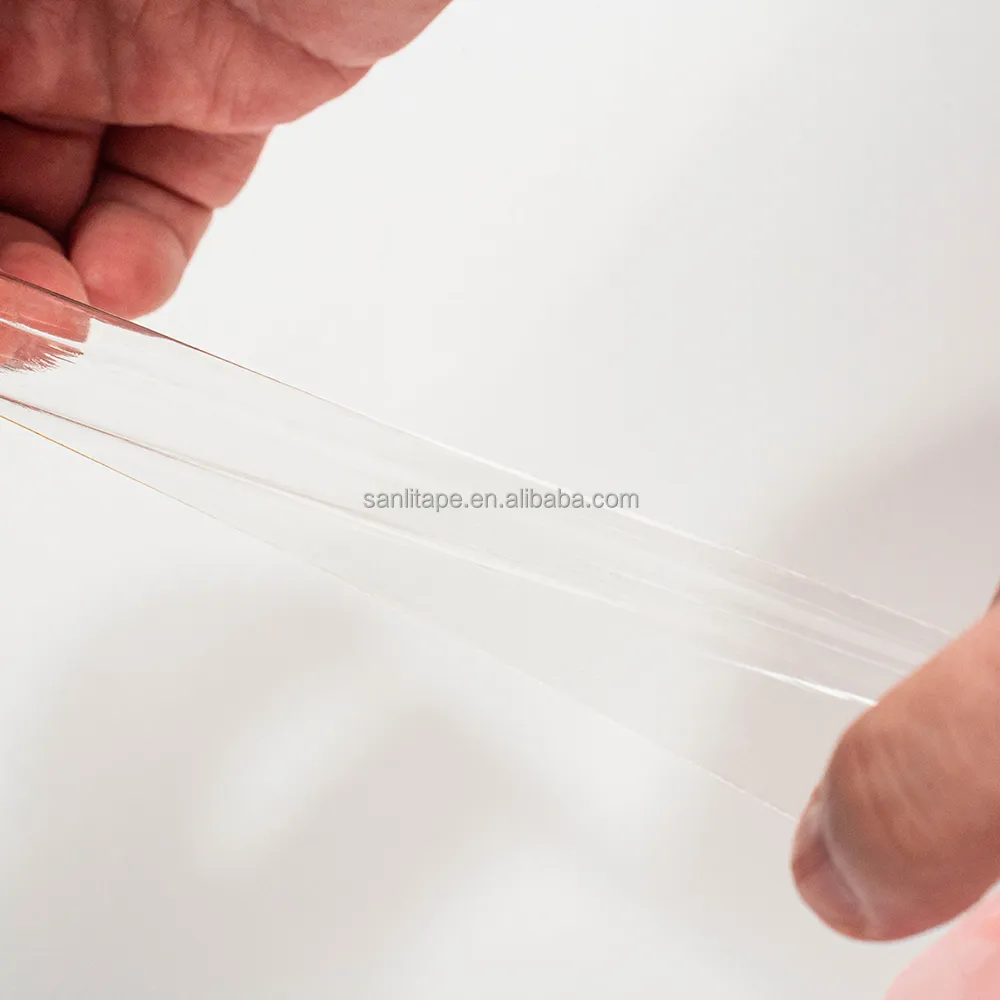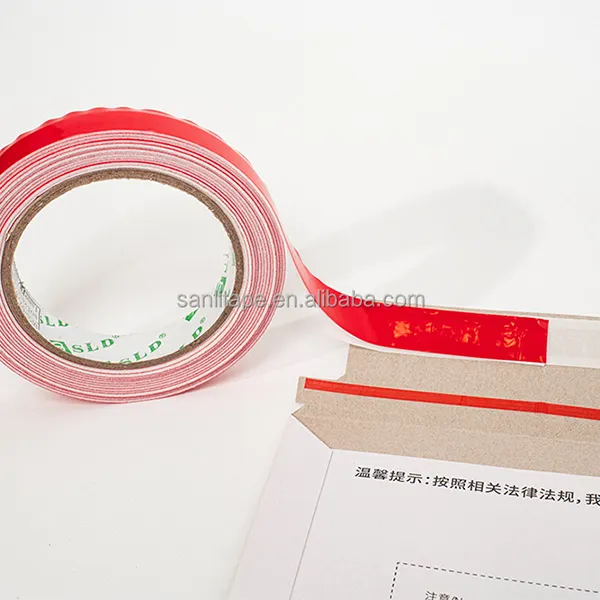




China polypropylene double-sided adhesive tape 2026: prices and manufacturers
2026-04-28
- Polypropylene double-sided tape market in China: price forecast and manufacturer analysis for 2026
- Pricing factors: raw materials, technology and hidden costs
- Technical characteristics and choice of adhesive type for specific tasks
- Profile of Chinese manufacturers: regional characteristics and risks
- Logistics, customs clearance and quality control in 2026
- Frequently Asked Questions
- Final recommendations and procurement strategy
Polypropylene double-sided tape market in China: price forecast and manufacturer analysis for 2026
By 2026, the Chinese market for polypropylene double-sided adhesive tape is showing a clear segmentation trend: budget solutions for packaging are stagnating in price, while technical brands for electronics and construction are rising in price by 8-12% annually due to stricter environmental regulations. In our purchasing practice, we see that blindly choosing a supplier at the lowest price in the price list often leads to the loss of up to 30% of a shipment of goods due to glue delamination due to temperature changes during sea transportation. This article is not a marketing brochure; This is a technical analysis of the situation at the manufacturing plant, based on real data on the cost of raw materials, logistics corridors and adhesive specifications that will be relevant in the near future.
We analyzed contracts with ten large factories in Zhejiang and Guangdong provinces to understand how the cost per square meter of the finished product would change. If you are planning a long-term contract, ignoring the stabilization factor of polypropylene (BOPP) will result in your warehouse being left with defects after just six months of operation. Let's look at exactly what parameters affect the price today and what awaits us tomorrow, so that you can make an informed purchasing decision.
Pricing factors: raw materials, technology and hidden costs
The price of Chinese polypropylene double-sided adhesive tape is determined not only by the cost of the film, but also by the complexity of the chemical formula of the adhesive layer. In 2025-2026, the main driver of price growth is the transition of Chinese factories to aqueous acrylic dispersions instead of solvents, which is dictated by new Chinese government standards for emissions of volatile organic compounds (VOC). Factories that still use old lines with solvent adhesive offer a 15% lower price, but risk losing their license or facing customs problems when exporting to the EAEU countries, where material safety requirements are becoming more stringent.
The cost of the base raw material - biaxially oriented polypropylene film (BOPP) with a thickness of 25 to 35 microns - directly correlates with oil and gas prices, but China has a system of government reserves that smoothes out sharp increases. However, we are seeing differentiation: films with a matte finish or special surface treatment (coronary discharge) to improve adhesion cost 20-25% more than standard gloss. When calculating your budget for 2026, consider this premium if your products require reliable adhesion to rough surfaces such as corrugated cardboard or polyethylene foam.
One of our clients was faced with a situation where the supplier saved on the thickness of the adhesive layer, reducing it from the stated 25 g/m² to 18 g/m². Externally, the roll looked identical, but during the shear test, the tape came off after 48 hours under a load of only 500 grams. This led to complaints from end customers and losses exceeding the savings on purchases by ten times. Therefore, when requesting a quote, always ask for a specification indicating the exact coating weight of the adhesive, not just the overall thickness of the tape.
The logistics component of the price is also being transformed. Delivery by sea from the ports of Ningbo or Shanghai to St. Petersburg or Novorossiysk in 2026 will depend on the availability of containers and the geopolitical situation. We recommend considering FCA (Free Carrier) conditions at the factory warehouse in order to control the loading process and avoid situations where the cargo is damaged before it even reaches the ship. Supply chain transparency is now more important than saving $2-3 per ton of freight.
Roll cost structure (forecast for 2026)
- Polypropylene base (BOPP):45-50% of the final price. Depends on the thickness (25-50 microns) and the presence of additives (antistatic, UV stabilizer).
- Adhesive composition (acrylic/rubber):30-35%. The most variable component. Water-based acrylic is more expensive, but more environmentally friendly; rubber is cheaper, but ages faster.
- Inner sleeve and packing:5-8%. A high-quality cardboard core prevents the roll from deforming when stacked.
- Energy and labor costs:10-12%. The increase in electricity tariffs in industrial zones in China is gradually being included in the selling price.
- Manufacturer margin and certification:5-8%. Includes costs for obtaining ISO, EAC certifications and laboratory tests.
Understanding this structure allows you to negotiate with your supplier in a reasoned manner. If the factory offers a price significantly below market, ask what component they saved on: most likely it will be the adhesive or the thickness of the film. Request a detailed cost breakdown from the supplier for large quantities - honest manufacturers are ready to disclose this data under a non-disclosure agreement.
Technical characteristics and choice of adhesive type for specific tasks
The choice between acrylic and rubber adhesive determines the lifespan of your product. Acrylic adhesives, which dominate the industrial applications segment, are highly resistant to UV rays and oxidation. They retain their properties at temperatures from -40°C to +120°C, which makes them indispensable for outdoor advertising, the automotive industry and construction. The curing time for acrylic ranges from 24 to 72 hours, so you cannot test the connection immediately after gluing - this is a common mistake of installers.
Rubber adhesives (natural or synthetic rubber based) provide instant tack and work well on low energy surfaces such as polyethylene or polypropylene without pre-treatment. However, they have a significant drawback: over time, the glue turns yellow, loses elasticity and can leave marks that are difficult to remove during dismantling. In our practice, we have seen cases where the rubber tape used to fasten panels in the interior turned into a hard crust after two years, damaging the finishing coating of the wall when attempting to remove it. Use rubber only for temporary fixation or internal packaging where long-term visual effect is not important.
The thickness of the adhesive layer critically affects the ability of the tape to compensate for surface unevenness. For gluing smooth materials (glass, metal, hard plastic), a layer of 15-20 microns is sufficient. If you are working with powder coating, textured plastics or leather, a layer of adhesive of 30 to 50 microns is required. Thin glue simply will not fill the micropores of the surface, and the actual contact area will not be sufficient to hold the load. Always request samples with different adhesive thicknesses and perform a peel test on your specific material.
Polypropylene backing also varies in its properties. Standard transparent film is suitable for most applications, but for heavy loads there are reinforced options with the introduction of glass fiber or denser films up to 60-80 microns thick. It is important to remember that increasing the thickness of the substrate reduces the flexibility of the tape, which can be critical when gluing curved surfaces. The balance between tensile strength and elasticity must be sought experimentally for each specific case.
Comparison table of types of adhesive bases
| Parameter | Acrylic adhesive (water/solvent) | Rubber adhesive (synthetic) | Silicone glue (special application) |
|---|---|---|---|
| Initial Tack (Tack) | Medium (pressure required) | High (instant setting) | Low |
| Heat resistance | up to +150°C (short term) | up to +80°C | up to +250°C |
| UV resistance | Excellent (does not turn yellow) | Low (turns yellow and crumbles) | Excellent |
| Adhesion to LPE/PP | Requires primer or crown | Good without preparation | Specific |
| Shelf life | 12-18 months | 6-9 months | 24 months |
| Price | Medium/High | Low | Very high |
When ordering a batch, be sure to specify the method of applying glue. The slot die coating ensures a more uniform layer compared to the squeegee method, especially at high production speeds. Uneven application leads to the appearance of bubbles and areas of delamination, which only appear after time. Request quality control protocols from the supplier that document coating uniformity in grams per square meter across the entire width of the roll.
Profile of Chinese manufacturers: regional characteristics and risks
The geography of production in China dictates specialization. Zhejiang Province (Yiwu, Wenzhou) is traditionally strong in the production of packaging materials and consumables for light industry. Here you will find hundreds of factories offering products at rock-bottom prices, but the level of technological control here often varies from batch to batch. These plants are ideal for one-time, large-volume purchases for simple tasks where tolerances are not critical.
Guangdong Province (Shenzhen, Dongguan, Foshan) is centered around high-tech industries: electronics, household appliances, and automobile manufacturing. Manufacturers here are accustomed to working with international brands and maintaining strict quality standards. The equipment at these factories is newer, automatic defect control systems (CCD inspection) have been implemented everywhere. However, the cost of their products is 15-20% higher, and the minimum quantity (MOQ) often starts from 500-1000 kg per standard size.
A striking example of a mature manufacturer combining experience and modern technology is the companyEnping Sunli Adhesive LLC. In business since 1997, the factory has accumulated 23 years of experience in the development and production of adhesives, successfully adapting to the changing demands of the global industry. Unlike many small workshops, Sunli Adhesive specializes not only in classic BOPP tapes, but also offers a wide range of high-tech solutions: double-sided tapes based on PET, PE Foam and EVA, as well as nanotape (Nano Magic Tape) and heavy-duty VHB tapes. Such a diversified portfolio allows the plant to meet the needs of a wide variety of sectors - from the automotive industry and furniture production to construction and household packaging.
The reliability of such a partner is confirmed by the presence of international certificates ISO 9001:2008 and ISO 14001, which guarantees stability of quality and compliance with environmental standards, which we discussed above. An important advantage is the possibility of obtaining customized OEM/ODM solutions: the plant is ready to adapt the size, type of packaging and chemical formula of the adhesive to the specific needs of the client, ensuring high adhesion and durability even in extreme conditions of humidity and temperature. Cooperation with trusted manufacturers of this level minimizes the risks of mixing batches and allows you to obtain a full package of permits for import.
Nevertheless, the practice of “trading houses operating under the guise of a factory” continues in the market. Many companies position themselves as manufacturers, having only a small winding workshop, while the film production itself and the application of glue are ordered externally. This creates the risk of mixing batches of different quality. Before signing a contract, insist on a live video conference with a tour of the production floor, paying attention to the presence of extruders and glue machines, not just cutting and packaging machines.
Certification plays a key role when importing to Russia and CIS countries. Having an ISO 9001 certificate is a basic requirement, but to pass customs and receive a declaration of conformity with the CU TR, you will need test reports recognized by the EAEU certification bodies. Make sure that the plant has experience shipping to Russia and understands the labeling requirements (EAC mark, information in Russian). Lack of correct marking can lead to delay of cargo in a temporary storage warehouse and fines.
The financial stability of the partner is another hidden risk. In times of economic uncertainty, small factories may close or change their payment terms dramatically. Work with trusted suppliers who have a history of export operations of at least 5 years. Using a letter of credit or export credit insurance (such as through Sinosure) will protect your funds in the event of default. Do not agree to 100% prepayment to new suppliers; the optimal scheme is 30% deposit and 70% against copies of shipping documents.
Logistics, customs clearance and quality control in 2026
Delivery of adhesive materials from China requires taking into account the seasonality and characteristics of the cargo. Polypropylene tape is sensitive to high temperatures: when heated above +50°C in a container in summer, the glue can migrate (leak) to adjacent turns, tightly gluing the roll (“blocking”). This is an irreversible marriage. When planning shipments in the summer (June-August), be sure to require the use of refrigerated containers or, at a minimum, thermal insulation and placement of the cargo in the upper part of the container, away from the hot floor. Saving on air conditioning en route often results in the loss of the entire batch.
Customs coding (HS) for double-sided tape usually falls under group 3919 (plates, sheets, film... self-adhesive). However, the exact classification depends on the base: if the base is paper, it is group 48, if textile, it is group 59. An error in the code entails incorrect calculation of duties and possible inspections by customs. We recommend that you obtain a preliminary classification decision from your country's customs office in advance, providing samples and a technical description of the goods.
Quality control should be carried out not only at the acceptance stage, but also during the production process. The most effective strategy is to involve a third inspection company (for example, SGS, Bureau Veritas or local Chinese agencies) to check the readiness of the batch (Pre-Shipment Inspection). The inspector must check not only the number of boxes, but also conduct random tests: measure thickness, check adhesion to steel and PET, evaluate ease of unwinding. The cost of such a service (usually $200-300) is not comparable with the risk of receiving a defect worth tens of thousands of dollars.
Packaging must provide protection from moisture and mechanical damage. Standard practice is for each roll to be individually wrapped in plastic wrap, then placed in a cardboard box, and the entire pallet is stretched and tied with tape. Be sure to require the installation of desiccant (silica gel) inside the boxes, especially when shipping by sea. Condensation that occurs due to temperature changes (“container rain”) can wet the ends of rolls and cardboard cores, making the product unsuitable for use on automatic labeling lines.
Delivery dates for 2026 remain variable. Standard production time for factory order is 15-25 days after sample confirmed and deposit received. Logistics by sea to the ports of the Far East takes 10-14 days, to the European part of Russia - 35-45 days. Rail transportation is faster (18-25 days to Moscow), but more expensive and has restrictions on the transportation of certain chemical cargoes. Allow a total delivery cycle of 2-2.5 months when creating an inventory plan to avoid stopping production at home.
Frequently Asked Questions
What is the minimum quantity (MOQ) for ordering double sided tape in China?
For standard sizes (10-50mm width), most factories set the MOQ at 500-1000 kg (approximately 100-200 boxes). If you need a smaller volume, the price per kilo will increase by 20-30% due to equipment changeover costs. Some factories offer purchases from stock items in batches starting from 1 box, but the assortment there is limited to the most popular items without the possibility of customization.
Is it possible to order a logo tape on the protective liner?
Yes, printing a logo on siliconized paper (liner) is a common service. However, this increases the production time by 7-10 days and requires a separate printing form. The minimum circulation for branding is usually 2000-3000 linear meters. Check with your supplier about the type of printing (flexography or gravure), as this will affect image quality and abrasion resistance.
How to check the quality of the tape before paying the balance?
Request a video report with tests: 1) Loop tack test - quick assessment of stickiness; 2) Peel adhesion test - measuring the peel force at an angle of 180 degrees using a dynamometer; 3) Shear resistance test - checking the retention of the load over time. Также попросите показать процесс случайной выборки рулонов из разных мест паллеты и измерение их толщины микрометром в трех точках.
Подходит ли китайская полипропиленовая лента для использования на улице?
Только если она на акриловой основе. Каучуковые ленты категорически не рекомендуются для наружного применения, так как ультрафиолет разрушает структуру каучука за несколько месяцев. Даже акриловая лента требует, чтобы сама полипропиленовая основа была стабилизирована от УФ-излучения. Уточняйте этот параметр в техническом задании, иначе пленка станет хрупкой и рассыплется через год эксплуатации.
Какие документы нужны для растаможки в России?
Стандартный пакет включает: инвойс, упаковочный лист, коносамент (B/L), контракт внешнеторговый и сертификат происхождения (Form A или общий сертификат). Дополнительно потребуется Декларация соответствия ТР ТС 005/2011 “О безопасности упаковки” или профильного регламента в зависимости от назначения. Заранее согласуйте с поставщиком точное наименование товара в документах, чтобы оно совпадало с тем, что указано в вашем сертификате.
Final recommendations and procurement strategy
Рынок Китая в 2026 году предлагает широкие возможности, но требует избирательного подхода. Китайская полипропиленовая двусторонняя клейкая лента перестала быть товаром, который можно покупать “на глаз”. Успех вашей закупки зависит от четкого технического задания, понимания различий между типами клеев и грамотного управления логистическими рисками. Не гонитесь за абсолютным минимумом цены — разница в 5% не стоит риска получить партию, которая отклеится через месяц и подорвет репутацию вашего бренда.
Начните с заказа пробной партии у 2-3 потенциальных поставщиков. Проведите независимые испытания в своей лаборатории или в стороннем центре. Сравните не только цену, но и стабильность качества от рулона к рулону. Выстройте долгосрочные отношения с тем заводом, который готов инвестировать в понимание ваших потребностей и предоставлять прозрачную отчетность. В условиях глобальной нестабильности надежный партнер в Китае ценнее, чем разовая экономия.
Если вы ищете проверенного поставщика с опытом отгрузок в РФ и полным пакетом разрешительной документации,contact us todayдля получения персонализированного коммерческого предложения. Мы поможем подобрать оптимальную спецификацию под вашу задачу и организуем контроль качества на всех этапах производства. Для подробного изучения ассортимента аналогичной продукции посетите наш разделпромышленные клеящие ленты, где представлены технические карты и примеры успешных кейсов внедрения.