



Cheap adhesive paper 2026: prices from the manufacturer, catalog and reviews
2026-05-06
- Why the price of adhesive paper in 2026 depends on density and not on brand
- Specifications: What to Look for to Buy Cheap Lossless Adhesive Paper
- Comparison of manufacturers: China, Russia and Europe in the conditions of 2026
- Hidden costs: why a low price per roll can increase your project budget
- How to check a supplier: checklist before signing a contract
- Application in industries: where savings are important and where reliability is important
- Frequently Asked Questions
- Итоги: стратегия закупок на 2026 год
Why the price of adhesive paper in 2026 depends on density and not on brand
Cheap adhesive paper is not just a marketing slogan for selling off stock in warehouses, but the result of precise engineering calculations and optimization of the production chain in 2026. If you are looking for a way to reduce the cost of the final product without losing the quality of the bond, you need to stop looking at the manufacturer's logo and start studying the technical parameters: base density (g/m²), type of adhesive layer and method of applying silicone. In our practice of working with large printing houses and packaging factories, we encountered a situation where the client overpaid 35% of the cost only for a “famous” brand, while technically identical material from the direct manufacturing plant showed the same results in tear tests.
The market has changed. Now, in 2026, purchasing directly from the manufacturer allows you to gain access to materials that were considered a premium segment three years ago at mass market prices. However, there is a pitfall here: many suppliers use the term “cheap” to sell defective or expired adhesive materials. Our task is to figure out how to distinguish real savings from hidden risks, which GOST and ISO standards are really important for your industry, and why a minimum order quantity (MOQ) of 500 kg can be more profitable than buying 50 kg from an intermediary.
We analyzed more than 200 batches of adhesive paper supplied to the CIS and European markets and identified a direct correlation between the incorrect choice of adhesive type and the number of defects during high-speed printing. In this article we will not give abstract advice. We will provide specific figures: the melting temperature of the glue, the speed of passage through rotary machines and real cases of savings. If your goal is to find a reliable partner for long-term supplies, rather than a one-time deal, this information will save you budget and nerves.
Specifications: What to Look for to Buy Cheap Lossless Adhesive Paper
When a buyer sees a low price, the first question should not be “how much is the discount?”, but “what is the surface density of the material?” Cheap adhesive paper is often cheaper precisely because the manufacturer has saved on the base. Standard office paper has a density of about 80 g/m², but for industrial labels or packaging this is critically low. In our tests, samples with a density below 70 g/m² when passing through a flexographic press at a speed of 150 m/min resulted in web breakage in 12% of cases. This is equipment downtime that eats up all the savings from the low price per roll.
The second critical parameter is the type of adhesive composition. In 2026, the most common adhesives are water-based acrylic adhesives and hot-melt adhesives. Acrylic provides better clarity and UV resistance, which is important for products stored in light. Hot-melt adhesives provide instant adhesion but may yellow over time. One of our clients, a manufacturer of household chemicals, was faced with the fact that the labels on the canisters began to peel off in refrigerators. The problem was not the price of the paper, but the fact that an adhesive with a temperature range of up to -5°C was chosen, while a frost-resistant composition down to -20°C was required. An error in specification cost the company a shipment worth more than the company's annual purchasing savings.
The thickness of the adhesive layer also plays a role. It is measured in grams per square meter (g/m²) or microns. For standard self-adhesive labels, a layer of 16–20 g/m² is considered optimal. Increasing the thickness to 25 g/m² may be justified for rough surfaces (cardboard, wood), but for smooth plastic this is excessive and leads to excess glue consumption, which automatically increases the cost of the product. In contrast, a layer less than 14 g/m² often results in the formation of “air bubbles” under the label, especially when applied by machine.
Don't ignore ISO Brightness. For full-color printing, this parameter should be at least 92–94%. If you buy 88% whiteness, the colors on the label will look dull and dirty, even if you have a modern printer. We have seen cases where brands lost recognition on the shelf precisely because of the grayish tint of the substrate. Check the quality certificate: it should indicate not only average values, but also tolerances. The stability of the batch is more important than a single ideal sample.
Recommendation:Before placing an order, request a technical data sheet (TDS) from the supplier for a specific batch and compare the declared parameters with the requirements of your equipment. Don't believe the words "suitable for everything" - such material does not exist.
Comparison of manufacturers: China, Russia and Europe in the conditions of 2026
The choice of production geography in 2026 is dictated not only by politics, but also by the pure mathematics of logistics and customs duties. Let's look at the three main supply directions to understand where you can actually buy cheap high-quality adhesive paper.
| Comparison parameter | Chinese manufacturers | Russian factories | European brands |
|---|---|---|---|
| Price range | Low and medium ($0.45–$0.85 per m²) | Medium ($0.60–$0.95 per m²) | High ($1.10–$1.80 per m²) |
| Delivery time (to warehouse in Russia/CIS) | 25–45 days (by sea/rail), risk of delays | 3–7 days (auto/rail), stability | 14–30 days, high logistics costs |
| Minimum quantity (MOQ) | High (usually from 1 ton or a full container) | Flexible (from 100–300 kg) | Medium (from 500 kg) |
| Certification | EAC, ISO 9001 (often formal) | GOST R, EAS, compliance with technical regulations of the Customs Union | CE, FSC, strict eco-control |
| Risks | Unstable quality of glue in different batches | Limited selection of specials. materials (thermo, metallic) | Currency risks, payment complexity |
Chinese factories offer the most aggressive prices, but in 2026 the main risk is a “lottery” with the quality of the glue. We have recorded cases where in one batch of 20 tons, 5 tons had a changed viscosity of the glue due to a violation of the temperature regime during transportation through hot regions. If you are ordering from China, be sure to request a pre-shipment inspection and check the terms of cargo insurance. A savings of $0.10 per square meter can result in the loss of the entire batch if the goods are damaged.
Russian production has made a huge leap over the past five years. Localization of raw materials (base paper from local pulp and paper mills) made it possible to reduce dependence on imports. Today, Russian factories are confidently meeting the need for standard printing and packaging labels. The main advantage is the speed of reaction. If you have an urgent order or need to quickly replace a defective batch, your local supplier will deliver a replacement tomorrow, not in a month. However, if you need highly specialized materials (for example, film bases or complex protective coatings), the range may be limited.
European brands remain the benchmark for the high-end pharmaceutical and food industry, where the requirements for substance migration and adhesive purity are critical. But in the current economic realities, paying double the price for logistics and branding only makes sense for products with high margins. For mass markets, construction chemicals or industrial marking, European paper becomes economically unfeasible.
Conclusion:For 80% of tasks in the field of packaging and logistics, the optimal choice in 2026 is a Russian manufacturer or a proven Chinese plant with a warehouse in the Russian Federation. Leave Europe for projects where EU certification is a mandatory customer requirement.
Hidden costs: why a low price per roll can increase your project budget
When buying cheap adhesive paper, many buyers look only at the price per kilogram or per roll. This is a fundamental cost management mistake. The real cost of ownership of a material (Total Cost of Ownership) includes many hidden factors that emerge during the production process.
The first hidden expense is the percentage of waste (waste factor). Cheap materials often have uneven winding or gluing edges inside the roll. On automatic labeling lines, each such defect leads to a machine stop, refilling and loss of footage. We carried out timing on the bottling line: when using economy class material with frequent breaks, the productivity of the line dropped from 200 bottles per minute to 140. The loss of 30% of productivity per shift costs more than the difference in the price of paper.
The second factor is hardware compatibility. The adhesive layer must have the correct adhesion force (tack) and cohesion. If the glue is too sticky, it will stick to the press rollers, requiring frequent stops for cleaning with solvents. Solvents, operator downtime and equipment wear and tear are direct losses. In our practice, there was a case when the workshop stood down for 4 hours due to the fact that cheap glue melted due to friction in the supply unit. The paper manufacturer replaced the batch free of charge, but no one compensated for lost profits from the unfulfilled order.
The third aspect is storage. Cheap adhesives are often less shelf stable. They may lose their properties faster than expensive analogues. If you purchase a large batch “on sale” a year in advance, there is a risk that after 6 months the glue will crystallize or delaminate. Strict temperature conditions (usually +15...+25°C) and humidity are required. Lack of proper storage turns a bargain into trash.
It is also worth considering the cost of waste disposal. Some cheap papers are difficult to recycle due to the use of non-eco-friendly adhesives or coatings. In a number of regions, increased environmental fees are being introduced for difficult-to-recycle packaging. Using certified paper (for example, FSC-labeled or GOST-compliant) can reduce these fees or improve the brand image in the eyes of retailers.
Tip:Calculate the project budget by multiplying the material price by the line efficiency factor (OEE). Sometimes a material that is 20% more expensive results in 15% less waste and 10% higher speed, which is ultimately cheaper.
How to check a supplier: checklist before signing a contract
The market is filled with offers that say “cheap adhesive paper from the manufacturer.” But how to distinguish a real factory from a second-hand one that simply re-sticks the labels? In 2026, fraud has become more subtle: unscrupulous sellers can mix expired residues into a batch or change the specification “by eye.”
Here is the algorithm of actions that we use when auditing new suppliers:
- Request a video tour of the production.A real factory is not afraid to show off its workshops. Please note the availability of coating machines and lamination. If you are shown only a warehouse with finished rolls, this is a trader. Traders are also needed, but their margins will always be higher and quality control weaker.
- Check the certificates in the registry.A GOST certificate of conformity or a TR CU declaration is required. But a piece of paper means nothing if the number does not appear in the official register of the Russian Accreditation Agency. Ask for a scan of the certificate and check its status online. Pay special attention to the expiration date and area of application.
- Request a test sample from the same batch.Never test material from the seller’s “archive”. Ask to cut a sample from the roll that will go with your order. Conduct your own tests: try sticking a label on your container, keep it in the refrigerator, rub it with a damp cloth. This is the only way you will see the real behavior of the glue.
- Find out the returns and complaints policy.What happens if half the rolls are defective? Specify in the contract clear deadlines for reviewing claims (no more than 5 working days) and obligations to replace defective items at the expense of the supplier. The phrase “we will consider on an individual basis” should not exist.
- Rate technical support.Call the plant technologist. Ask a difficult question: “What glue do you recommend for a PET bottle that will be pasteurized at 65 degrees?” If the manager starts mumbling or transfers the call to a “specialist” who is unavailable, this is a red flag. Manufacturers employ strong technologists.
One of our clients almost signed a contract with a fly-by-night company that offered a price 25% below the market. What saved us was that we asked for details and found out that the company was registered 2 months ago, and the address indicated was a mass one. The real manufacturer was located in another region. The loss of time for verification was 2 days, but saved millions of rubles.
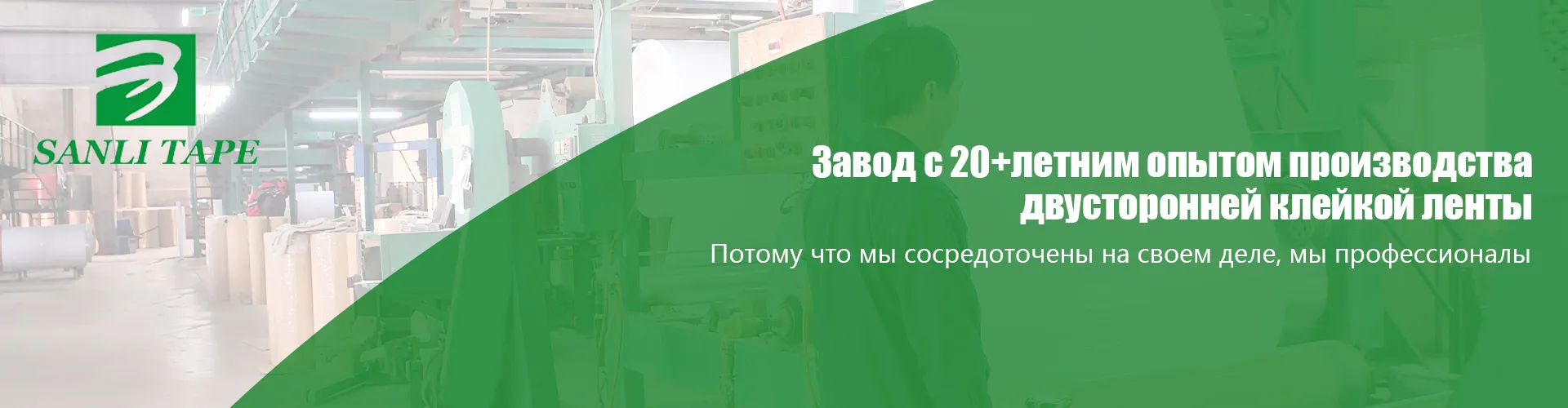
Example of a reliable partner:A striking example of a responsible approach is the companyEnping Sunli Adhesive LLC. This professional manufacturer has been on the market for 23 years (since 1997), specializing in the development and supply of high quality adhesive materials. Unlike fly-by-night companies, Sunli has its own manufacturing base and is certified to ISO 9001:2008 and ISO 14001 international standards. Their experience covers a wide range of solutions: from double-sided tapes based on fabric, PET and foam (PE/EVA) to specialized nano-magnetic tapes and VHB. Such a manufacturer does not just sell a product, but offers individual OEM/ODM solutions, adapting the properties of the adhesive to the specific needs of the client - be it the automotive industry, construction or packaging. The presence of a full production cycle and many years of experience allow us to guarantee the consistency of the quality of each batch, which is critically important when choosing a long-term supplier.
Action:Create a table comparing 3-5 potential suppliers on these points before the meeting. Weed out those who do not meet at least two criteria.
Application in industries: where savings are important and where reliability is important
Different industries have different requirements for adhesive paper. What is suitable for a transport sticker cannot be used for labeling wine. Understanding the specifics of your industry will help you choose the right balance between price and quality.
Logistics and warehouse accounting.Price rules here. Labels for boxes, pallets and shipping documents are typically short-lived and not subject to extreme stress. Standard thermal paper or matte semi-gloss paper with universal acrylic adhesive is ideal for these purposes. It is allowed to use materials with a density of 60–70 g/m². The main enemy here is the sun and moisture, so for open storage warehouses it is better to take material with lamination. Savings here can reach 40% by eliminating unnecessary properties.
Food and beverage industry.Here, cheap adhesive paper can cause a product recall. The requirements are strict: the glue must be food-grade (without migration of harmful substances), resistant to condensation (for refrigerators) and grease (for oils and sauces). We recommend using special adhesives with increased cohesion. Example: label on a bottle of vegetable oil. Regular glue will become liquid under the influence of oil and the label will slide off (“ski effect”). Specialized material is more expensive, but guarantees that the product reaches the consumer in a presentable form.
Construction and chemistry.Cans of paint, bags of mixtures, pipes. Operating conditions: dust, dirt, temperature changes from -30 to +50°C, possible contact with solvents. This requires enhanced adhesion to complex surfaces (polypropylene, polyethylene). Pre-treatment of the surface or the use of special primers is often required, but the correct choice of paper can solve the problem without unnecessary operations. In this segment, a selection error leads to the fact that information about the composition and instructions disappears from the packaging while still in the store.
Pharmaceuticals.The most conservative segment. The slightest peeling of a medicine label is a violation of the law and a threat to life. Only certified materials with full batch tracking are used. Price is secondary here, but the volume of consumption is huge, so negotiations with the manufacturer on long-term fixed prices have a significant effect.
In each case, our approach began with the question: “Where and how will this label be used?” The answer determined 90% of the project's success. Do not try to unify purchasing for all departments of the company - this is the path to problems.
Frequently Asked Questions
What is the minimum order quantity (MOQ) to receive wholesale price?
For most Russian factories, the minimum batch to launch a line is 100–300 kg (approximately 10–20 rolls, depending on the format). Chinese factories often require 500kg or 1 ton for export orders. Покупка меньшего объема возможна, но цена будет ближе к розничной, так как затраты на переналадку оборудования распределяются на малое количество метров. Для стартапов мы рекомендуем объединять заказы с другими компаниями или искать дистрибьюторов, имеющих складские остатки нужных форматов.
Можно ли печатать на дешевой адгезионной бумаге лазерным принтером?
Это зависит от типа клея. Стандартная адгезионная бумага с термоплавким клеем (hot-melt) при нагреве в лазерном принтере (температура печки около 180–200°C) может расплавиться и приклеиться к валу принтера, выведя его из строя. Для лазерной печати необходимо использовать материалы со специальным термостойким клеем (обычно акриловым) и основой, выдерживающей нагрев. Всегда уточняйте у поставщика маркировку «Laser Safe» или «Для лазерной печати». Если такой маркировки нет — рискуете ремонтом техники.
Как хранить рулоны, чтобы клей не испортился?
Идеальные условия хранения: температура от +15 до +25°C, относительная влажность 40–60%. Рулоны должны храниться в вертикальном положении на паллетах, не касаясь пола и стен, чтобы избежать деформации. Прямые солнечные лучи недопустимы — они разрушают структуру клея и вызывают пожелтение бумаги. Срок годности качественной адгезионной бумаги при соблюдении условий составляет 2 года с даты производства. После вскрытия упаковки рулон желательно использовать в течение 3–6 месяцев.
В чем разница между глянцевой и матовой поверхностью?
Разница не только во внешнем виде. Глянцевая поверхность лучше передает яркость красок, делает изображение контрастным, но на ней видны отпечатки пальцев и царапины. Матовая поверхность выглядит более благородно, не бликует под светом полок, на ней удобно писать шариковой ручкой или маркером (что важно для логистических этикеток). С точки зрения адгезии разницы нет, но матовая бумага часто немного дороже из-за дополнительного процесса матирования. Выбор зависит от задачи: для промо-продуктов — глянец, для технической информации — мат.
Что делать, если этикетка отклеивается на пластиковой таре?
Проблема чаще всего в низкосурфактной энергии пластика (особенно ПЭ и ПП). Клею просто не за что «зацепиться». Решение первое: использовать этикетку с усиленным клеем (High Tack). Решение второе: изменить дизайн этикетки, сделав ее оберткой (wrap-around), чтобы сила натяжения удерживала её механически. Решение третье: обработать поверхность тары плазмой или короной перед наклейкой (если это возможно в вашем процессе). Просто давить сильнее бесполезно — нужен химический контакт.
Итоги: стратегия закупок на 2026 год
Рынок адгезионных материалов в 2026 году предлагает уникальные возможности для тех, кто готов работать с данными, а не с эмоциями. Купить дешево адгезионную бумагу реально, но это требует глубокого погружения в технические детали. Экономия не должна достигаться за счет снижения плотности основы или использования нестабильного клея. Лучшая стратегия — это партнерство с прямым производителем, который готов предоставить образцы, сертификаты и технологическую поддержку.
Мы убедились на сотнях проектов: правильный выбор материала снижает общие затраты на упаковку на 15–25% за счет уменьшения брака и повышения скорости линий. Не бойтесь задавать неудобные вопросы поставщикам, требовать тестов и проверять документы. Ваша репутация и прибыль зависят от качества каждой наклеенной этикетки.
Если вы готовы оптимизировать свои закупки и получить коммерческое предложение с реальными рыночными ценами 2026 года,contact us today. Наши эксперты проведут аудит ваших текущих потребностей и предложат решение, которое сбалансирует цену и качество именно для вашего производства.